
AVIS DE DÉCÈS
Xiaolian "Lian" Gao
20 août 1954 – 29 juin 2025
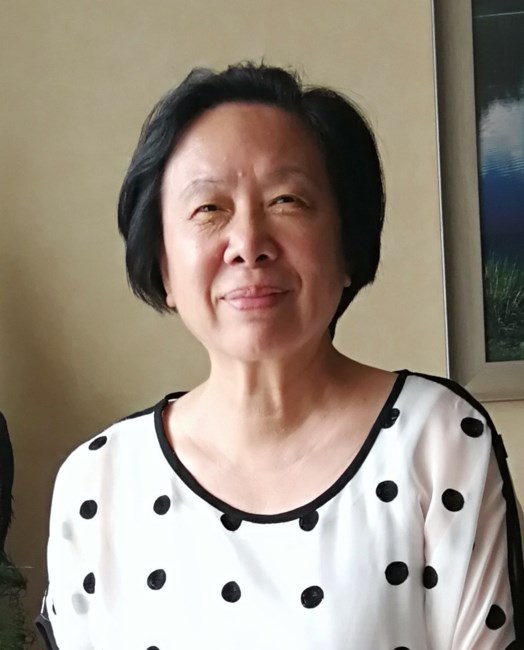
Prof. Xiaolian Gao's (Lian) life is a testament to brilliance, resilience, and an unwavering commitment to science and humanity. Her journey, from her modest childhood beginnings to becoming a trailblazing professor, reflects her unyielding determination and passion for knowledge, deep love in guiding and nurturing students, as well as the profound connections she fostered along the way.
Lian was born into a caring family in Beijing, China in 1954. Her mom devoted herself to raising three daughters, with Lian being the youngest, and managing the household, teaching them value and encouraging them to strive for higher goals regardless of challenging social conditions. Her father, a chief engineer, inspired Lian with his hard¬working attitude and precise technical writing, influencing her academic and professional pursuits with hard work, rigor, and attention to detail.
Lian was playful and occasionally a little naughty. She had a strong sense of self-determination. For a couple of times, she disobeyed her teachers and prompted them to contact her parents. She loved reading. While growing up during China’s Culture Revolution when most literature books were banned, she would borrow books, some of them being hand-copied, through her friend network and read them voraciously. Her innate love for learning set her on a path that would lead her to extraordinary academic and professional achievements.
In early eighth grade, Lian's family was forcefully relocated to poor rural northwest region of China due to Cultural Revolution. Lian refused to yield to life. A year later she used her sister's money to buy a train ticket and went back to Beijing on her own. Her parents discovered this after she left, and her father was punished for her "escape".
During the Culture Revolution, all high school and college classes were closed in China and young people were denied from receiving even high school education. Upon her graduation from middle school, she was assigned by the government to a clothing factory as a worker. She was 16 at the time. She did not stop learning. Together with young coworkers, she involved in various technical innovation projects, such as cutting pattern design to maximize material utilization, fabric spreading machine development to reduce labor intensity, and other improvements to the manufacturing process.
The Cultural Revolution ended in 1976. In 1977, upon hearing the news of resumption of college entrance examination after 10 years of interruption, she felt a surge of excitement. She diligently self-studied all high school courses and successfully passed the examination. Subsequently, she was admitted to the Beijing Institute of Chemical Technology.
During four college years in China, Lian's talents began to truly shine. She entered the Polymer Chemistry and Technology Department. Immersing herself in rigorous studies, she pursued her passion for science with remarkable focus and dedication. Her academic scores remained at the top of her class. Her professors and peers recognized her exceptional intellect, and her work laid the groundwork for what would become a brilliant scientific career. It was in these formative years that she identified her goal of making meaningful contributions to the scientific community.
She aimed high and prepared to continue her study in the US. Upon college graduation, she was accepted by the Graduate School at Chemistry Department of Rutgers University.
In 1982, Lian enrolled at Rutgers University and joined Professor Roger Jones' laboratory, where she focused on nucleic acid synthetic chemistry. Her talent soon became evident, as she received A grades in all her courses and maintained a perfect GPA of 4.0 during her graduate studies. She eagerly pursued research in nucleic acid synthetic chemistry and NMR characterization, laying the groundwork for her future research career. She authored four papers as first author on top ranking journals, including Journal of the American Chemical Society, Journal of Organic Chemistry, and Nucleic Acid Research, completing her Ph.D. degree in four years.
Besides academic studies, Lian enjoyed the new country. In 1982 China was mostly an underdeveloped country, to a poor Chinese graduate student, the US looked like a wonderland. For the first time in her life, she owned a car, a used 1972 Plymouth Duster, that was rusty and required a tricky start and constant repair. She explored New York City, Atlantic City, Washington DC, Disneyland, Los Angeles, Yosemite National Park, Sequoia National Park, Yellowstone National Park, San Francisco, and more. She loved this country.
In 1986 Lian joined Professor Dinshaw Patel's group at Columbia University for her postdoctoral research, marking a pivotal chapter in Lian's professional career. Her substantial contributions to the NMR studies of DNA-drug binding structures, DNA triplex structures, and DNA mismatch structures earned her considerable recognition in the field. In her three years of postdoctoral research, she published 17 peer-reviewed papers, serving as the first author on 9 of them. This period was instrumental in shaping her vision for the future, as she aimed to integrate basic research with real-world applications.
In 1990, Lian joined the Research Institute of Glaxo Inc. as a senior scientist and research investigator in Structural and Biophysical Chemistry. She focused on NMR structural studies of protein and antisense to understand their therapeutical functions. While working at the leading international pharmaceutical company, she was involved in a wide range of projects. By engaging with top scientists in both academia and industry around the world, she gained a comprehensive perspective on research and began planning her career path. Eventually, she chose a career in academia for the opportunity to conduct research freely.
In 1992 Lian joined the University of Houston starting from an Assistant Professor of Chemistry with an adjunction appointment at the Biology and Biochemistry. The university generously included a then most powerful 600 MHz NMR spectrometer in her startup package. She quickly set up her research lab, recruited graduate students, obtained NIH research grants, and established a collaboration network. In addition to continuing NMR studies of biomolecules, she expanded her research into large scale biology, photochemistry, parallel molecular synthesis, microfluidics, synthetic biology, bioinformatics, DNA sequencing, and protein profiling. In total, she published more than 100 peer-reviewed papers. Her works were recognized with numerous rewards. She worked very hard, and her mind was sharp. Her colleagues enjoyed interacting with her and described her as “fierce and brilliant”, “her impact on UH science was huge”, “such a brilliant and lively mind, so dedicated and ambitious”, and “a wonderful colleague and an inspiring presence in our department”.
She set high expectations for her students preparing them for the future and genuinely cared about each of them. Every time she heard the news about any of her former students she would share it with her husband in joy. She was happy to see the career and personal development of all her students.
She received tenure and was promoted to Associate Professor in 1998. She was promoted to full Professor in 2002.
Over the years, she taught two large undergraduate courses and seven graduate courses. She successfully supervised the graduation of 19 PhD candidates and 10 Mater students. She also supervised 6 postdoctoral researchers and 8 research staff members. Many have become professors, company executives, senior scientists and other esteemed professionals, significantly contributing to society.
Lian's research has played a pivotal role in advancing genomic and proteomic technologies. In 1997 she introduced a photogenerated reagent facilitating highly parallel DNA, RNA, and peptide synthesis. Collaborating with her husband, Dr. Xiaochuan Zhou (Joe), who is an engineering scientist, they demonstrated the concept, formed a startup company, and successfully brought the invention to market. In 2004, Lian engaged in another innovative venture alongside university faculty colleagues to develop a groundbreaking single molecule sequencing technology, which led to the successful acquisition of their startup by a major biotech corporation. Throughout her career, she co-founded five technology companies.
Prof. Xiaolian Gao's life leaves an indelible mark on those who had the privilege of knowing her and on the scientific community she so deeply enriched. Her journey from childhood wonder to academic and professional excellence is a story of hope and inspiration. She lived a life filled with purpose, love, and achievement, and her legacy will continue to inspire generations to come.
In celebrating her life, we honor not only her achievements but also the profound connections she nurtured, the lives she touched, and the love she shared. Xiaolian Gao's story is a reminder that passion and dedication, tempered by kindness and humility, can indeed change the world.
Montrez votre soutien
Envoyez Vos
Condoléances
Partager
L'avis De Décès
Obtenir les mises à jour
Prestations de Service
Partager l'avis de décèsPARTAGER
- RECEVOIR DES RAPPELS
v.1.18.0