
AVIS DE DÉCÈS
William Douglas Stanford Sr.
12 janvier 1945 – 2 septembre 2010
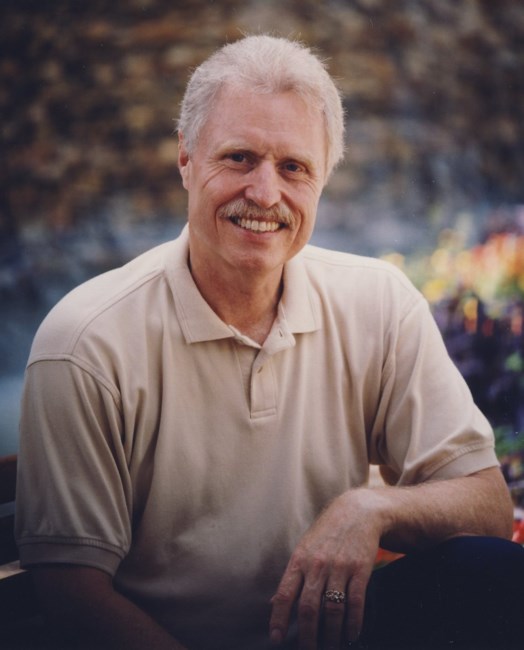
Doug was born to William Arthur and Thelma Harp Stanford on January 12, 1945 at Crawford Long Hospital in Atlanta. He was raised in Hapeville, Georgia, along with his older brother and only sibling Michael Arthur Stanford.
As a boy, he could always be found on the local playground fervently enjoying a game of pick-up baseball or sandlot football. Practice made perfect for Doug, who possessed an innate aptitude for athletics and a dogged determination to excel. As a student-athlete at Hapeville High School, he was the starting defensive end and offensive tackle for the Hapeville Hornets football team. He was co-captain for the Hornets in his senior year. A multi-sport athlete, he also excelled at baseball, earning tri-city honors as a pitcher.
After graduating from Hapeville High School in 1963, Doug was introduced to Barbara Lee Rinker by his long-time friend Chesley Coleman. Later in his life Doug referred to those life-changing events that occur in one’s life as “signposts.” Little did he know that his introduction to Barbara would be a magical signpost in his own life.
Although Doug and Barbara would eventually fall deeply in love and marry, it was not exactly love at first sight. Doug worked at a funeral home and on his first date with Barbara talked incessantly about his duties there, much to the Barbara’s chagrin. Ultimately, Barbara decided to go on another date with him at the urging of her childhood friend Cathy English (who was dating Chesley Coleman), and after correcting the conversational malady, Barbara began taking a liking to Doug.
The couple began dating in April of 1964, and as he did with so many people, Doug grew on Barbara. The two were married on March 10, 1966, and embarked on their life together. Through 44 ½ years of marriage, there was love and laughter, joy and sadness, magic and tragedy, sickness and health, and plenty of change; but Doug and Barbara enjoyed the good times and weathered the hard times as one, just the way God intended.
During his courtship of Barbara, Doug began attending South Georgia Technical School in Americus, Georgia. He studied there from 1963 to 1965, and graduated with an electronics technology and radar degree. Upon graduation, he went on to attain his first-class electronics license. Shortly after graduating from technical school, Doug joined the Army National Guard, where he would serve his country for six years.
Doug hired on with Delta Air Lines in April 1965 – another signpost. He was a faithful employee of Delta until his retirement on January 31, 2001. During his almost 36 year tenure at Delta, he worked on radar systems and radio, then cross-trained to work on hydraulics, and worked line maintenance. He came in early every morning, not because of any corporate directive, but guided by an old-fashioned work ethic.
Doug did not limit his service of Delta to the physical workplace. He did volunteer work on Delta’s behalf at Christian City Nursing Home and Orphanage. Additionally, he represented Delta on the Atlanta Chamber of Commerce Chairman’s Committee, where he set an all-time Delta chamber record by selling over $51,000 in corporate memberships. This earned him the third place slot overall in Atlanta that year. In response to his exemplary performance, the Atlanta Chamber of Commerce named Doug a lifetime member.
Likewise, Delta recognized Doug’s hard work and dedication, tapping him to become an analyst and later promoting him into management. After enjoying a long and distinguished career at Delta, he retired as the Component Group Leader.
Doug prided himself on mentoring young leaders for Delta. He stated his goal succinctly: “If I am remembered for at least one thing here at Delta, I helped more people succeed and or get promoted than anyone else.” Even though he took his mentoring role so seriously, he still used it as an avenue of humor. He advised all new supervisors under his tutelage to “listen to what I say and watch what I do and then just do the opposite and you’ll be fine.”
Those who knew him well at Delta said he was “stubborn as a billy goat.” One of Doug’s more noteworthy “AKA’s” at Delta , “Chief No Pot,” came about in response to his consistent failure to remember to make sure the coffee brewer was finished dispensing coffee before removing the pot - quintessential Doug genius. His service to Delta can be summed up in another statement he often made, “we got to do the right thing for Delta Air Lines.” As evidenced by the legacy of successful leaders he mentored, mission accomplished.
Although Doug devoted his time and his talent to Delta Air Lines, his heart and soul were reserved for his family, whmo he dearly loved. Doug and Barbara’s first child, Lorie Stanford Grimes, was born on October 31, 1967. The couple’s second child, William Douglas Stanford, Jr., was born on July 11, 1972. The births of his children were also miraculous and joyful signposts in Doug’s life. He had five grandchildren: Nickolas Robert Miller, Jordan Elizabeth Miller, Jaden Douglas Grimes, William Douglas Stanford, III, and Jillian Lee Stanford.
Doug was a wonderful father. He loved his children unconditionally and with every fiber of his being. He cared enough to be a father in addition to being a friend, and meted out discipline when warranted. Although the discipline genuinely hurt him worse than it ever hurt his children, he corrected nonetheless, knowing in his heart it was in the best interest of his children. Indeed, everything Doug did as a father was guided by his children’s best interest; and he perpetually ignored his own wants and needs to provide for his family. Later in life, he would bemoan with regret the long hours at Delta – and at various and sundry second jobs – spent away from his family. Notwithstanding his thoughts on the matter, the simple fact is that all of the hours at work represented his unwavering commitment to and unquenchable love for his family.
Throughout his life, Doug’s integrity, selflessness, and quick wit accumulated many friends. He would keep his word, even to his own detriment. He was always there when friends needed to talk, and was a sure repository for sage advice. He would do almost anything for his friends. Doug laughed, a lot. He made his friends laugh, a lot. If Doug ribbed someone mercilessly, it probably meant he liked them. Conversely, if he stopped making someone the butt of his jokes, it probably meant they were in his doghouse.
Doug enjoyed several hobbies. He was an avid and accomplished woodworker who specialized in high-level trim work. He remodeled several houses, turning outdated interiors into updated works of art. Given ample time, he could fix almost anything. A voracious reader, he especially loved history. His favorite time period was World War II. He could wax endlessly about Hitler’s rise to power, the two-front war, America’s role in defending the world from Nazi tyranny, the Pacific theater, the myriad battles, the weaponry, and on and on. He also loved John Wayne movies, and would watch virtually anything featuring “The Duke.”
Politically, Doug was an unabashed Libertarian/Conservative. He voted for the person, not the party. He believed the Constitution was the final authority on all political questions, and believed the document should be interpreted based on the plain meaning of the text and the intent of the framers. He was an especially staunch advocate of the Second Amendment right to keep and bear arms, and considered all gun control measures an affront to the Constitution and to liberty.
Spiritually, Doug was a committed agnostic for much of his life. Religious conversations with him generally ended in frustration, with him questioning every possible angle of the belief system of a person who approached him about matters of faith. It is quite probable that religious organizations emphasizing door-to-door proselytizing had Doug’s house black-listed.
Throughout his life, Doug has a soft spot for dogs. He loved training dogs, and had several over the years, including Mitzi, Kojak, Baron, Buck, Chikki and Sassy, and Dandy. Although he loved all his dogs, he especially loved Sassy and Dandy, who were his consummate companions during his illness with cancer. Doug had Sassy for 14 years. After Sassy passed, he adopted a rescue dog named Dandy and surprised his wife with Dandy (Dandy was so-named because he was born on July 4th). He and Dandy took frequent, long naps together. They would also regularly walk around the block, side-by-side.
Doug was diagnosed with lymphatic cancer on Memorial Day Weekend of 1998. Inspired by a previous relative, Henry Stanford, who had likewise fought cancer, Doug decided long before his diagnosis that if faced with a dread disease he would go at it with courage and good humor. Doug often remarked that he had cancer; cancer didn’t have him. How true. He laughed his way through the suffering, always maintaining a positive outlook no matter his travails. Occasionally, people were shocked at the levity he and some close family members exhibited. His son would often joke, “go cancer go,” and went as far as encouraging Doug to “hurry up and die.” Doug encouraged such behavior from all those around him. He had no interest in being a forlorn victim or a guest of honor at his own “pity party.” He had spent his life finding humor in all things, and would not give cancer the privilege of being an exception. For his part, Doug joked about using cancer to get breaks in life. Whenever someone started giving him a hard time, he relished playing “the cancer card,” as he called it.
While witnessing his battle with cancer, those closest to Doug came to respect him more than they ever had (which is saying something considering the respect they felt for him prior to his battle with cancer). Barbara remarked that “he showed a side of him that [even she] didn’t know existed.”
Doug often decried the trivialization of the word “courage” that he said resulted from its overuse and misapplication in everyday language. However, the word courage cannot be overused when referring to his battle with cancer, nor is it misapplied when referring to him. He endured seemingly endless bouts of chemotherapy and a plethora of adverse side effects.
One of the typical side effects, hair loss, became another source of humor for Doug. One day when his hair first began falling out, he was in a Delta board meeting and remarked that a situation was so frustrating he wanted to pull his hair out. And pull it out he did, yanking out two wads of hair to the shock of everyone in the board room. Thereafter, he stalked the hallways of Delta sporting a lovely neon wig to mask his chrome dome. These antics typified Doug’s courageous battle with cancer. Although he was poked more times than a pin cushion, prodded more than a herd of cattle, and went through two bone marrow transplants, Doug never ceded his dignity or his humor to the disease.
Doug had a particularly difficult time during the second transplant. He suffered through extreme rashes over large portions of his body. He developed graft versus host disease in his intenstinal tract, which led to over three months of endless throwing up and diarrhea. During this particularly difficult stretch, he referred to himself as a “professional thrower-upper,” and joked about his change from big-boy underwear to Depends. Reacting to the surprise of doctors and nurses seeing him in Depends, he said all he could say was thank goodness for Depends.
Even more agonizing, Doug suffered through neuropathy in his legs and feet, a condition caused by nerve damage as a result of transplant complications. His neuropathy led to the contradictory symptoms of numbness and extreme pain in his feet. Through all of this, he endured with courage and good cheer. He said he fought because “it’s what I do.” In reality, he soldiered on because of his desire to be with his family on this earth as long as possible.
Although Doug seemed to have an endless wellspring of strength, courage, and good cheer, he eventually ran dry. One day driving on Interstate 75 in Atlanta the committed agnostic began weeping uncontrollably. He was at the end of his own strength. He began talking with God, recounting his 12-year struggle with cancer and saying he had nothing left in reserve to continue his fight, that he was simply tired. He asked God to give him strength to continue fighting.
At this point, Doug said something in him changed. The committed agnostic became a man of faith, a believer in God. After this signpost, Doug maintained a quiet, dignified faith. He prayed often. Like everything else in his life, he found humor in his conversion. He jokingly theorized that the marrow donor from his second transplant was a holy man from some distant land. He took on the moniker “Holy Man.” Although he was already close with Northside Hospital Chaplain and Presbyterian John Neiman, who he jokingly and affectionately dubbed “John the Baptist,” Doug grew even closer with Neiman after his fateful commute on I-75 when he met God.
One day, returning from a trip to Florida to see his grandchildren, Doug said to Barbara that “he was the happiest he had ever been in his life, and that if he died, “he would go a happy man.” This summed up his feelings. Doug was proud of both of his children. Lorie excelled in nursing school as a single parent of a beautiful son and became licensed in Georgia. Douglas had graduated magna cum laude from law school and passed the Bar exam in Florida, married his loving wife Alisha, and been blessed with two lovely children. Both of Doug’s children were very happy in their respective lives and careers. He often said that he felt his mission on earth was accomplished. A happy grandparent and parent, a content and beloved husband, and a man who loved God, he was at peace with his life, and indeed ready to meet his Maker whenever that fateful second might come.
William Douglas Stanford, Sr., a loving husband, a wonderful father, and a loyal friend, passed on to be with God on September 2, 2010.
Montrez votre soutien
Envoyez Vos
Condoléances
Partager
L'avis De Décès
Obtenir les mises à jour
Prestations de Service
Partager l'avis de décèsPARTAGER
- RECEVOIR DES RAPPELS
v.1.18.0