
AVIS DE DÉCÈS
Jerry Lee Morton
7 mai 1943 – 24 janvier 2011
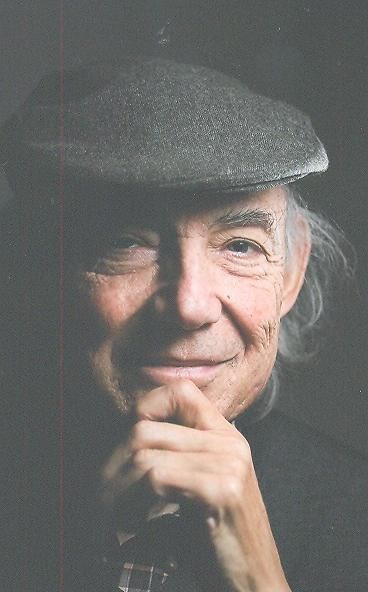
Jerry Morton, 67, journalist, photo-journalist, historian at large, and Spartan fan extraordinaire, died in his East Lansing apartment January 24, 2011. His death was sudden and unexpected, and he will be missed by students, friends, colleagues, and relatives of every description. He photographed the faces of people he met in unsung corners of the world, in Timisoara, Romania, in Zongolica, Mexico, and in the rural counties of southwestern Michigan. His prize-winning images of people absorbed in work and conversation were exhibited at the Birmingham Our Town Art Show, the Birmingham Bloomfield Art Center, the Okemos Library, the University of Michigan-Dearborn, and the Detroit Artists’ Market. In the Fall of 2007, his work enjoyed a one-man show at the Swords into Plowshares gallery of the Central Methodist Church in Detroit, and last year, his recent color photographs were featured in an exhibit mounted by the Mexican Consulate in Detroit. He did not look for the art in people’s figures, so much as he distilled the art of the authentic and the intimate from the human experience he observed. In his life, as well as in his work, he prized honesty and laughed at pretension.
He liked to have a mission, and his idealism always sought a project involving other people. As a Fulbright Fellow teaching journalism at the University of Timisoara in western Romania, he helped a new generation of free Romanians produce the first student newspaper at their school. In his most institutional work, doing public relation for many years for the Mexican Red Cross, his work was not to recruit funders, but to figure out small things (rulers, pencils, notebooks) that would reach every schoolchild in Mexico with the message of the Cruz Roja and a personal reward for contributing to it. He met the President of Mexico, but more importantly, he gained an entrée into towns and villages far enough off the beaten track to never be referred to as “off the beaten track.” Morton’s exposure to the vibrancy and open-heartedness of Mexicans confirmed his photographic vocation, and the color of their life eased his skeptical transition to digital technology.
His personal “mission” was to shoot a million baskets. He was shooting with a friend one day who asked him “How long do you think it would take you to shoot a million baskets?,” and from that casual playful moment on a warm September day, began a happy set of notebooks in which he wrote down, not only how many baskets he shot, and where, but the people he saw or played with, and what they had to say. He never worried about whether he’d make the mark, he just never left home without packing his basketball. Only in the past two years did he begin to say he could do it. One of his friends intends to make the last few tens of thousands in his name.
A believer in the local nature of history, he was a supporter and ultimately President of the Barry County Historical Society, and a frequent visitor to Hastings, for the Society, for work on the County’s biographical register of its war veterans, or for coffee. Cultivating the lore of small towns and individual craftsmanship also led him to Freeport, whose old-style hot-type press issued the last such newspaper in the state, and whose last days Morton chronicled in the The Sound of Words (2001) – finding in this project a splendid rationale for touring similar ventures in the small towns of Iowa and Dakota. It was hard to get him to point east. The one time he visited me in New York City, he managed to arrive during a transit strike, so that on his way out of town, he got a story by walking 3 miles from my place down to Penn Station, interviewing people in coffee shops along the way.
He took endless pleasure in recalling presidential trivia, family stories, and the dates and details of vintage football games, serving as proofreader to the MSU Football Players Association’s history of the football program, The Tradition Continues (2008). He was the only guy who had all the scores memorized. (“Is that crazy” he asked. “No, it’s just not normal.”).
Jerry was born in South Bend, Indiana, on May 7, 1943, the only child of Donovan and Regina (Hosinski) Morton, who introduced him to the wonders of travel via the Corn Palace, Badlands, Wall Drug and Mount Rushmore in South Dakota en route to his Uncle Ed’s ranch in Hat Creek, Wyoming. He developed interests in history and sports that informed the personal touch of his journalism. Favorite authors Carl Sandburg and Studs Terkel signal his fascination with the experience of the solitary American’s work, aims, fears, and inspirations. He took up the classic loner sport of cross-country running, but spent more time as equipment manager for the basketball team of Benton Harbor High School, a position that enabled him to adopt the reporter’s stance: a witness in the scene, but not a contestant. He took up the bass drum to be in the marching band, and learned accordion as part of the Polish heritage of which he was always proud. His historical interests included as well the pride he took in familial accomplishments, whether with Sherman on his March to the Sea, his Uncle John wounded by a bolo knife in the Philippines during the Spanish-American War, or, most of all, his father’s arduous, esteemed work as ship’s storekeeper during World War II.
Having attended Lake Michigan Community College, he entered MSU’s journalism department, and earned a Masters Degree in a fellowship year at the Medill School of Journalism at Northwestern (he studied political journalism in a later fellowship year at the University of Michigan). Jerry also completed a Ph.D. at Michigan State University.
After college, he served as a VISTA volunteer in Baltimore, founding a community literary magazine, Chicory, based on transcriptions of neighborhood residents’ oral poems and stories, was one of the authors of Rights in Conflict, the Walker Report on the protests at the 1968 Democratic Convention in Chicago, and worked on the 1972 McGovern presidential campaign.
Along with shorter stints at the Benton Harbor Herald Palladium, the Akron Beacon Journal, the New Brunswick, New Jersey Star Ledger, and the Hammond, Indiana Times, Morton worked for many years at the Battle Creek Enquirer, where his talent for observation and interview led to the special feature of his annual “Walk Through Spring,” that saw him walking a pre-published itinerary in and around the outskirts of the paper’s circulation area, talking to people he met along the way, or who came out to meet (and often feed) him, phoning the day’s adventures in to the paper each night. His editor, Don Martin, called “Morton the best listener and perhaps the best writer to grace the Enquirer’s news columns.” It was from the interviews and photographs of these Walks that he compiled his first three books, Yesterday in Hodunk (1985), Footprints and Friends (1988), and Back to Algansee (1991). Later books drew on this technique of photographing a stranger who gradually became a friend; Romania (1996), The Sound of Words (2001) and Wandering in Mexico (2006).
He is survived by first cousins Elaine and Val Delinski and Jean Kolski of Niles; second cousins, David and Sonya Delinski and Janet and Don Miller of Niles; cousin, Janice Allison of California and her sons, Harvey and John, of California and Tom of Redford, MI; cousins, Ellen Martin of Detroit and Anne Moiseev of New Jersey.
Donations may be sent to: East Lansing High School Boys Basketball, 509 Burcham Dr., East Lansing, MI 48842; or to St. Vincent de Paul of St. Mary Cathedral, 219 Seymour, Lansing, MI 48933.
[Obituary composed by Jerry Morton’s cousin, Ellen Martin. Please send corrections, comments, and additions, to her at: [email protected].]
Montrez votre soutien
Envoyez Vos
Condoléances
Partager
L'avis De Décès
Obtenir les mises à jour
Prestations de Service
Partager l'avis de décèsPARTAGER
- RECEVOIR DES RAPPELS
v.1.18.0