
AVIS DE DÉCÈS
Gladys Marguerita Alexander Goodwin
19 septembre 1919 – 19 février 2016
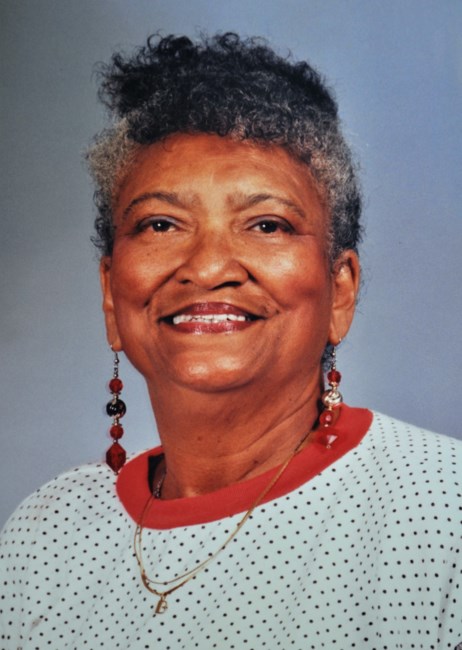
The announcement of the passing of Gladys carries with her death, memories of life that expand nearly a century.
Margueritte Clarida, took life on 19 September 1919 while her parents, Chas and India Clarida, provided her with their love and the hospital provided her with her first gymnastic stretch.
This baby girl stayed in Chattanooga, Tennessee for a short period of time. Then, after the tragedy of losing both parents during childhood, close relatives took her to live with them in a white framed house. She would stay with Aunt Alberta and Uncle Cicero.
These circumstances did not last long. Indeed, with the death of Mom Berta, she once again had to relocate to another relative’s home. For her older sister and brother, Nellie and Henry, they had already left Chattanooga to live in Sugar Valley, Georgia. Only after years of separation would each of these children meet again.
Finally, Margueritte lived with her Aunt and Uncle, Elsie and Cleve. They already had five children, and Margueritte fit in just fine!
Following her formative years, Margueritte took the name, “Gladys”. Gladys enjoyed her years of learning. Gladys did learn and excelled in school. As she used her talent, interesting activities like writing skits and short plays to cheerleading and high school queen, became integral in her expectations of future goals.
During the period of time Gladys spent in the southern region of the country, the “separate but equal” ritual of daily life put an obstacle in the logical path towards democracy. Overcoming social separation and ethnic communalism, took hard work, inside and outside the court house. The Supreme Court’s Plessy v. Ferguson decision in 1896 reduced the effectiveness of any Constitutional guarantees to more, dynamic educational resources.
After leaving high school. Gladys strongly expected to attend college, as her brother and sisters had. But that could not happen, for her, as well as millions of other Americans. The Great Depression snapped many incomes and savings, forcing families into making heartbreaking choices. By the mid-nineteen thirties, the economic recovery during the New Deal did not reach all Americans with equal strength. With an emergency operation arranged for her Daddy Cleve, Gladys sidestepped college in order to seek employment and went forward, remembering the intent of his words. You may never have a degree from a college but as a young lady, you have personality and character.
She also witnessed the breakdown of law and justice while living in her community. Daddy Cleve assisted other persons of an ethnic minority (POAEMI)to resist the strong-armed manipulation of legal statutes when occupying a jail that had a prisoner threatened with possible lynching.
Soon, as the world once again faced the probability of world war, Gladys met a young man who had traveled from Knoxville with his family to participate in Sunday church services. Robert Walter Alexander sung in the choir and impressed everyone with his voice.
Over time, written letters and consistent contact, Gladys and Robert would begin their engagement and soon married in August 1940. They took up a household on the northern bank of the Tennessee River.
After settling in her new space, Gladys joined the Works Progress Administration, receiving beneficial information on preparing and cooking meals. This project added an economic foundation to Gladys’ future portfolio.
Robert had worked at a local meat packing plant after leaving college. Although he earned an increase in wages, he did apply for a federal courier position. He would eventually work at the Tennessee Valley Authority.
Soon, Gladys and Bob started a family. Gladys had her first born Bob Jr. and two years later, James and Edward.
With her husband Bob fully engaged in singing, Gladys moved with him to New York; but, he went into the Army, tasked to locate military personnel. His brothers and brother-in-law had also joined the effort to combat axis fascism.
After a short stay in Manhattan, the family moved to Brooklyn. In an apartment at 952 St. Marks Avenue, for more than eight years, they made their home. Gladys gave birth to her youngest son, Ronald.
Once moving from Tennessee, the Alexander family entered the Roman Catholic Church. After Bob Jr. finished the first grade in public school, the children began to attend St. Gregory’s Catholic Church.
Gladys and Bob, and the children, received the sacraments and moved forward in their learning and in their religious obligations. Gladys acknowledged her inner strength as a member of the Confraternity of the Holy Rosary.
Eventually, they relocated to Springfield Gardens, in the borough of Queens. She and Bob, with the children’s help. developed a large garden on a tract of land next to their new home. The boys continued to learn at St. Catherine of Siena school and served as altar and choir boys. Gladys took care of the altar decorations, since she constructed flower exhibitions in New York. Eventually, they all graduated from Holy Cross High School.
Moreover, for Gladys, those WPA classes gave impetus to a burgeoning career. Having a family of six helped as well. Food preparation and cooking shifted from just an ordinary, routinized activity to a well-paying catering business. Eventually, her sons would complete advanced degrees, and found successful careers in significant disciplines.
Gladys also assisted Bob, while he formed opportunities as an executive at the Department of Health, Education and Welfare. She would even travel with him to meetings, organizing and arranging his work. She did have “personality and character”.
The fact that they moved to another home in Westbury, Long Island, didn’t mean that they would forget about their former neighbors and friends. Gladys had help found the Springfield Gardens Flower Club. As a member of the New York Horticultural Society, she pulled others into joining and in participating, forming a grassroots’ program.
Bob and Gladys never stood still or stayed in one place for too long. That is to say, they also began to enjoy long drives to visit family and friends in other states and took plane trips to Europe, visiting always interesting sites.
Determined to enjoy their retirement, they moved to California in late 1980. Bob grew tired of the cold weather and considered the move as advantageous since their son Ed lived in San Diego. Their achievements “back east” had positive consequences.
On the other hand, employment as an executive required intense concentration and skill. Under those circumstances, the environment contributed in Bob’s developing an ulcer. It caused a steady decline in his health. He passed in 1981, and took internment at Holy Cross Cemetery and Mausoleum in San Diego, wearing his Knights of Columbus sash. He had brought many rewards and honors to the Alexander family.
Subsequently, Gladys continued her “world tours” after Bob’s death, visiting European, Asian and African nations. She then met Bill Goodwin, who had attended another parish church. His wife had passed years earlier. After finding much in common, they took their marriage vows in 1993, more than ten years after Bob’s death. At least they found happiness during the last years of the twentieth century. However, Bill would only survive his marriage by less than a year and a half.
Gladys tried to remain consistent in her daily journeys. Once again she took to her travels, fulfilling an ambition she encouraged during her adolescent years, after reading books about geography and world cities. She decided not to exercise her desire to renew her travels after 1999.
She did visit her oldest son during the burial of Nile Alexander, the son of her eldest and his wife, Carolyn Alexander. He received internment at Arlington National Cemetery. Jim’s wife, Betty took ill and died in 1994, while living in Virginia. It seemed that the adage that “Weddings and funerals bring families together!” imposed a different relationship.
Gladys moved from her home on Darby St. to an over “55” community, still in Spring Valley. While in her home, she easily viewed the surrounding village from her location, situated near the top of the hill.
Her modeling, volunteer work and other travels took a backseat to her more profound thoughts and intentions. She remained as a Church lector and Eucharistic Minister, giving service to Skyline Nursing Home and homebound Catholics in her area.
Particularly, in 2004, Gladys began studies with the Carmelite Sisters. She completed her formation and she definitively professed in 2009, into the Secular Order of Discalced Carmelites.
Gladys often brought her sons together, and as many grand and great-grand children as possible, to celebrate special days and ordinary home visits. Predeceased by her first husband of nearly forty years, Robert W. Alexander (1981), her second husband of less than five months, Bill Goodwin (1994) and grandchild Nile Alexander. Survived by her four sons (Alexander): Robert W., James I., Edward C. and Ronald C. Also, four daughters-in-law, nine grandchildren and ten great-grandchildren (current).
Ronald Alexander Ph.D.
For inquires contact: 661-940-4519
Montrez votre soutien
Envoyez Vos
Condoléances
Partager
L'avis De Décès
Obtenir les mises à jour
Prestations de Service
Partager l'avis de décèsPARTAGER
- RECEVOIR DES RAPPELS
v.1.18.0