OBITUARY
Guenter Bernhard Risse
April 28, 1932 – February 15, 2026
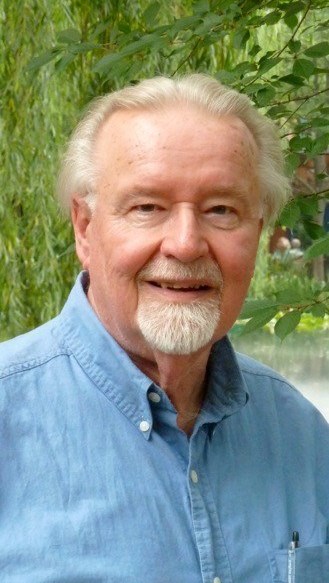
Guenter Bernhard Risse, distinguished historian of medicine and Professor Emeritus, passed away on February 15, 2026, at the age of 93. He died peacefully at his home in Lincoln, California in the midst of his family, after a long struggle with Parkinson’s Disease.
Born in Buenos Aires, Argentina, Dr. Risse earned his medical degree magna cum laude from the University of Buenos Aires in 1958 before continuing his medical training in the United States. His intellectual interests gradually shifted from clinical practice to the historical foundations of medicine, leading him to complete a Ph.D. at the University of Chicago in 1971 with a focus on eighteenth-century medical systems.
Over a distinguished academic career spanning four decades, Dr. Risse held faculty and leadership appointments at several major universities, including the University of Chicago, the University of Minnesota, the University of Wisconsin–Madison, and the University of California, San Francisco and Berkeley. In the 1970s he developed the Department of the History of Medicine at the University of Wisconsin–Madison, and later reorganized the Department of the History of Health Sciences at the University of California, San Francisco. He also served as Affiliate Professor of Bioethics and Humanities at the University of Washington in Seattle.
A prolific scholar, Dr. Risse authored and edited numerous influential works that reshaped understanding of hospitals, epidemics, and the cultural context of medical care. Among his major publications are Hospital Life in Enlightenment Scotland: Care and Teaching at the Royal Infirmary of Edinburgh, Mending Bodies, Saving Souls: A History of Hospitals, and Driven by Fear: Epidemics and Isolation in San Francisco's House of Pestilence. His scholarship ranged widely—from ancient medical traditions and the evolution of physiology to public health responses to epidemic disease.
Beyond institutional history, Dr. Risse emphasized the emotional, cultural, and moral dimensions of medicine. He regarded himself not simply as a chronicler of facts but as a storyteller, illuminating how fear, belief, compassion, and social structures shaped medical practice across centuries. His intellectual curiosity extended into the ancient world, where he undertook the translation of Egyptian hieroglyphic texts in order to study early medical practices, later publishing articles on ancient Egyptian medicine. His work consistently drew connections between past and present, demonstrating how historical insight informs contemporary health debates.
He also translated and edited foundational historical texts, including the English edition of History of Physiology, broadening access to key works in medical historiography. A dedicated collector and steward of rare medical books and manuscripts, he donated significant portions of his collection to major institutions, including, the National Library of Medicine, and the Huntington Library, ensuring their preservation for future generations of scholars. Dr. Risse donated the core of his rare book and medical historical collection to the Washington State University Health Sciences Library in Spokane, for the History of Medicine Collection and Archives, where it now supports the curriculum and research of the Elson S. Floyd College of Medicine.
Dr. Risse’s contributions to the field were recognized with several honors, including the William H. Welch Medal in 1988 and the Lifetime Achievement Award from the American Association for the History of Medicine in 2005. He was a past president of the American Association for the History of Medicine and held memberships in multiple international scholarly societies
Through his scholarship, teaching, and preservation efforts, Dr. Risse expanded understanding of medicine not merely as a technical enterprise, but as a deeply human endeavor shaped by culture, community, and care. His life’s work endures in the institutions he shaped, the students he mentored, and the scholarship he leaves behind.
Beyond his formal scholarship, Dr. Risse was, at heart, a lifelong teacher. Conversation was rarely casual in his presence; it was expansive, animated, and often instructional. Those who met him frequently remarked on his brilliant intellect, prodigious memory, and command of language.
Dr. Risse enjoyed good food and wine, appreciating the daily gourmet meals his wife, Sandy, thoughtfully prepared and the ritual of sharing wine each evening. Holidays were celebrated with generous feasts and the gathering of family, traditions observed without fail. Together, he and Sandy have fond memories of hosting students, colleagues, and friends into their home over the years with lively dinners and social gatherings. He relished dining out as much as dining in, always eager to savor new flavors with long evenings of conversation. In lighter moments, he enjoyed dancing to his favorite Latin music, bringing the same enthusiasm to the dance floor that he brought to the dinner table.
He found great pleasure in travel and the experience of other cultures. During summers away from teaching, he and his family traveled extensively throughout the United States and abroad. He believed deeply in the importance of seeing how others lived and understanding different histories and traditions firsthand. In later years, he and his wife continued their travels through cruises, including a family voyage to Greece in celebration of their 50th wedding anniversary — a journey that allowed him to explore sites such as Ephesus and Crete, bringing his love of history, travel, family and celebration together.
His home office, lined with rare books, antique medicines, medical artifacts, and historical objects collected over decades, stood as a testament to his commitment to stewardship. He regarded himself as part of a larger intellectual lineage, and believed the preservation of knowledge was a responsibility to future generations.
He maintained a strong interest in the lives and backgrounds of those he encountered, often asking about their origins and aspirations, and he took evident pleasure in conversation that connected personal histories to larger stories. His intellectual presence left a lasting impression on colleagues, students, caregivers, and all who engaged with him.
In his final years, disease greatly limited his mobility. Yet during this period he continued to be engaged and well-informed, discussing all manner of subjects with those around him. He remained active in his writing, particularly interested in the connections between his work on previous epidemics and the recent Covid-19 pandemic.
Dr. Risse is survived by his wife of over 64 years, Alexandra (Sandy) Risse; his three daughters, Heidi Risse, Monica Risse, and Alisa Ingrid Risse Anderson (Deirdre Runnette); and his brother, Edgardo Risse (Tessie Risse) of Buenos Aires, Argentina. He was preceded in death by his parents, Francisco Bernhard Risse and Kaete Westernhagen Risse.
Condolences can be conveyed to Sandy Risse ([email protected]). In the coming weeks a private family service will be held in California. In lieu of flowers, donations may be made to: UC Davis Department of Neurology, Parkinson’s Multidisciplinary Clinic
Dr. Risse and the Risse Family would like to express deep gratitude for the thoughtful and devoted care from his team of specialists at UC Davis Dept of Neurology and the kind and attentive care of his many caregivers over the last several years.
Show your support
Add a Memory
Share Obituary
Get Reminders
Services
SHARE OBITUARYSHARE
- GET REMINDERS
v.1.18.0