AVIS DE DÉCÈS
Robert Victor Paul Hutter MD
25 mai 1929 – 2 juillet 2014
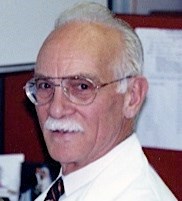
A devoted husband, father, and grandfather, his colleagues knew him as a pathologist with a keen eye for diagnosis and a medical editor with a sharp eye for clear and concise writing. He demanded a lot of those who worked for him, but was always a loyal and dedicated teacher. His close friends and family knew that his quiet, distinguished facade hid a dry sense of humor. He was the rare pathologist sought out by cancer patients for advice and what they got in return was a compassionate expert with sensitivity and honesty. As a former chairman of the department of pathology at St. Barnabas Medical Center, beginning his tenure in 1973, he helped transform this community hospital into a world-leading center with his own expertise and the recruitment of other medical leaders. Above all, he was devoted to his family. He died about a month before his 59th wedding anniversary.
In 1982, Dr. Hutter became the first New Jerseyan to serve as the national president of the American Cancer Society and helped to spearhead the ACS’s first nutrition guidelines that emphasized a low-fat, high fiber diet. Dr. Hutter practiced what he preached, sticking to a rigid diet and exercise regime, squeezing in time in his hectic schedule for long distance running through the streets of Livingston before the sun rose, and weight lifting in the afternoons.
He single-handedly convinced the ACS to switch the name fibrocystic disease to fibrocystic changes, which had significance way beyond the semantics of a moniker. He ameliorated the worries of many women who thought they harbored an illness and now understood that they had naturally occurring changes in breast tissue. Dr. Hutter was passionate about finding early cancers and preventing deadly tumors. He shaped cancer prevention strategies nationally and internationally, and promoted a new system for staging cancer. In 1981, he was named Physician of the Year by the New Jersey Division of the American Cancer Society and ten years later, in 1991, was awarded the Edward J. Ill Excellence in Medicine Award.
Born May 25th, 1929 in Yonkers, N.Y., he attended Syracuse University on scholarship and played football for Coach F. Ben Schwartzwalder, who finagled a way for Dr. Hutter to become an assistant coach while still an undergraduate so he could maintain his scholarship after injuries cut short his playing career.
Dr. Hutter inspired everyone that knew him. When he was 16 and working as a waiter in Rockaway, N.Y. for the summer, his sculpted physique nudged a fellow waiter, the scrawny Harry Schwartz to bulk up. Decades later, when Schwartz was profiled in a national magazine for his career as a body builder, the former Mr. Venice Beach and owner of a chain of Jack LaLanne gyms, he credited Dr. Hutter for getting him started.
When Dr. Hutter started medical school at Syracuse Medical School (now called State University of New York Health Science Center at Syracuse), he tried to continue to coach football. That is until the medical school dean (not a fan of football players) called him into his office and demand that he choose football or medicine. He had a minute to decide. Dr. Hutter chose medicine.
He did his residency at Yale University, where he was an American Heart Association Research Fellow. Again, pushing the limits, he asked the head of the residency program if he could apply to Yale Law School and somehow try to get a law degree while completing his residency. He was told that if he felt he had leisurely time, it should be devoted to the hospital. Dr. Hutter never went to law school.
He completed his residency at Memorial Sloan-Kettering, where he was Chief Resident in Pathology and an American Cancer Society Clinical Fellow. Then he served two years of active duty in the Navy, returned to Memorial, then to Yale and became a tenured professor of pathology at the age of 39. In 1969 he was awarded an MA from Yale University. In 1970, he served for three years as chairman of pathology at the University of Medicine and Dentistry of New Jersey and subsequently moved to St. Barnabas. Among his many leadership roles, he served as President of the Surgical Oncology Society, the only non-surgeon to hold that position. He is survived by his wife, the former Ruth Lauterbach, son Andrew (Barbara), daughters Randi (Stuart) and Edie, and 10 grandchildren. Donations can be made to the Department of Pathology, St. Barnabas Medical Center, Livingston, N.J., or The Alzheimer’s Association of New Jersey or SUNY Health Science Center at Syracuse. The Funeral will be held Sunday, 10 a.m. Bernheim-Apter Funeral Home in Livingston, N.J.
Montrez votre soutien
Envoyez Vos
Condoléances
Partager
L'avis De Décès
Obtenir les mises à jour
Prestations de Service
Partager l'avis de décèsPARTAGER
- RECEVOIR DES RAPPELS
v.1.18.0