
AVIS DE DÉCÈS
Albert B. Crutcher Jr.
24 février 1920 – 20 février 2012
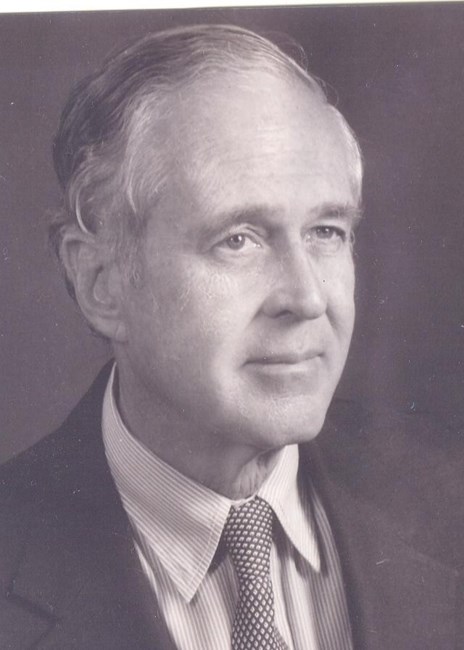
Albert Bruce Crutcher, Jr. passed away on February 20, 2012 at his home in New Orleans at age 91.
Born on December 21, 1920 in Mineral Wells, Texas, Crutcher was the only child of Dr. Albert Bruce Crutcher, Sr. and Mary Lee Hudson Crutcher of Dallas, Texas. His father a prominent dentist (the legendary wildcatter, H.L. Hunt was both a client and family friend), Crutcher grew up in the Dallas-Fort Worth area developing an innate talent for drawing and painting. Surrounded by the colorful, larger-than-life characters who flocked to Texas to seek their fortune after the Great War and during the Great Depression, Crutcher’s sensitive, observant nature developed an early fascination for people, as well as a bold, independent, Texas-sized spirit for adventure. By age 10, something of an art prodigy, when not riding horses or out exploring with boyhood friends, he was attending adult live model classes; by his early teens, he was producing impressive, gallery quality portraits and working summers as a roustabout in the East Texas oil fields.
Crutcher attended Highland Park School in Dallas, where his prowess as the varsity football team’s star running back earned him the nickname, “Mountain Man Crutcher.” He enrolled at Yale University’s School of Fine Arts in 1940 and under the tutelage of the eminent Professor Deane Keller, excelled in spite of frustrations with certain faculty.
In 1943 Crutcher enlisted in Naval Air Training. Upon earning his wings, he was assigned to the US Marine Corps as a pilot in the South Pacific. Among other fiercely contested islands, he saw action in Rabaul and Emirau. He flew 96 combat missions in the Dauntless SBD-5, a dive bomber nicknamed affectionately, “Slow But Deadly.” The nickname was earned because of its excruciatingly slow speed (making you an easy target) and for its deadly accuracy (the Dauntless SBD-5 sank more enemy shipping than any other aircraft in the Pacific theater). As a sitting duck, you had to keep it together on approach, Crutcher would say. There were times when an experienced pilot would taxi out for a mission and then sit there on the runway, unable to move, frozen. They just couldn’t take off. It happened. There was pain mixed with sympathy in Crutcher’s voice when he spoke of such things, as if the worst fear of pilots was to lose their nerve.
In a technically unofficial and controversial capacity, the famed aviator Charles Lindbergh accompanied Crutcher’s squadron during a week-long assault on Rabaul, proving Lindbergh’s mettle as a combat pilot. Lieutenant Crutcher was awarded six Distinguished Flying Crosses and 21 Air Medals for bravery. After nine months of combat duty, Crutcher flew back to California where he spent the remainder of the war training recruits in the F4U Corsair. After the war Crutcher returned to Yale, graduating in 1946 with a Bachelor of Fine Arts.
In 1948 his father died, and for financial reasons he felt compelled to set aside a promising career as a portrait painter and get a decent paying job. He sought advice (and a letter of recommendation) from his late father’s client, the wealthy wildcatter H.L. Hunt. The secret to success, Hunt told him, was learning how to trade. Crutcher was hired by Humble Oil & Refining, where he worked as a petroleum land man, buying and selling oil and gas leases. He was the only land man at Humble that did not have a law degree. In 1950, Humble transferred Crutcher to New Orleans where he later decided to set up his own shop as an “independent” buying and selling mineral leases. His future prospects at Humble were apparently quite limited by his lack of a business education.
No sooner had he leased an office on the ground floor of the Saratoga Building than a good friend from Humble, J.D. Tufts, began hanging around, curious to know what Crutcher was up to and eager to swap news about leasing activity in the area. It wasn’t long before JD was spending most of his time at Crutcher’s office, eventually prompting Crutcher to growl, “Well dammit JD! If you’re gonna spend all your time in this office, you might as well come to work here!” And so, a dynamic partnership was born, a joint venture that lasted 33 prosperous years. Known for their casual, feet up on the desk style, “JD” and “Crutch”, primarily under the aegis of Crutcher-Tufts Corporation, built a successful oil and gas exploration and real estate business.
On the home front, within a year of transferring to New Orleans Albert met and fell in love with Mary Lee Tullis Eaves. After months of on-again off-again dating, Crutcher proposed marriage using a technique he must have found effective when negotiating a mineral lease—the ultimatum. “Mary Lee, you’re gonna have to make a choice,” he told her, “either you marry me, or we’re through!” Shocked by the audacity of this tall, handsome Texan, Mary Lee accepted. They were happily married 54 years.
In the1960s, Crutcher took up competitive sailing, racing one of the last of the Olympic class of wooden hull boats—the dragon. He quickly developed into a fierce racer at the Southern Yacht Club, representing the club internationally. It wasn’t long, however, before a slightly younger crew comprised of Buddy Friedrichs, Barton Jahncke, and Click Schreck upstaged him and other top racers at the club, winning most races they entered. Recognizing the potential the upstart crew had for bringing home an Olympic medal for the club, Crutcher led a group of members to form the Olympic Sailing Association of the Southern Yacht Club, a syndicate that supported Friedrichs and his crew all the way to the 1968 Mexico Olympics, where they won a gold medal.
During the 1970’s, Crutcher’s focus shifted from sailing to golf, a sport that satisfied his competitive nature and his love of travel. Mary Lee and Crutcher’s passion for the sport grew as years passed. They played well into their 80s, traveling widely and enjoying the company of many great friends along the way. Crutcher and Marilee divided their time between homes in New Orleans and Pebble Beach, CA. As a member of the Cypress Point Golf Club in Pebble Beach, Crutcher was renowned for hosting a popular New Orleans-themed seafood luncheon during one of the club’s annual tournaments.
He was a member of the Cypress Point Club, the New Orleans Country Club, the Bayou Club, the U.S. Seniors’ Golf Association, the Petroleum Club of New Orleans, the New Orleans Lawn Tennis Club, the Southern Yacht Club, the Avoca Duck Club and various carnival organizations.
Pre-deceased by his devoted wife of 54 years, Mary Lee Tullis Crutcher, and step-daughter, Penelope Eaves Becker. Crutcher is survived by three children: Allison Crutcher McAshan (Kenny), Albert Bruce Crutcher III (Robin), and John Tullis Crutcher (Encarna) of Seattle, WA; two step daughters Marilee Eaves James (Ed) of Seattle, WA and Priscilla Eaves Reiss (Jimmy); seven grandchildren: Shannon Collins, Charlotte Collins Meade, Samantha McAshan, Will McAshan, Hudson McAshan, Garner McAshan, and Ian Crutcher; nine step-grandchildren: Anne Phyfe Palmer, Rebecca Snedeker, Jennifer Arnone, James Reiss III, Lady Reiss Fuller, Crutcher Reiss, Peter Becker, Christian Becker and Rudy Vrana; 1 great grandchild: John Arthur Meade II; 16 step great grandchildren, and his black lab retriever, “Maggie.”
A very special thanks to Mr. Marc Lenoir for his many years of loyal service and loving care of both Mr. and Mrs. Crutcher. Also the family wants to thank Alvin Banks, Marina Aguilera, Pablo Navarrete and St. Joseph Hospice for their special care of Mr. Crutcher during his final years. In lieu of services, a gathering of friends and family will be held at his home in New Orleans on Saturday, March 3rd at 11am. Donations in lieu of flowers to: Ochsner Health System, 1514 Jefferson Hwy, BH 240, New Orleans, LA 70121 or to Fore!Kids Foundation, 11005 LaPalco Blvd., Avondale, LA 70094.
Tharp-Sontheimer Funeral Home in charge of arrangements.
Montrez votre soutien
Envoyez Vos
Condoléances
Partager
L'avis De Décès
Obtenir les mises à jour
Prestations de Service
Partager l'avis de décèsPARTAGER
- RECEVOIR DES RAPPELS
v.1.18.0