OBITUARY
Richard Allan Livingston
June 23, 1946 – December 6, 2025
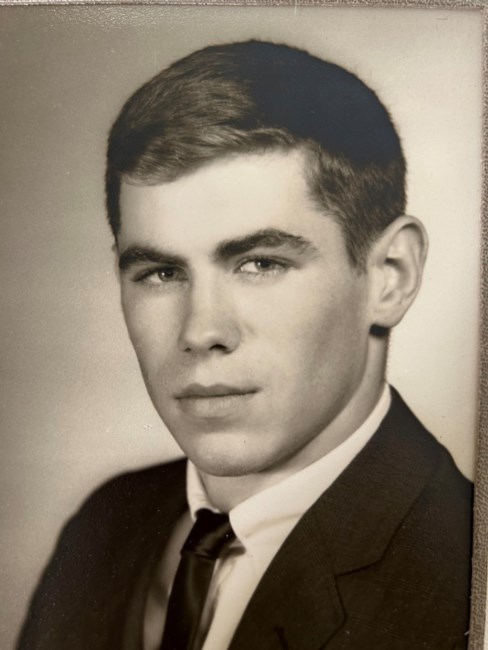
After graduating from NVRHS, I went to Dartmouth College. The engineering major there was a five year program, so I didn't receive my final degree until 1969. Along the way, I also got a BA degree
in medieval history. In the summers of 1966 and 1967 I was as an intern with NASA. The first summer was at Huntsville, Alabama and the second at Kennedy Space Center. This was at the beginning of the Apollo program, which led to the Moon landing in 1969. The capsule I worked on was the initial unmanned test vehicle. I wasn't around for its launch, but later on I re-discovered it in the Smithsonian! This was the beginning of a career-long relationship with NASA. In the summer of 1968, NASA's budget for interns was cut, so I wound up working as a waiter on the ocean liner U.S.S. Independence sailing around the Mediterranean.
Following Dartmouth, I went to Stanford University to get a Master's degree in nuclear engineering. I graduated in 1970 in the midst of the chaos of the all-campus strike against the Cambodian invasion. I had planned to continue on for a PhD, but that summer I was awarded an internship in Washington DC working for the US Atomic Energy Commission. Once there I developed a bad case of Potomac Fever, and never went back to Stanford.
After two years at the Atomic Energy Commission, I went on to the U.S. Environmental Protection Agency to work on energy and environmental policy. In 1975, for various complicated reasons, I was detailed for a year to the Gerald Ford White House to work on nuclear energy issues. This also included the preparation of the memorable 1976 Presidential Message on Energy. By coincidence, my sister Nancy was also working at the time in the Executive Office of the President as a budget examiner at the
Office of Management and Budget.
Back at EPA, I transferred to the Office of Research and Development in 1978, and became involved in a major interagency research program on acid rain. Part of this research concerned the effect of acid rain on architecture and sculpture. This led to an interest in what is called cultural heritage
science. Eventually, I decided to make a mid-career change to pursue this field more actively. I received a PhD in Geochemistry from the University of Maryland in 1990. My dissertation research involved measurement of damage to a historic building in Colonial Williamsburg using a nondestructive method based on a NASA technique for measuring the geology of the Moon.
After the University of Maryland, I was awarded a post-doctoral fellowship at the National Institute of Standards and Technology in Gaithersburg, Maryland. My major project there was the application of neutron scattering to measure the curing of Portland cement.
With the completion of the fellowship 1992, I took a position at the Federal Highway Administration as Program Manager for Advanced Research. This was at the Turner Fairbank Highway
Research Center, a research laboratory located in suburban Northern Virginia. This was a very
challenging job covering everything from nanotechnology to chaos theory. One specific local project
involved the nondestructive measurement of corrosion in the cables of the George Washington Bridge.
I retired in 2007 after 35 years of government service. Since then I have been an adjunct professor in
the Materials Science & Engineering Dept. of the University of Maryland. This does not involve much teaching, but rather mostly research in several diverse topics in materials science ranging from
infrastructure construction materials to nuclear reactor materials to cultural heritage. Recently I have also become a guest lecturer in the Civil Engineering Dept. at Columbia University.
I also do some consulting work. One project involved the nondestructive measurement of the structural condition of the cryogenic rocket fuel tanks at Kennedy Space Center. This was the same system that I worked on as an intern in the summer of 1966!
Concerning cultural heritage, monuments I have worked on include the Parthenon, the Taj Mahal, the Statue of Liberty, the Washington Cathedral and the lost Leonardo da Vinci mural. I am currently
collaborating with the Smithsonian Institution on the preservation of the Smithsonian Castle sandstone,
the old columns of the US Capitol and Thomas Jefferson's tombstone.
Show your support
Add a Memory
Share Obituary
Get Reminders
Services
SHARE OBITUARYSHARE
- GET REMINDERS
v.1.18.0