
AVIS DE DÉCÈS
Donald Edmonds Herbert Jr.
11 décembre 1928 – 4 mars 2016
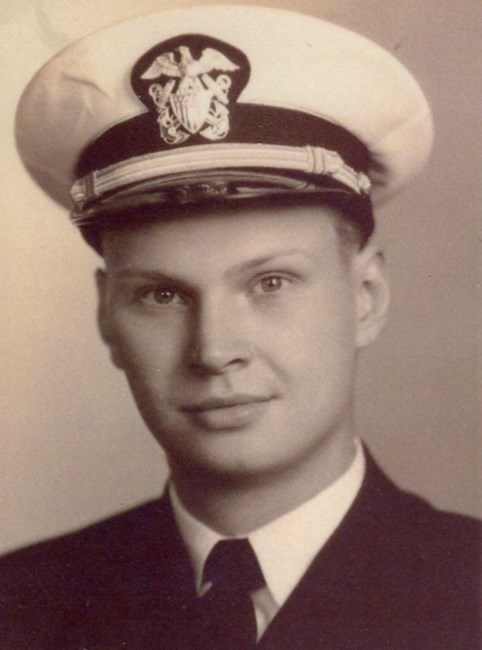
Donald Edmonds Herbert, Jr. was born on December 11, 1928 in Muskogee, OK and died on March 4, 2016 in Mobile, AL after a long illness. He was the son of Mr. and Mrs. Donald E. Herbert of Muskogee and Tulsa, OK. He was preceded in death by his parents, a younger brother Gary and an older sister Virginia, his first wife Lucia Lee Ferguson of Tulsa, OK to whom he was married for seven years and his second wife Anne Phelps Dodge of Colorado Springs, CO to whom he was married for forty six years. He is survived by his daughters Hillary and Emily and her husband Victor Maskey of Mobile, a son John Geary and his wife Stacy of Atlanta, GA and two grandsons Jack and Riley also of Atlanta.
He graduated from high school in Tulsa, OK in 1946 and entered the Carnegie-Mellon University in Pittsburgh, PA as a Westinghouse (now Intel) Science Talent Search scholar and Chemistry major. He subsequently transferred to Northwestern University in Evanston, IL in 1949 and received a BS in Physics in 1950.
Following the outbreak of the Korean War in 1950, he enlisted in the US Navy. Upon completion of Navy boot camp he was sent to the U. S. Naval Officer Candidate School in Newport, RI where he was subsequently commissioned as an ensign. He served in the US Navy as a gunnery officer (lieutenant (jg)) on a heavy cruiser in a fast carrier task force of the 6th fleet in the Mediterranean Sea and in the Indian Ocean. He subsequently served as a staff officer in the War Plans division of CinCLant / CinCWestLant Staff, a joint US-NATO command, where he held both US and NATO Top Secret clearances.
Upon receiving an honorable discharge as a lieutenant (jg) in 1954 he entered the graduate school of the University of Oklahoma, Norman, OK where he was awarded an MS in Physics in 1956. Because of his interest and experience in experimental physics he then entered the PhD program in Physics on a fellowship at Johns Hopkins University in Baltimore, MD.
He interrupted his post-graduate training and left the Johns Hopkins PhD program and his positions as Research Assistant at the Johns Hopkins Radiation Laboratory and Lecturer in the post-graduate Electrical Engineering program at Drexel University in 1961 when his first wife Lucia died suddenly. He was immediately asked to join the Physics Department of Colorado College (CC) in Colorado Springs, CO where he served as Assistant Professor of Physics for the period 1961-1964. While teaching at CC he developed an interest in biophysics and also became friends with Dr. Juan del Regato, the physician-director of the Penrose Cancer Hospital and an internationally recognized oncologist, who had recruited him to teach radiological physics in the Penrose radiation oncology residency program. Dr. del Regato subsequently persuaded him to enter the field of medical physics instead of biophysics.
In 1964, He entered the PhD program in Medical Physics at the University of London in London, United Kingdom as a US National Cancer Institute Special Research Fellow under his UK sponsor Professor Sir Joseph Rotblat, a former atomic bomb physicist at the US Los Alamos National Laboratory and subsequent Fellow of the Royal Society and winner of the Nobel Peace Prize in 1995. Dr. Herbert’s research in electron spin resonance was done at the Medical College of the internationally renowned Royal Hospital of St Bartholomew. Upon being awarded his PhD from the University of London in 1967, Dr. Herbert joined the Penrose Cancer Hospital in Colorado, Springs, CO as the physicist and statistician under the medical director Dr. Juan del Regato from 1967-1975.
For the fall semester of 1974, Dr. Herbert was appointed an American Association of Physicists in Medicine (AAPM) Visiting Scientist at the Radiological Physics Center of M D Anderson Cancer Institute in Houston, TX. In 1975, Dr. Herbert was invited to join the Department of Radiology of the College of Medicine of the University of South Alabama (USA) in Mobile, AL as part of their new program to upgrade the Radiation Oncology services available to cancer patients in (at that time) an underserved region of the states of Mississippi, Alabama and Florida.
As a Professor of Radiology and Head of the Division of Physics and Statistics of the Department of Radiology at USA that provided physics and statistics support to the radiation oncology programs at several other area hospitals as well as to the diagnostic radiology and radiation oncology programs at USA, Dr. Herbert also served as the first Director of the USA College of Medicine Bio-Statistics and Epidemiology Core Unit and taught courses in physics and statistics to radiology residents and to medical students.
In addition to his responsibilities to the College of Medicine Dr Herbert served for several years as an expert consultant in statistics under contract to the US Nuclear Regulatory Commission in Washington, DC to evaluate the BEIR III report on the biological effects of ionizing radiation published by the US National Academy of Sciences/National Research Council in 1980. He subsequently served as a member of the US National Academy of Sciences/National Research Council BEIR V Committee and is a co-author of their 1990 BEIR V Report on the biological effects of ionizing radiation, in particular the effects of the radiations from the Hiroshima and Nagasaki bombs. The series of BEIR Reports informs and strongly influences the health policies and guidelines of the US and other nations as well as the UN.
For his work in Medical Physics Dr. Herbert was elected a Fellow of the American Association of Physicists in Medicine in 1995. Dr. Herbert was subsequently named a joint US/ UK-supported AAPM/IPEM Visiting Professor in England and Scotland during the spring semester of 1998 where he gave a series of invited lectures to the medical faculties and medical and graduate students of the UK universities and hospitals of London, Manchester, Bristol, Cambridge and Edinburgh.
In 1984, Dr. Herbert co-founded with two other physicists an ongoing series of international conferences on radiation oncology that continues to meet every four years at the University of Wisconsin in Madison, WI under the aegis of AAPM and the University of Wisconsin. Dr. Herbert contributed one or more lengthy papers to each of the first eight conferences and co-edited the Proceedings of all but two of them. His last paper on nonlinear dynamical systems and systems biology was presented following his retirement in 2009.
Dr. Herbert organized and chaired many symposia for the AAPM, and contributed numerous papers, as well as co-edited the Proceedings. Dr. Herbert also served as chairman of several AAPM standing committees and task groups. Dr. Herbert served for two three-year terms as a member of the Statistics Advisory Committee of the American Institute of Physics. He also served as Associate Editor and member of the editorial board of two scientific journals. He has published over 80 scientific papers, reports, etc on mathematical and statistical modeling of clinical data, nonlinear dynamical systems (i.e., complexity theory, chaos theory, catastrophe theory), etc. He also either edited or co-edited the proceedings of several other conferences.
In addition to writing scientific papers and monographs and teaching medical students and residents, Dr. Herbert was frequently invited to teach short courses on topics in mathematics and statistics and to organize and chair symposia on various medical topics at the annual national meetings of the American Association of Physicists in Medicine (AAPM), American Society of Therapeutic Radiology and Oncology (ASTRO) and the Radiological Society of North America (RSNA).
Dr. Herbert received the AAPM lifetime Achievement award in 2004 “For his outstanding career achievements in Medical Physics and his contributions to the profession.” Dr. Herbert retired from the College of Medicine in 2009 after 34 years of service and was appointed an Emeritus Professor in the Department of Radiology. Dr. Herbert maintained an office at the College of Medicine for several years after his retirement where he continued to provide statistical support to colleagues and to continue to work on papers and books in nonlinear dynamical systems theory, also termed complex systems theory, and its applications to clinical medicine. He published his last scientific paper in 2012 at age 84. In 2015, shortly before the death of his beloved wife Anne, he established and funded, together with his son John, “The Anne and Donald Herbert Distinguished Lectureship in Modern Statistical Modeling” as a lasting memorial to her. The Lectureship will make a significant contribution to the Annual Meetings of AAPM for many years to come.
In his spare time Dr. Herbert enjoyed reading military history and economics and playing tennis. He was a member of the Delta Tau Delta fraternity at Carnegie-Mellon University and at Northwestern University, a member of the Broadmoor Golf Club, Cheyenne Mountain Country Club, and The El Paso Club in Colorado Springs, CO, and a member of the Mirror Lake Racquet Club and the International Trade Club in Mobile, AL.
.Private services will be held for the immediate family at St Paul’s Episcopal Church in Mobile on April 4, 2016. A reception will follow at the family residence at 5:00 p.m. In lieu of flowers, contributions should be made to the USA College of Medicine scholarship fund or to the Santa Fe Institute for the Study of Complex Systems at 1399 Hyde Park Road, Santa Fe, NM 87501.
Arrangements under the direction of Radney Funeral Home-Mobile, Mobile, AL.
Montrez votre soutien
Envoyez Vos
Condoléances
Partager
L'avis De Décès
Obtenir les mises à jour
Prestations de Service
Partager l'avis de décèsPARTAGER
- RECEVOIR DES RAPPELS
v.1.18.0