AVIS DE DÉCÈS
Albert George Mercer PhD
3 décembre 1931 – 5 août 2021
This is an account written by Albert Mercer in 2017 during his 85th year intended to record his story as well as he could recall it so that his descendants might learn a little of their background and the part that I played in it. I never kept a dairy or even records of the events recorded here and there are very few people alive to refer to, except Vickie, my loving wife of 63 years, so there are certain to be gaps that should not be here but, hopefully, there is someone that will find it worth reading.
BEFORE I WAS BORN
My forefathers were the Mercers, Bowering’s and Butlers of Newfoundland. A Samuel Butler was part of John Guy's colony of Cupid in 1610. A James Bowering settled in Coleys Point in1812 and Charles Mercer founded Mercers Cove soon after he arrived in 1705. Another Newfoundland family with close ties were the Babcocks. They were all attracted by the enormous cod fishery but this never provided more than a subsistence for most, because of the controlling merchants of St John's.
The Bowering’s were the most successful with James having 13 children who all survived and produced 76 children in all. The Bowering family tended to be boat builders and owned several fishing schooners. They were also very religious and founded a church, called the Bowering Bethel.
In the early 1900s many Newfoundlanders came to Vancouver searching for a better life. These included Victor and Eli Mercer and their good friend Walter Babcock. They found a set of house plans and helped each other build their own homes. This was during the terrible depression of the 1920s and 1930s. Only my father Vic stayed with fishing and became the skipper of a fish packer for BC Packers. They produced meal from processed herring which Vic delivered to the reduction plant by the 90-foot packer, Korprino.
Another Newfoundland family that came to Vancouver was Isaac and Rosella Bowering. He was a carpenter and he built his own house starting with a shed which he added to as their family grew to six children including my mother, Violet. The youngest, Gwen, is the only one of her generations still living. Isaac loved boating and built several beautiful clinker-built sailboats and rowboats, which he kept in a boat house on Burrard Inlet. Isaac, however, suffered from depression and was dependent on Rosella who was a very strong person. Religion remained a strong part of Bowering life and Isaac led family prayers every evening.
Rosella was a Butler by birth and her brother Samuel married Isaac’s sister, Ellen. Brothers and sisters married each other and lived half a block apart. All their children were genetically related like brothers and sisters and acted like that.
Vic would visit Isaac and Rosella when he was in town and would often take out their daughter, Violet. They married in1931 and moved into the new house that Vic built with the help of his brother Eli and Walter Babcock. About this same time Eli married Lizzy Babcock and Walter married Gertie Blackwell (not from Newfoundland). I was born at St Paul’s Hospital on December 3 1931 and my sister Eveline was born 14 months later on February 12 1933.
EARLY YEARS
Evie and I lived very easygoing, pre-school years at our home on the east side of Vancouver. But as was very common in those days, we had lots of sick days. We had all the vaccinations available but there were many days spent in bed with measles of several kinds, whooping cough, mumps, chicken pox, and scarlet fever. Polio was a terrible disease that too many children were contracting but fortunately not us. Evie, however, did contract pneumonia when she was 4 years old and was taken to the hospital. Mom and dad were told not to go home because she was facing a near fatal crisis and might not survive the night. Happily, she did.
Vic, who worked for B.C. Packers, was home only about one month a year because his work required him to spend the rest of the year sailing their 90-foot fish packer, the Koprino, bringing herring to the processing plants on shore. When he was home, he was busy fixing up the house and yard. Raising Evie and I was mom's job. The favorite thing for her to do was to pack up Evie and I and walk the 5 km round trip to grandma's house and visit the Bowering and Butler families. In the summer we would often take a picnic on the street car to the local beaches. We also took lots of trips on the Vancouver passenger ferries to the beaches at West Vancouver. Evie and I were good swimmers by the time we were four.
There were very few houses on our newly developed street and very few children, but lots of bush to play in. These bushes held many beautiful pheasants that we would see almost every day. Our nearest neighbor was partly Indian with three sons raised by a devoted, but strict, house mother. They, and an Italian girl our age, Mary Sardoni, formed our gang,
My father was not religious, and he didn't like mother going to church, but she did send Evie and I to Sunday School at the Renfrew Baptist Church run by Mr. and Mrs. Withers. To encourage young boys, he organized a church soccer team. Although it was late in the soccer season, he arranged to play St Georges, the most elite private church school in Vancouver. We won and took the church championship. Our victory dinner was held in Mr. Withers garage.
At about this time, 1934, Grandma Prudence Mercer died in Mercers Cove and Grandpa Nathan moved out to Vancouver to live alternatively with Vic or Eli. He never learns to read but knew the alphabet
(backwards) and taught it to me. He loved to sit on our front porch in the evening and sing hymns at full voice.
Our street was on the border of the primary school district and Laura Secord School (named after an Eastern Canada heroine in the British-American War) was a mile away. Because I was born in December my mother enrolled me when I was five. This turned out to be a disaster sports-wise for all my public-school years. I just couldn't compete and whenever a team was organized, I was always last picked.
On sports day I never won an event or a ribbon. That is until my 8th year when I began to grow and I won the hop, skip and jump. The teachers had run out of ribbons and I was given a piece of chocolate. I'm sure if I explained the situation, they could have found a 1st ribbon for me, but I didn't. But I did do well academically and found several friends at school. One was Stan Mersen, who years later was best man at my wedding.
The 2nd World War broke out in 1939 when I was 8 years old. This didn't affect us too much but the navy decided to set up a fisherman's reserve and Dad took the Korprino to the naval yard at Victoria. They him up alongside a naval destroyer and dad said no way. Some of his friends did join and spent most of the war rounding up Japanese fish boats. I spent a lot of time making model war planes. One I was particularly proud of was a model of the Mosquito Bomber. The plane was built in Canada almost entirely of plywood and had a great reputation during the war. The war benefitted my mother because married women had been prevented from taking paid jobs, but now were needed and she became a substitute school teacher which she enjoyed doing very much.
A lot of houses were beginning to be built on my street and another thing I liked to do was to spend time with the builders and help them if they would let me. The result was I soon learned a lot about house building which I have used on most of the houses we lived in in later years.
Unhappily, about this time a sad thing happened within our family group Walter Babcock suffered a heart attack and died after a week. Aunt Gertie had to sell their home which Walter, Eli and Vic had helped build and bought a smaller one near our house. Her son, Don Babcock, was my age and we became very close friends. We both got Vancouver Sun afternoon paper routes. After several routes Don became manager of the distribution shack where papers were picked for the paper routes. I followed and became a shack manager as well.
By this time Don and I finished elementary school. I went on to Britannia High School and kept on managing the paper shack and Don went on to advance with the Sun paper distribution department and continued with them for the rest of his working life.
BRITANNIA HIGH SCHOOL AND UNIVERSITY
High School was a really big change to my lifestyle. Much more choice in subjects and friends. For instance, I chose Latin. Why? My next-door neighbor was a pharmacist and that seemed like a good profession that needed Latin. What a mistake. I spent a year on vocabulary and declensions and right into Virgil and Caesar. I was lost. All of us lost souls were sent to Miss Mayse who drilled and drilled on the basics and required us to take a provincial exam before she would pass us.
I also chose wood shop under Mr. Ridley. He recognized a talent that resulted in my making a beautiful small walnut Duncan Phyfe drop-leaf table I still have and love.
Britannia had only about 600 students so we all knew each other. The year book for my senior year shows I was president of the Projectionist Club. Big deal. Evie, on the other hand is shown as being on the baseball and basketball teams. Evie was mostly disgusted with me.
I was still not into sports but found a group of boys that enjoyed skiing. Allen Forsyth, Peter Costanzo, Jim Law, and Al Ingves. We would trudge up the local Grouse Mountain on weekends and for several years rented a cabin to stay in while we built a log cabin of our own. I did much of the work during the summer because the others worked out of town for spending money. I still managed the Sun paper shack for spending money.
At the same time, we were building the cabin, Grouse Mountain Resorts were building a chairlift up to the village near our cabin to encourage more people to ski on Grouse. I saw them fitting on the first
chair and asked them if I could ride down on it. They said why not and so I was the first ride. Two weeks later when all the chairs were fitted, they held a ceremony and a lot of dignitaries rode up. But as they were riding down, the cable came off the upper drive wheel and many of the riders were thrown off and badly hurt. It was a real disaster. But the chair lift survived and worked for many years more.
It was a great looking cabin and we used it until we graduated from university. Skiing was a sport I enjoyed because it didn't need to be done competitively.
The Vancouver Sun set up a competition for a $400 bursary for high school graduates based on the results for the Provincial Exams and I studied very hard to compete. I wrote the exams required for bursary and also the Latin exam required by Miss Mayse. When I got the results, the Latin exam made the difference and I won the bursary.
About this time, my father decided to sell his old house we grew up because it needed expensive repairs and be bought a newer, but smaller house, my mother wanted to make some changes like newer linoleum for the kitchen but my father would not go along and she never liked it. He also was against a refrigerator and television which was becoming popular but lost these battles. He was now working at the BC Packers shipyard which was nearby. For me it was much closer to the University of B C.
Of my skiing buddies, all went on to university, except Al Ingves who worked for B.C. Telephone all his life. I went into Engineering as did Pete Costanzo. Al Forsyth took Agriculture and followed his girlfriend to Veterinary School, married her, became a Vet and got rather wealthy treating pregnant poodles. I don't remember Jim Law's major but he married, had several children and then in his thirties, tragically, collapsed on a hike and died.
Engineering seemed to be a profession that suited me and I enrolled in Civil Engineering at UBC after leaving high school. I still have a copy of the engineer year book for 1953. It shows 19 of us in the class. We took all our courses together and became close friends. The instructors were all practicing engineers. This was later changed when the University decided all instructors needed PhDs.
I needed a summer job to earn spending money. BC Packers was setting up a whaling station at the north end of Vancouver Island and my father got me hired on. Whales killed close by were cut up and the pieces put in large cookers to produce whale oil, dried whale meat meal and other products. The station was relatively when the summer but got more and more rancid as the season advanced. So did us workers, but we got used to the smells and earned a good wage and had fun on our off hours. Before going home, we would spend all day trying to clean up and put on clean clothes. Oh, you’re from the whaling station the air stewardesses would say.
I worked at the whaling station each summer during my Civil Engineering studies. There were other university working there as well. One, my roommate named Mike Smith, recognized me at an exercise class at the West Van Senior Center in 2015 and said hi Al.
In the fall of 1951, an event occurred that changed my life to this day. A mechanical engineering who also had a ski cabin on Grouse phoned me to see if I was using our cabin that week because he would like to use it bring his sister and another girl up for the weekend. I said sure because I wanted to stay home and study. Of course, I forgot and showed up to their surprise. The engineering student was Bill Lund and his sister was Vickie Lund. The other girl was Audrey Widen who was in nursing training at St. Paul's Hospital with Vickie and who Bill was dating. My cabin was in a cleared area called the village, which also had an eatery and dance hall that operated Friday nights. We went up to the dance hall and it had large windows that overlooked the city lights be below. It is spectacular and Vickie and I enjoyed the view. Vickie had a very nice figure and gorgeous red hair. For once I had something to on talk about, the view, and we spent most of the evening chatting. I knew I wanted to see her again.
The next morning it was raining hard so we decided to go down where Bill had parked his Ford coupe that had a rumble seat. Vickie wanted to ride inside where it was dry but Bill said she had to sit in the rumble seat with me. It wasn't a great way to end a week end.
An opportunity soon arose for me to invite Vickie to an engineering friend's party. I picked her up at the nursing home but forgot his address. We went to a movie instead. We dated a lot year. An annual event for all engineering students and their dates was the Red Eye Ball. Each group made a model for the Ball representative of their interest and these were judged and prizes given. I worked on our model and decided on one that would grab the judge’s attention. It was a working model of a Buchus Erie power shovel that could be operated by any person sitting on an operators chair with levers that made it all perform. At the ball the 5 judges walked around each display but stopped at ours until each had a turn operating it. We won hands down and our group paraded me on their shoulders. Vickie was impressed.
Our dating increased and we both soon realized it was serious. I invited her to meet Mom and Dad and it came out that Vickie was catholic. At the same time Evie was dating Harold Graham who was also catholic. Mom thought it would be best if Vickie and Harold take up and leave her kids alone but that was not to happen.
I was to graduate from engineering in May 1954 and Vickie was to graduate from nursing in January 1954 and I asked Vickie to marry me that year and she accepted. I wanted to go into hydraulic engineering and I accepted a fellowship at St Anthony Falls Hydraulic Lab at the Univ. of Minnesota starting in September. We set our wedding to happen early in September before we left for Minneapolis. But Vickie and I soon realized we were too in love to wait for September and went to a Justice of the Peace in May to get married.
But I still had all summer to earn money and I was now trained in using a surveying transit. The owner of the Chilco Ranch, about 30 miles west of Williams Lake, wanted a surveyor to plot new irrigation canals for him and the pay was good. I said good bye to Vickie and went to survey on the Chilco Ranch. The owner was a rich American who spent the winters in Hawaii. I had a helper from a nearby Indian Reservation, named Francis, and he “sold” me a little pinto pony and we had great summer. I managed a few weekends in Vancouver with Vickie.
Father Campbell at St Jude’s agreed to marry us in the Church is September. Mom said Grandma and Grandpa Bowering would never go to a catholic church but they did. At the reception afterwards I gave a short speech and the Master of Ceremonies, who I had never met before, said it was the most meaningful and sincere speech he ever heard.
Vickie's dad, John Lund, lent us his pretty little car for our honeymoon in the interior of BC and then we packed a trunk and took the train to Minneapolis.
MINNEAPOLIS
We got off the train in Minneapolis about midnight and took a taxi to a downtown hotel and went to our room and had a big drink of water and thought we had poisoned ourselves it tasted so bad. In the morning we took a bus to the university and went to the foreign student office. They said Canadians were not foreigners and they could not help us. But they had a list of rooms and we got one for the next few days. St Anthony Falls was about 10 miles from the university so we clearly needed a car. My Dad had given us $400 and we found an Austin dealer who would sell us one for that amount. We never saw another Austin in Minneapolis.
We drove to St Anthony Falls Lab and met Dr. Lorenze Straub, the Director. He gave me a schedule and assigned me a drafting table. I thought he was from Germany but it turned out he was a bachelor from Iowa. All my Masters courses were taught at the lab. We found a room in a small three-story apartment building near the lab. Vickie found work doing private duty nursing. Vickie was pregnant with a due date in January and one of her private patients was a very wealthy spinster women, Miss Janney, who lived in her own mansion and had her own chauffeur. Vickie worked from 3 to ll and sat with her, listening to opera and helping her with supper and getting her ready for bed, while getting more and more pregnant.
Our baby girl arrived on a cold January 24. I was in the father's waiting room and listened to other fathers complaining about their long waits. About 30 minutes later a nurse came in and said “Mr. Mercer you have a pretty baby girl” and I said “not me, I'm just waiting.” But it turns out Vickie has very easy deliveries, we named the baby Lauren.
Dr Straub was a consultant to Harza Engineering of Chicago who designed dams. St Anthony Falls built models of these dams to test that the water flowed over them as required. He found out that I had a talent for designing these models and getting them built and tested. So, this is what I did for most of the time I was at Lab. After I completed my Master’s Degree, I was employed as an instructor and taught hydraulic engineering to undergrad students for part of my time.
I was teaching on campus and they had installed a large vacuum tube Univac computer there and I got very interested in computing. The computer ran on data fed into it on punched paper tape produced by a typewriter. The same typewriter took results on similar paper tape produced by the computer and then typed it out on standard typewriter paper. I had an idea for plotting fluid flows and tried to apply it on the computer but it was not possible on this machine. I was given a computer course to teach engineering students. I based the course on plotting a picture of a house using the typewriter. I think this was the first attempt ever at computer graphics and I had no idea how far this would go in years to come.
Vickie continued to do private duty nursing in the evening while I looked after Laurie and she was pregnant again. We were now renting a duplex close to the university owned by the Krauser family. One day, Rita Bachtell living across the street saw Vickie walking Laurie and rushed out with her daughter, Sally, to meet her. Rita and Rodger became our close friends for the rest of our lives.
Meanwhile Evie met and married Harold Graham who was in the Airforce and they went to live in Winnipeg where he was stationed. Harold was catholic and Evie converted to Mom and Dad’s dismay.
About this time, I got interested in 8mm home movies and bought an old Bell and Howell camera and started filming. I assembled and edited about 15 minutes of movies each year for the next 8 years or so and these still exist although they were converted to CDs.
Vickie completed her pregnancy while we were at Krausers, had her usual 30-minute delivery at the Swedish Hospital and the result was another beautiful baby girl we named Theresa.
The movies show her being driven home.
Vickie's mom, Margaret Pringle, was living in Vancouver and came out to Minneapolis for two weeks to visit and stayed for the rest of our life in Minneapolis and helped taking care of Laurie and Terry.
Minnesota was known as the land of 1000 lakes and we liked to vacation at a lake-side cabin each summer. Margaret could even be coaxed into wading. We would take out a rowboat and fish for bass. One day a neighbouring, vacationing boy came over and complained that his dad and older brothers had gone fishing for pike but wouldn't take him. I said come with us but we had never fished for pike. Within an hour he had hooked a two-foot northern pike and landed it. We made his week. We all really enjoyed the swimming, boating and fishing.
Vickie was still nursing nights and looked after another rich widow who wanted someone to look after her on a holiday to Florida. Vickie's fees amounted to over $1000 and we used the money as a down payment on a large house in New Brighton, about 5 miles north of the lab, we were becoming quite comfortable.
Dr Straub encouraged me to go on for a PhD. There were several other PhD students working at St Anthony Falls and our courses were taught by professors working at the lab. After the course work was finished the matter of a thesis came next. I was interested in sand transported by flowing rivers. This had received much study by engineering professors but they mostly thought it was a process controlled by random forces. I thought that these forces were very controlled and could be determined as such. My thesis was aimed at determining these forces and the transport that resulted. I worked less at the lab and more in my basement. By the end of 1955 I had the thesis completed and Vickie struggled to type it without errors.
I was still making hydraulic models at the lab and about this time Harza was designing the largest dam ever to be privately built. It was the Wanapum dam on the upper Indus River in Pakistan. It had to be designed to pass a very large flood flow. I worked out the spillway design using models of different scales. I later was in Pakistan and saw Wanapum being built.
About this time, I met a person who would become very important to the rest of my professional life. He was Art Charbonneau who came down from Alberta to earn his Master’s Degree at St Anthony Falls. Art was there for several years and met and married his wife there.
Vickie was pregnant again while we were living in New Brighton but a baby girl was born about a month premature and barely two pounds. She was baptized Mary and put into an Isolate where she stayed for about six weeks but, fortunately she never required oxygen. Vickie and I went to the hospital every evening and had to look at her from out in the hallway where we stayed until Vickie's eyes began to tear up and then we would go home. When she weighed 5 lbs. we could take her home. She was the size of a new-born but looked as alert as a 5-month-old. Laurie, aged 7 and Terry, aged 3 were home to welcomed Marianne, as we named her,
About this time Vickie and I stopped at the Lab one night to get some materials for the morning. We could see Dr. Straub through the window lying back at his deck which was odd. We called the university police and they opened his locked office door and he had died of a heart attack. He had a sister but no other relatives.
About this time, I was being considered for a permanent position teaching at the university. But I didn't get along too well with some of the faculty. One of them commented that I was from the fever swamp of the radical left. I was not accepted and this ended Minneapolis for me.
PAKISTAN
The next two years led in a roundabout way to our family spending several years in Pakistan. I needed to find a university where I would fit in and the University of Washington had a hydraulics program with a lab that they were interested in developing further and they were willing to have me teach there for the spring semester. We packed up, put our house up for sale, and moved to Seattle. I was assigned to the Civil Engineering Department and given a course in hydraulics to teach.
There was a Pakistani graduate student, Khalid Mahmood, there with his family working on his Master’s Degree. Our families both had girls of the same age and we became good friends. His wife, Sofia, treated us to delicious Pakistani dinners.
I was thinking that I wanted to get into actual engineering and there was a firm. Tipton and Kalmbach, in Chicago which was constructing link-canals between the five rivers in Pakistan. Encouraged by Halid, I applied, mentioning my interest in sediment transport, and was accepted and was to travel there in July.
We had to pack up the things we would need in Pakistan and hired a shipping company who supplied two wooden crates and loaded them up and sent them off by ship. The rest was put in long time storage.
Khalid wanted to stay on and get his PhD. I knew professors at the University of Colorado through my interest in sedimentation and gave him such a good recommendation that he was accepted.
Vickie and I enjoyed staying in a rented house in Seattle, visiting their fabulous zoo, meeting Mom and Dad with the girls, and enjoying the beaches. At the end of the school year, Vickie and the girls went to Vancouver to stay with my folks while I finished up there. I stayed and marked my exams that night and there was a cot in the civil engineering office which I was going to use. When I got to the office, I was astonished to see flames on the other side of the glass door. I called the fire department and when everything was extinguished it turned out that a foreign student was expecting to be sent home and he set the office on fire. I had to explain what I was doing in the office at that time of night.
In Vancouver we had to pack up all the things we would need to take with us by plane. Fortunately, T&K could send us 1st Class. But they wouldn't take Margaret so we left her with Rose and Chuck. We put all our stuff together and it filled 15 boxes and bags and included Toby our Westie dog. Our first stop was Hawaii.
For dinner they served delicious Kobi steaks which our girls didn't touch. When we deplaned, another first-class passenger said to us “I love children, in boarding school”. We went swimming in the warm water and then toured in a rental car. I saw a road sign saying Pipeline Road which I mispronounced as Pi-Pe-Li-Ne. Our next leg was to Tokyo on Japan Airlines. The stewardesses all wore beautiful obis and spent most of the flight entertaining our girls. We stayed at the famous Imperial Hotel next to the Emperor's Palace. I bought Vickie a double strand of pearls. We wheeled Marnie around Tokyo in a cumbersome stroller while Japanese mothers carried their babies on their backs.
Hong Kong was our next stop and we stayed at the Mandarin Orient. I took Laurie and Terri for a ferry ride while Vickie stayed at the hotel with Marnie who wasn't feeling good. She ordered a hot dog and they rolled in a cart and set up a cloth covered table with a domed platter under which was the hot dog.
Next stop was New Delhi and we arrived after mid-night. A taxi took us to a hotel and we passed many people sleeping in the streets which astonished our girls. Next day we flew to Lahore, Pakistan and was met by my new boss, Colonel Troxler. T&K had a guesthouse and we were put up there while our home was made ready. Professional entertainers, with trained bears and goats would come by to the delight of our kids. Cooks and cleaners would come by looking for jobs. That is how we met Daisy, the joy of our life all the time we lived in Lahore. She wanted to take care of the girls and we hired her right away.
The T&K engineers had jobs related to the construction of the link-canals. I expected to be involved in the sediment transport problems but Troxler had these problems in hand and what he needed was someone to evaluate the change orders given to the contractors. This involved determining how much the contract changes altered the value of the work and that is what I and several Pakistani engineers did all day. It often involved flying out to the field offices so I saw a lot of the Indus plains.
T&K had a housing compound for about 25 families and we were assigned one of the houses. It was very comfortable, especially after our new Volkswagen arrived and several oxcarts arrived with our boxed household goods. Laurie and Terry enrolled at the American School and learned a lot of the Pakistan language Urdu. Marnie found friends around the compound to play with. The families got together many evenings and Vickie made a hit with Col. Troxler by often singing Lilly Marlane to him.
The need for link-canals was related to the five rivers tributary to the Indus River that irrigated the very fertile plains that covered most of the country. Two of these rivers arose in India and India was diverting all their water before they crossed into Pakistan. The link-canals were needed to divert some the flows of the other three rivers to replace this water.
Pakistan has a very old population with a great history going back to Alexander the Great. Lahore has several large and beautiful garden parks that go back to the early Shahs that ruled the country. It was part of India when it was ruled by the British Raj and when Britain decided to return the country to Indian rule the Muslim population wanted to carve out Pakistan as their homeland. This was done in 1947 with devastating consequences. Train loads of slaughtered muslins arrived at the Lahore railway station. The separation was still fresh in everyone’s mind when we arrived about 20 years later.
We soon found out our dollar would but buy twice as many rupees from certain money changers and of course we dealt with them. They also sold all kinds of beautiful hand crafts which we bought and treasure today.
The favorite play area for the girls was the Railway Club which had a swimming pool. We also enjoyed boating on the Ravi River which ran past Lahore. We sometimes liked to eat out but there weren’t many options. There were of course Chinese restaurants. There always are. The was also an English style restaurant we sometimes went to. But a choice we liked was called chicken tika prepared roadside by frying chicken breasts. It came heavily spiced unless you insisted the spices be washed off as much as possible.
We made several trips back to India. One was to the Taj Mahal at Agra south of New Delhi which was a magnificent park built by Shah Jehan in the 1600s as a cenotaph for his wife who died in child birth. The tomb was a huge polished stone structure and the crypt was all of marble. Marnie had a pack of M&Ms which she brought into the crypt and then spilt them all over the hot marble floor where they immediately melted.
For our summer holiday, Vickie and I planned two weeks in the Kashmir. At the same time Vickie was determined to have Daisy visit her family in New Delhi which she had never seen. Everyone said it wasn't possible but Vickie got her a passport and a visa. When we were ready to go, we drove across the border into India without trouble and put her on the train and then got our plane to Srinagar. We had rented a lovely houseboat on a lake and had a fantastic time swimming and even water skiing. Laurie could manage the water board but Terry needed to go with me. We were startled to see the new Canadian maple leaf flag for the first time on a houseboat across the lake. They were a group of Canadian peace-keeping soldiers.
Every day merchants came to the houseboat in little canoes selling things. We heard of an outfit in Srinager that sold furniture made of beautiful gun-stock walnut. We loved it and bought a coffee table set and a dining table set. We have it today and it is wonderful.
When it became time to fly home to the border, we went to pick up our car and the man in charge told us that police were looking for Daisy because her papers were not OK. It was likely she was in jail. We rushed to the train station and there she was with suitcases of things from her relatives. We got everything in the car and headed straight for the border.
But India had never been too happy with the idea of Pakistan and not too long after we got back, we heard that an Indian Army had crossed the border and was heading to Lahore. Everyone should arm themselves. Sure, enough about 10 pm we heard gunfire. But it wasn't Indians, it was the locals over reacting. But the Indians were across the border and their planes were bombing the airport. It was getting serious and the American community decided to pack up their families and go north to Islamabad. Troxler said our families should go with them but the men should stay on the job. Vickie and the girls went and a few days later took a flight down to Rome and then to London. The plane had a Pakistani air force escort to the border. Vickie and the girls enjoyed a few days in London. They went to see a new movie that was playing, Mary Poppins, and afterwards they could see the same skyline from their hotel. They went on to Vancouver and stayed with my folks.
The T&K engineers kept their engineers on but there wasn't much to do so they went together to see Mangla Dam being built. It was great to see the huge spillway under construction. There were concrete spillway blocks bigger than the construction cranes. I was anxious to be going home and Troxler agreed I could leave before Xmas. I phoned Vickie and told her to meet me in Hawaii. My folks were flabbergasted. I had a lei for her at the Honolulu airport as planned.
VANCOUVER
Vickie and I spent several days in Honolulu swimming and as passengers on a sailing catamaran before going on to Vancouver reuniting with our girls. We rented a house near South Granville and settled Laurie and Terry at St Anthony's school. I found work as head of hydraulic engineering at B.C. Hydro where they were constructing the Revelstoke Dam on the Peace River, B. C’s largest dam. Construction was at the flow diversion tunnel stage and design was at the closure of the tunnel stage. There were three 30 ft. tunnels and they would be closed one at a time. Each would be plugged with concrete having a 11 ft pipe which had a valve which could be closed. The valve type chosen was called a Howell Bunger Valve, which was much less expensive but had a history of failures.
There were 11 valves known to have failed and many reasons given including bad welding, bad upstream flow conditions and bad downstream flow conditions. I had heard of airplane features that would fail by vibrating if certain flow conditions were reached. I determined an equation which would be common to all Howell Bunger Valves and would determine failure. I applied the equation to allinn valves, some of which failed and others that did not. There were about 50 cases and all cases that failed had higher values for the equation and those that did not had lower values, giving a critical value for failure. The answer was to apply this equation to the valve design for new valves. I wrote a paper on how to use the equation for new valves and there hasn't been a failure since. The equation was applied to the Revelstoke valves. I haven't written many engineering papers but am proud of this one.
There was a house for sale near south Granville Street for $25,000 and we bought it and then sold it again less than a year later for $29,000. It would cost more than $2 million in 2017.
Coming back to Vancouver we checked up on Evie and Harold. They now have five children, Michael, Diane, Robb, Jo Ann, and Steven. Harold has to house them in Airforce accommodation with only one bathroom. Robb later comes down with childhood diabetes and has to inject himself daily with insulin.
FORT COLLINS
I was still looking for a university position. Colorado State University at Fort Collins, a college town, had a big hydraulics program and a lab to match. I contacted them and they were impressed and offered me a position as Assoc. Prof. However, they would only pay half my salary. The rest would have to come from research. I didn't realize how difficult that would be and agreed.
I sold our house for a big profit at $29,000, and packed up for Fort Collins. We drove our Volkswagen with the three girls and Toby. I remember we counted all the different wild life for amusement. That worked fine until we passed a field full of gophers. Fort Collins was located along the east foothills of the Rockies and we decided we would drive up to the crest where there was a ski area and down again along the Big Thompson River, which it turned out we could wade across. We quickly found a beautiful home backing on a park that had an outdoor community swimming pool. The girls were delighted.
Laurie was starting high school and she didn't know anybody and was very unhappy. Vickie heard about a drama club that a young women operated and got Laurie to go down and help them out. One of the active groups included a young boy named Robb Deines and this became the center of her life. Terry was interested in a boy named Tom Savage and Marnie had a friend she liked to swim with.
Robb was the son of Vic and Helen Deines and Vic was a builder of top-grade houses and Robb and his brother Stewart helped him. Robb was a very serious singer and guitar player. Robb and Laurie performed in 'Fiddler on the Roof' together with their drama group.
They became quite serious and by the time Laurie was ready to graduate from high school they were talking marriage. Vickie and I thought it was far too soon. But Laurie and Robb were determined and married they did. Vic and Helen insisted they be married in the Lutheran Church. After the wedding we all went to the nicest restaurant in town and then Vickie and I gave them a honeymoon in Hawaii. When they came back to Fort Collins they moved into a rental home.
Colorado State University had a faculty wife's club and Vickie met the engineering dean's wife, Virginia Chamberlin, who also was Canadian and they became good friends. Her husband who was Dean of Engineering became the University's President.
Vickie also got a job on the night shift in pediatrics at the local hospital which helped our finances a lot. But Vickie's dad, John, came down to visit and it turned out he was suffering from lung cancer so we made up a room for him and he stayed there over a year until he passed away.
The hydraulic lab was about 5 miles west towards the foothills. It had a strong sediment transport bent with Dr Simons and Dr Richardson, big names in this area, working there. I taught a course in hydraulics but my main objective was to obtain needed research funding. There was a manufacturer of a series of mining pumps with rubber impellors that wanted performance testing. I set up a test stand and this supplied the research funding for several years. There were several Pakistani students at Fort Collins who were friends of Khalid Mahmood and I was their instructor. One student had a sister at home in Pakistan who was getting married and he went back to the wedding. He was very surprised when he was told he was marrying the groom's sister.
Up the Big Thompson River was a small town called Estes Park which was surrounded by ski areas. We went up there most weekends in the ski season. We all skied with Vickie watching out for Marnie. Terry, especially, became quite expert.
However, one nice summer day a big thunder storm developed in the headwaters of the Big Thompson River and a flash flood coursed down the valley trapping many campers on the shores. Many died and this made big news throughout Colorado.
One of the Professors at CSU got a Research Foundation Grant for training irrigation engineers in Pakistan. Because of my experience and my need for research I got to go along with him. I found out there that Pakistan held about five million in US dollars but couldn't use them. Khalid Mahmood and I thought that the Research Council could use this money to fund a grant to study sediment transport and we prepared a request which was accepted.
Meanwhile I got the phone call that changed my life. It was from Art Charbonneau telling me that he and Dick Cooper had started up a new company in Edmonton and they would like me to join them. He explained they wanted to provide a work place for exceptional engineers to practice their profession. I told him I liked the idea and would talk it over with Vickie. After all it was a new company and maybe it would go under. We decided I should go to Edmonton and talk it over with Art and Dick and I did.
It turned out that that they already had a lot of work on the Alaska Oil Pipeline and several engineers working there including Mike Okun who I had worked with me at B.C. Hydro. They wanted me to set up an office in Vancouver with a small lab for model testing. Vickie and I liked the idea of going home especially since Mom and Dad were getting on and could use our help. Dick also said he was going to pay each professional the same amount and there would not be any intra-office competition. The company was called Northwest Hydraulic Consultants (nhc). I was happy to join and have stayed with them for the rest of my working life. Another engineer I had worked with at BC Hydro was Ernie Portfors and we were to start up a Vancouver office together.
VANCOUVER AGAIN WITH nhc
Vickie and I with Terry and Marnie shipped our household effects and made for Vancouver. Ernie had found an office in North Vancouver with open space that would do for a lab. An office girl completed our staff and a pump with a sump completed our facilities. With the help of Art, I started looking for clients. I went to Ottawa soon after we started up and the Canadian International Development Agency (CIDA) was also just starting up. One of their staff was going to Pakistan and I told him of my experience and wrote up a summary of Pakistan and the people he could meet.
In a few days while I was still in Ottawa, I got from him a request to send one of our staff over there right away. I asked Dick who we could send and he suggested his friend Vic Galay who was teaching at the University in Edmonton. Vic did go and ended up in Dahka which was then part of Pakistan. Dahka had a program called Food for Work whereby poor people would build embankments. The World Bank was to finance extras such as bridges for the embankment roads and needed a firm to handle this. Vic arranged for nhc to do this which we did for more than 20 years. This started our overseas work. Vic enjoyed the drinks and socializing at the old Dahka Club.
Vickie and I bought a house up the hill from the nhc office. It was located about 500 ft above the Seymour River and right on the edge of the cliff leading down to the river. It was a spectacular site and we enjoyed living there. Actually, we were living there when Marnie was married. Terry and Marnie both attended nearby Windsor High School. Terry had several serious boyfriends. One was a boy from West Vancouver. He was very upset when one day he backed up over Toby who was going blind. The next day he came over with a replacement, a Samoyed puppy who was already bigger than Toby and we called her Jasmine.
Marnie also found a boyfriend. He lived uphill and noticed Marnie walking on her way to school. His name was Murray Wooding. He and his dad were very good soccer players and they were also serious Christians. They dated continuously until one evening Murray asked me if he could propose marriage. They were still very young and it reminded me of Laurie and Robb. But I was impressed by his asking and said yes. Marnie, of course, accepted his proposal. Marnie was even then showing the literary skill that has stayed with her all her life. She wrote a fairy tale she called “Sapphire” and when on to finding a publisher. There was a woman that would publish it but she wanted almost all the returns and Marnie said no.
They were married at the West Coast Christian Fellowship and after the ceremony a group of men gathered around Marnie and placed their hands on her head but not on Murray's head. I was ready to call it all off right then but, of course I didn't.
Terry was interested in learning advertising and enrolled in a media course at the BC Institute of Technology. At the same time, coincidently, Murray enrolled there in a course in television production. Terry found a job in advertising at BCTV in Burnaby. Murray applied for a job at CBC and they hired him provisionally but they were going on strike and the strikers said you are on and he was for the rest of his working years. Terry did well sell advertising but decided she could do better on her own. She started up Mercer Creative and took off with an account for Panagopolis Pizza who had very many outlets in Vancouver.
Meanwhile, Vickie and I became grandparents. Laurie and Robb had two sons while living in Fort Collins, Tim and Andy. Robb was a great father and became their Scout Master, taking them camping and teaching them songs which he played on his guitar. Marnie and Murray had a girl and a boy in Vancouver. Amy was a flaming red hair and Nick was a little blonde. Murray signed them up on a kid’s soccer.
While we were living in North Vancouver Vickie and I bought our first sailboat. It was a 24 ft Swiftsure named Charlie and we had many years of fun sailing it. We needed a place to moor Charlie and this was available at the Deep Cove Yacht Club which we joined. The Club was expanding its moorage and wanted a large float at the far end that would protect it from occasional storms. I prepared a study that analyzed the storm waves to design against and the dimensions of the float needed. The club had the float built and more floats, moorage slips, walkways and anchors. The result was a much-enhanced moorage system.
About this time Evie's son, Robb Graham, showed up in Vancouver and I got him a job working in the lab. He loved to go sailing with Vickie and I on Charlie.
At nhc, Dick wanted all the staff to have PhDs. One of the few who did not was Gene Yaeko but he had a long background working with Edmonton engineers and was very good at finding clients. The other was Jerry Mutter who wanted to go on for his PhD. Charlie Neal from Edmonton did have a PhD but he was teaching river ice etc. at Memorial University in Newfoundland and was not happy away from home. Everyone in Edmonton knew Charlie and asked him to join which he was happy to do.
But about this time engineering work in western Canada was slowing down and we at nhc all had to take reduced pay for about a year. Dick told Jerry that this was a good time to take off for his PhD and he would support him. Jerry knew of CSU's reputation in hydraulic engineering at Fort Collins and enrolled.
Dick gave me a call and said Montreal Engineering were proposing on work for CIDA and wanted to include someone with hydraulic credentials and he gave them my name, but not to worry because they had no hope of being successful. Wrong, they did get the job and it was on Java, Indonesia. CIDA was putting a group of about 30 families together to live several years in a town called Solo. Vickie and I talked it over and work were slow in Canada and this sounded exciting and our kids were all independent so we agreed to go.
We rented our home in North Vancouver, put all our furnishings in storage, said goodbye to our family, met another person from nhc, Barry Evans, and flew with him to meet the others of our team in Jakarta. On our way we stopped at Singapore and stayed at Raffles, an old hotel filled with history.
We met the others of our group along with CIDA people who said one thing we must do is learn to speak Bhasa. This was a military language that was very much simplified over the real Indonesian language. Barry and I tried to learn but we never could.
We flew as a group across Java over a number of dormant volcanos to Solo and were put up at the main hotel which was part of the sultan’s palace grounds. There was a group playing gambang music
in the lobby. They had a compound of furnished houses just beyond the town and they allocated one to each family.
Ken Britton from Montreal Engineering was the leader of our group and there were not enough allocated homes so he decided that he and his wife Doreen and Vickie and I could find separate housing. We found a house with a walled in back yard that had several extra bed rooms along the wall for nhc guests. The flies and other insects were troublesome so we netted over the whole back yard. Very comfortable, right.
There was a car dealer in town and he sold us a Land Rover and found us a driver that took meticulous care of it. In Solo, men were called Pa and that’s what we called him. A women came around the next day looking for household work. Vickie liked her and wanted her for laundry and said she could come tomorrow about 9am. At 6am she was in the kitchen making our breakfast. Ibu was the name for women and that's what we called her. She became a great friend of Vickie. One day soon after, Vickie saw a rat and she jumped on a coffee table and called out Pa - Pa. Ibu thought this was the funniest thing she had heard and repeated laughing, Pa – Pa, Pa – Pa. all day long.
The Solo River flowed eastward along flat rice fields through the middle of Java and my job was to design embankments to eliminate or reduce the flooding. Another Canadian engineering was to design a dam on the Solo River to generate power. I had a new computer with me for the first time but otherwise the work was not much different than what I had done many times before.
What was different was the Hash House Harriers. These were groups of expatriates in towns all across the south pacific. They meet each Friday afternoon in a preset area and a small preset group layout a marked trail with mismarked detours and the whole group takes off to see who will finish first. At the end they meet again and chug-a-lug a lot of beer according to any penalties they accrued. It was lots of fun and Vickie and I would not miss it. It used to be all men but our group included everyone.
But a tragedy befell the Canadian community. Ken was visiting a small dam and spillway and taking pictures when he slipped and fell, hitting his head and dying immediately. We held ant funeral with the help of two Canadian missionaries. What a farce, the missionary’s said Ken was not going to heaven and neither were most of us. We had to have Ken cremated and there were Chinese who had a crematorium. It is not simple to reduce a body to a box of ashes. Vickie accompanied Doreen home with the box. A custom official needed to see what was in the box and Vickie had to open it and show him.
Vickie stopped over in Vancouver and met Terry and her serious boyfriend, Jerry McKenna, who by his own admission was CIA, (Catholic, Irish and Alcoholic). They planned to live in Singapore but first to meet us in Solo and go on to nearby Bali. They enjoyed Bali very much and went on to Singapore and set up housekeeping there for a couple of years but then Jerry and Terry separated. Terry went home to Vancouver. Jerry stayed in Singapore.
VIETNAM
It was time to return to Vancouver. Gerry Mutter had his PhD and Dick was planning to set up a new office in Seattle with Gerry and I. It was also time to sell our sail boat Charlie which we did.
It was good timing for us, so Vickie and I rented a place in south Seattle and Gerry and I opened an office and lab near Tacoma. Gerry had met an engineer working on wind loads. He was hired on and we built a wind tunnel with an 8ft-by-8ft cross section. We didn't get much work for either hydraulic or wind testing. But a lot of work came through the local Corp of Engineers office.
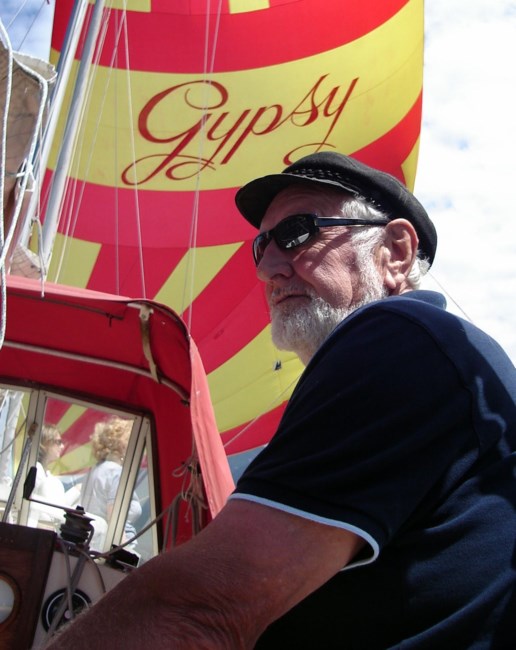
We wanted a larger sailboat and there were a couple of 32 footers at the club which we liked. We saw a notice for a 32 ft Ontario which was for sale at the Vancouver Rowing Club and we decided to buy it. It had a red hull was called “Gypsy”. Without ever sailing or motoring it we took off for a marina near Federal Way and Tacoma. We had no real problems except we went slightly aground stopping overnight at Bellingham.
It seemed likely we would live in Seattle for many years so I bought a lot through a realtor in a new development called Federal Way, near Tacoma and close to the office. I drew up a set of plans I liked and the realtor found a builder who built one of the nicest houses we had ever lived in. We spent several years in Federal Way and sailed Gypsy around Puget Sound even going up to Vancouver several times.
Dick heard that the Asian Development Bank were looking for a group of engineers with irrigation and river experience to westernize the engineers in Hanoi, Vietnam, who had all their training and experience in Communist Russia. The Bank awarded a two-year contract to nhc and since my interest was now in overseas work I was put in charge. Vickie had injured herself badly walking Toby at home but was recovering and we went anyway. We discovered that traveling with an injury had a lot to recommend it. We were always put first in line wherever we went such as customs, etc. We rented a room in a hotel with a swimming pool and Vickie swam every day and began to take longer walks until she was feeling fine.
It was hard to find regular accommodation in Hanoi but Vickie and I finally found a suite on the fourth floor of a small apartment building in the suburbs. One of my duties was to provide the cash needed by each of our group to live on, but the local currency was the Dong with the exchange rate of 10,000 Dong to the dollar and it had no value outside of Vietnam. Later, in Vancouver, I left a million Dong in my brief case in my car and it was stolen. What a disappointment for the thief.
My office was at the engineering university college and I watched them building a small cafeteria of concrete. They built the forms and started to pour the concrete. They made it by mixing cement and gravel and then filling buckets and carrying them onto the forms. This was all in front of the engineering students. By the time they plastered on a surface coating it looked pretty good.
The professor I was to report to did not like the new ways or me at all. But one day he received an award in the form of a Russian cross and I took his photo. I got it mounted in a wall frame and presented it to him. This helps our relationship.
The Hanoi Hilton, where Senator McClain was tortured during the war was still there to be seen.
Sadly, one of our group, Richard Stasiak, suffered a heart attack while at his second-floor apartment and died. He was a very large man and his death caused a lot of problems for Vickie and I. The least of these was removing him from the apartment by lowering him out of a window. Getting him cleared by the Vietnamese authority was another problem which the Canadian consulate handled along with others. They wanted me to attend the autopsy and I avoided that but had to view his enlarged heart. Getting him home was another problem. There were no coffins anywhere near his size and one had to be built plus a metal outer one so he could be flown home. Another one was his Vietnamese girlfriend which his wife in Canada knew nothing about.
EGYPT
Next Dick got a call from a Montreal engineering firm, SNC Lavalin, who needed river engineers to plan projects for the Nile River for 4 years and he was thinking of Vic Galay and myself. Romero Mayor-Mora was the project manager for SNC. Vic and Kathie and Vickie and I met up in Nepal where the Galays were living and agreed to go. When we arrived in Cairo, we met the other SNC people and Mayor-Mora worked on arranging accommodations. Vic and Kathy found an old home near downtown Cairo on their own. Mayor-Mora found us a furnished apartment in Maadi, an English-speaking area in the outskirts north of Cairo, which suited us very well. It had a small swimming pool on the roof and it overlooked the Nile and the pyramids beyond.
Our offices were located about 40 miles away at a new building built by Americans for the Egyptian Nile Research Institute headed by an Egyptian Dr. Moattassem. I was told that every foreigner needed a defender and at an early lunch on the Nile I met Dr. Makari, a Coptic Christian, and I said “this is my man”. He was Dr. Moattassem's chief assistant. Every morning I would sit in his office and he would pour me thick Turkish coffee which I enjoyed. He had written a computer program for his doctor's degree in Germany but couldn't get it to work again. I looked it over and found the problem and he was delighted.
I was given a car and driver for our own use but I soon found it was missing parts like the new battery. One morning the car had a repaired and painted bit of body damage, courtesy of the driver. I sadly found he was characteristic of most Egyptian workers. At the office I found all the toilets to be very dirty. I complained to one of my Egyptian co-workers who said “no problem, tell me which one you use and I will get it cleaned”.
Vic's work was mostly related to the sediment transport of the Nile while mine concerned the structures on the Nile. These included the Aswan Dam built by Russians in the1990's and the Esna and Nag Hammadi barrages built by the British in the early1900's. These had 30 spillway gates each.
I found them to be in excellent condition with only minor repairs needed but the Egyptians wanted them replaced with hydropower added. A group of Italian engineers were perfectly willing to do this for them. I found a large low-lying undeveloped area next to the river and I developed a plan to transform this area into a productive agricultural area. No one was impressed.
Vic addressed the expected bed erosion that was common knowledge to have occurred below the barrages because of the upstream Aswan Dam. He found that the bed had risen but Dr Moattassen would not let him use the word aggradation. It turns out that lower flows were not enough to remove the sediments being carried in by the winds blowing across the Nile. Vic was told to look at the riprap needed to protect the river banks even though the river banks had not shifted since baby Jesus was there in Egypt. Our 4 years in Cairo were not impressive technically but were great otherwise.
Incidentally, on my way to the office in Cairo I often noticed an elderly man walking across a bridge over the Nile. I found out he was Naquib Mahfouz, a Nobel Prize winner for literature. He wrote short stories and one was about a woman whose husband never allowed her to leave the house but when her son, feeling sorry for her, let her out she was hit by a car. After she recovered, her husband told her that she could not stay and had to leave the house.
The Red Sea was only afternoons drive away and the community of Sharm el-Sheik, on the Red Sea was a scuba diver's paradise with a great abundance of colorful fish. All of our children and grandchildren came to visit us at different times and enjoyed the scuba diving there. After, when they were home Laurie's Andy wrote a report saying the Red Sea wasn't as red as he thought it would be.
We took Terry to see the pyramids and there was a young Bedouin with a camel offering us a ride for 5 Egyptian pounds which we turned down. He came down to 3 pounds which I also rejected. He kept bugging us and I said his camel was ugly and dirty and he should go away. His reply was “OK, one pound”.
We took them all up to Luxor and the Valley of the Kings where Howard Carter discovered King Tut's tomb. They also spent several days on a river cruise boat and the crew made a big fuss about little Nicky all during the voyage, to Amy's disgust.
Vickie got a job as the Canadian Embassy Nurse. This suited her very well because the one thing she does best is to listen to people's troubles. Vickie wrote up an evaluation of all the medical resources in Cairo which was in big demand. AIDS was a new serious medical threat at that time but Egypt was denying it existed there. Victims were visited by police and taken away.
JAKARTA
CIDA was reducing its overseas staff at this time and were contacting out a lot of their activities to firms having extensive CIDA experience. nhc received a contract to oversee some of their work in Jakarta provided I and another fellow named Chan (he only went by Chan) would be working together.
We were living in our home in Federal Way and had to find renters which was not a problem but we wanted to charter our boat while we were gone. This was done successfully by arranging with a yacht charterer and we left for Jakarta.
Chan and his wife Grace were already living in Jakarta. When we arrived there Chan had already found a beautiful house for us that had a dining room overtop of a swimming pool. The Canadian Embassy had already approved the fantastically high lease. Vickie and I and Grace and Chan became close friends and we enjoyed their Chinese dinners.
Chan and I had an office near downtown and CIDA provided us with a car and driver. Traffic was a real problem during rush hours and two passengers were required. Cars with only one person would pick up children for a small fee for the ride into town and then they would walk back. Our job required close interaction with the Canadian Embassy and consisted of preparing reports on the work of other CIDA contractors. We needed to bring in outside specialists to review the work of these contractors and prepare these reports although some we did ourselves. We made a lot of contractors who were Canadian firms like ourselves pretty unhappy.
One of several engineers we brought over from Canada to help us was Hank Saltink who was Dutch and born in Indonesia and living there when it was occupied by the Japanese during WWII. Although only a young boy he was taken to Japan and made to work in a coal mine there. A Japanese miner there did what he could to see that he survived. At the end of the war his whole family was reunited and emigrated to Canada and bought a farm in the Fraser Valley. He went back to Japan to visit his friend.
The CIDA contracts covered much of the Indonesian Archipelago and a lot of travel was involved and Vickie enjoyed going with me. One time we went to Kupang in East Timur and saw the monument to Captain Bligh. Another time there were serious problems with an Indonesian irrigation contractor. And we had to inspect the work being built. It was terrible and nothing fitted. A CIDA rep came to see the mess and his answer was to bring in a Canadian engineer for six months to fix things. He came and brought his wife and her grand piano by plane. No problem. The result of all this was that Vickie and I were sent home to Canada but Chan seemed to have something on the CIDA rep and stayed on.
But an engineer we worked with was from Prague, in the Czech Republic, and he convinced us we should visit there and we did. We found a basement room in the old town square and we could eat there. The square had a large clock from which a group of elves emerged when the clock struck. The most outstanding thing were the many musical groups, instrumental or vocal, that were playing all day either free or for a small price. We went to an old church one evening where they were performing Mozart's Requiem. We also attended an opera but didn't recognize it. There was an old castle there that introduced us to a new word “defenestration” which meant killing someone by throwing him out the castle window. We spent about a week there and then drove a rental car the 150 miles to Vienna.
Vienna was the capital of the long lasting and widespread Habspur dynasty. They are recognizable by their deformed chins caused by their interbreeding which almost was their downfall. We visited their palaces which are lavish beyond belief. On our drive back to Prague we stopped at a small cafe where they served an outdoor lunch with a lovely bottle of wine.
From Prague we returned to our home in Federal Way and our boat, Gypsy, and working again with Gerry Mutter. But one day not long after (1980) a volcano about 150 miles away, Mt. St. Helens erupted, blowing most of the mountain side away and filling most of the upper Toutle River with ash. The river needed dredging and Gerry and I were involved.
It was about this time that Dad died. He had been suffering from late life diabetes and the doctors told him he had to walk more or he would lose his leg. He wouldn't listen and sure enough his leg had to be amputated. This completely immobilized him and it wasn't long before he passed away. Mom remarked that she could now go back to church.
About this time a number of new technologies were being made available to engineers. One was the development of transportable computers so that everyone could have a computer that could be taken to wherever he was working. Another was a system whereby every engineer could locate himself and his elevation on the surface of the earth based on signals transmitted by orbiting satellites. All that wasrequired was a handheld instrument that received these signals and made the necessary computations. With this equipment, computer programs that modelled the behavior of actual physical phenomena such as rivers could be developed and used. US Federal agencies developed such programs and made them available to anyone who wanted them.
MT PINATUBO PHILIPPINES
Meanwhile, Mike Okun from the nhc Vancouver office had made a working contact with a Japanese engineering firm, Nippon Koei, working in the Philippines and in 1991 a volcano called Mt Pinatubo on Luzon Island erupted with devastating effects. I was sent there along with another nhc engineer, David McLean, to work with Nippon Koei to clean up all the ensuing mess that involved flooded villages and farm lands and sediment clogged rivers. I bought plane tickets so that Vickie could come too.
We landed at the Manila Airport and drove about 100 miles north to a town called Tarlac and found a very nice motel called the Oasis and booked a room there. The motel had a dining room with entertainment each night. The Volcano is about 25 miles SW of Tarlac and the main effect of the eruption was to fill all the local rivers with ash so that they overflowed their banks and flooded all the farming villages and farm land. The main river draining the area ran north through Tarlac across a wide valley. The river had to be dredged and embankments around the town strengthened. This would not be sufficient so future floods needed to be diverted into low waste areas. All this required that numerical models including sediment transport that had to be developed and run-on personal computers to determine how the rivers with all the planned changes would respond. This required close cooperation with Nippon Koei engineers because they had different experiences in designing river changes. For instance, they favored building low dams across the rivers upstream of Tarlac to store some of any future floods before it entered the town. A lot of computer modelling was needed before a plan was agreed upon.
Vickie found that the politics of governing the Philippines was just as interesting. Ferdinand Marcos along with his wife, Imelda, essentially ruled the country and lived in a palace in Manila. He had died and she was ousted before we arrived. Vicky toured the palace and saw her immense wardrobe of shoes and gowns. Manila was a strange city with almost all the city transportation was converted from old American jeeps.
It was just before Xmas so we decide to spend Xmas on Corregidor, the famous island in Manila Bay. Before WWII when the Philippines was an American colony Corregidor was made into a fortress with big naval gun installations and an extensive network of military tunnels. The famous General Douglas MacArthur was stationed there. The Japanese did come but they used dive bombers and the naval guns were of no use. Gen MacArthur escaped from Corregidor though a tunnel onto a submarine saying “I will return.”
When we returned to our home in Federal Way in 1995 Jerry had a job from the Corp of Engineers to see what could be done for the small rivers in the lower Mississippi that were badly maintained and in needed cleaning up so that they would pass flood discharges more effectively. I went down there to see what the nhc crew was accomplishing. They were in very bad shape with many large snakes and with human garbage everywhere. There were several environmentalists there from Northern Washington University that eventually played a role in Andy Deines's education. After Dad died Mom sold their home and rented an apartment near Hastings and Naniamo Sts where she lived for several years. Evie came out from Winnipeg and helped her move into the Salvation Army retirement home at 54th and Kerr St where she was very happy. She was kept busy with her sewing machine fixing up other residents’ clothes and attending the Salvation Army's services. However, her heart was failing and she died while being operated on. The Major gave her a great funeral speech.
FAMILY
Laurie and Robb and the boys, decided to leave Fort Collins and move west to Boise and bought a home there. Laurie found an opportunity to buy a bookstore, Rainbow Books, and with some help from Vickie and I, she purchased it and made it successful. She soon needed help running the store and hired Lindy Whitmore, who quickly became Laurie's best friend. Robb wanted to set up a plant to manufacture wood products and found a large area where he installed machinery for sawing, sanding and shaping wood in large quantities. It was very successful as well until a depression took over the whole country and sales fell off and wood products were being brought in from overseas. Laurie still had the bookstore and it is still their main source of income. Lindy is still Laurie's best friend but has contacted a serious form of lung cancer.
While in her late forties Laurie became pregnant and the baby girl, who she named Megan, was born with a serious genetic problem, called Prader Willi, which is manifest mainly by a need to eat continually. Laurie and Robb continue to raise, and care for Megan who is in her 20’s
Laurie's boys were graduating from high school about this time. Tim decided to join the Navy and went east to Annapolis for training on the atomic engines of the atomic submarines. When completed he sailed on the atomic subs which were docked in Puget Sound and cruised submerged for most of the time. His signup time was six years. Andy wanted to go on to university to study environmental subjects. I put him in contact with the environmentalists I met in Mississippi and they got him enrolled at Northern Washington University near Bellingham. When he graduated, he joined the Peace Corps for two years and was sent to Zambia in Africa where the people were cultivating tilapia, a breed of fish from the Nile River. When he returned to the USA, he heard that Notre Dame were offering three year all-expense paid scholarships He applied and was accepted. At Notre Dame they sorted out the winners and one of the girls named Jill saw Andy and decided she wanted to be on the same team. They ended up happily married and gave birth to a lovely baby girl they named Riley.
Terry had started up her own company, Mercer Creative, which helped companies develop their advertising programs and with Panagoplis Pizza as a major client was becoming very successful. Paxton Robertson joined Mercer Creative and pretty much acted as manager for Panagopolis Pizza. Mercer Creative advised a change in name to Panago Pizza. To Terry's delight, she and Pax had a baby boy they called Alex. Mercer Creative became so successful that Terry found she could run it from Maui in Hawaii where she loved to go. She bought a small horse ranch there. Pax stayed in Vancouver.
Marnie was developing a career in writing and wrote about 12 children's books and also had a relationship with a publishing firm Harper Collins whereby she helped authors by reviewing their manuscripts to make them more publishable. Murray continued to work at CBC where he displayed a talent for organizing television teams for special events such as the Winter Olympics in Vancouver and again in Japan. Fortunately for Murray, CBC was cut back and he was given a golden handshake and could go on organizing television teams on his own. Evie's son Robb Graham has always had a special relationship with me almost as if I was his mentor. He came out to Vancouver from Winnipeg and I hired him to help at the model lab. This was when we owned the sailboat Charlie and Vickie and I taught him how to sail. He was attracted to our office secretary. One day the secretary's fiancé came looking for him and he ran out the back door breaking up parts of the model in the process. Eventually, he went back to Winnipeg and called on a friend and his sister was there and that is how he met his wife, Romana. They went to Australia so Robb could get a degree. He met a group of engineers there who had developed a computer program that would simulate driving along a road that was being designed. Robb modified it for a river and he made his life's work promoting the program around the world.
RETIREMENT
Vickie and I started thinking about retirement and one thing we were sure about was it wouldn't be in the USA. We sold our place in Federal Way to a Korean family and sailed Gypsy up to Vancouver to find a retirement home. We looked over the whole area even as far as Naniamo but decided we should try to find a place near Marnie and Murray in North Vancouver. We didn't want a house because it would be difficult to keep up in case nhc wanted us to go overseas again. There was a gated condo complex nearby called “Windermere” which we liked and a unit was for sale. It was half a duplex and had two floors. It did need a lot of work but the price was right and we bought it.
It had a kitchen, dining room, living room and TV room on the main floor and two separated bedroom/washroom units on the second floor. It needed a lot of upgrading however and Robb Deines was glad to use his house building skills to add the missing base-boards and other wood trim and paint all the walls. We replaced all the existing substandard carpeting upstairs and downstairs and brought all our furniture from storage in Seattle and moved in.
We next rejoined the Deep Cove Yacht Club and moored Gypsy at the club. The club had an outstation 10 miles north on Indian Arm at Iron Bay across from the old Wigwam Inn which has been there for over 100 years, allegedly started up by the Kaiser. We would sail Gypsy up to Iron Bay most weekends in the summer. But we wanted to sail away for a month or more and there was a couple, Nancy and Keith Byers, who owned a sailboat “White Raven” and we arranged to spend a month with them going up north of Vancouver Island. Nancy's parents managed a salmon plant when she was a girl and she wanted to see it again. We went together motoring most of the way and stopped over to see my old whaling station as well as Nancy's old home but all that was left was a bunch of pilings.
We followed them north and reached Calvert Island. We had a good month, but Keith died tragically within the year.
I started to grow my beard on this trip and still have it.
Back home, we started the renovation of our condo beginning with the kitchen because the cabinets were very outdated. We found a firm that would help us plan new cabinets and counters and provide them for us to install. Vickie and I did install them and the effect was spectacular. They had glass doors where we could feature our china. The top of the cabinets were about 4 inches below the ceiling so we added a 3-inch varnished wood molding above. The old cabinets were installed in the garage for a small workshop there. Other upgrades could wait.
At the yacht club we met and sailed with Carl and Nina Hansen. They were also active hikers and introduced us to the Ramblers at the West Van Senior Center, they would go out to different local places each Monday for about a 4-hour hike. We took turns with the other Ramblers leading our favorite hikes. One of ours was from Belcarra Park north to Jug Island across from Deep Cove. Another was through Pacific Spirit Park at UBC from Chancellor Blvd to the Fraser River Monument on Marine Dr. There would be about 30 people in the group and each took a bag lunch.
Other sailing friends we met were Russ and Eileen Curtis and Pam Juryn and we wanted to go sailing with them in the Mediterranean area and chose Sun Sail that arranged sailing trips all over the world using their own boats. We selected the SW coast of Turkey but wanted to take a road trip across Turkey first. I found a tourist group that would take us by car and made the arrangements. We flew separately to Ismir on the west coast of Turkey and our tour car, driver and tour guide met us at the airport. Our road trip took us west across Turkey and one of the most amazing places was Cappadocia which was an old volcanic site where early Christians lived there carving homes and churches into the hillsides. Our overnight stay was also carved out of the hillside. In later years Cappadocia has been developed as a popular place for hot-air ballooning.
We also saw the home of the Whirling Dervishes, a Muslim group that worships by whirling around in their mosques. Our road trip included a flight from Ankara to Istanbul which used to be called Constantinople and was the eastern center of Christianity and had a large cathedral which is now a mosque. It is even now the most spectacular building of the city. Our road trip ended up near Ismir, which has the remains of large Roman structures.
From there we joined the boats of the Sun Sail group. The boats were large, about 40 ft long and looked brand new. There were about six boats in our group and included one for the group leaders. We were told where our next overnight stay would be and were allowed to sail out on our own. Pam quickly took charge as was her way. Each night there was a restaurant to eat at. The weather and winds were great and we quickly made friends of everyone. We ended up at a town called Marmaris which featured a large Turkish bath for men and women which everyone enjoyed. Pam actually let me take the wheel as we sailed in. This was the end of our trip and also the end of the sailing season so we were off to home.
The next adventure Vickie and I wanted for our retirement was a cruise on a cruise liner. I had kept saying I would prefer cruising on Gypsy where I was the master but this was different. Terry had a long-time employee of Mercer Creative, Rhonda Thibault, who arranged cruises as a sideline and we asked her to make all the arrangements which she did wonderfully She booked us on a cruise from Copenhagen to St. Petersburg in Russia with Norwegian Cruise Line. We also wanted to give Laurie a holiday so we arranged to meet her in Paris after the cruise. Marnie and Murray wanted to go to visit Murray's relatives in England and so agreed to meet us in Paris as well.
We flew to Copenhagen and a taxi drove us to the cruise ship. All our needs were met for the next two weeks. I had booked an outside room which our room attendant showed us to and brought up our bags. One of the features of our room was a hand towel twisted in the shape a monkey. There was a different shaped towel animal for every day of the cruise.
Lunch came next and it was served cafeteria style as was breakfast. The boat's whistle blew and we were on our way. There is a long channel out to open water and we had a chance to examine the decks and swimming pools on our way out. The weather was never warm enough to use the pools. This was not the only disappointment on the cruise. We were either going at sea or docked at selected ports that were to be visited. While at sea there was not much to do if you were not into the casino. Vickie and I are not good at making casual friends. In the evenings, the stage presentations did not attract us much.
There were several ports of call and we were able to spend most of the day at each and visited the older areas and the museums. But the main attraction was St Petersburg (Leningrad in Communist times) where we stayed for three days. Rhonda had arranged for a guide to take us around for the whole while and she did a great job. St. Petersburg was the capitol during the time of the Tsars and their home is called the Hermitage and it is comparable in scope to the French Versailles. The guide told us that all the contents were hidden when the Nazis were approaching Leningrad but they were turned around by Russian soldiers at the last minute. When we were there the rooms were furnished fantastically and some of it featured the fossilized resin called amber which is found abundantly in this area.
On the return to Copenhagen, we were to stop for a day in Stockholm but the weather would not permit the ship to berth and we bypassed there. I thought this would give us an extra day in Copenhagen to tour there. But this didn't happen we just slowed down to arrive on the scheduled day. Apparently, the cruise ships are only permitted dockage on these days.
From Copenhagen we flew to Paris to meet Laurie, Marnie and Murray there. I had arranged to stay at a small hotel on the outskirts of Paris and Murray and Marnie had another place nearby to stay at. I didn't realize it until then that Murray was a master organizer. He had our whole Paris visit organized on the first day. We visited the Louvre but got lost from Murray and Marnie. We didn't do that again. He arranged dinner on a boat on the Seine and another at the top of the Eiffel Tower. I chickened out on that because I hate heights. We spent several days in Paris visiting many of sights such as Notre Dame. We went to Versailles on the outskirts which was the palace of the Roi and had all luxurious features of the other palaces we had seen.
From Paris we took a train west to Cherburge where we took a channel ferry to Poole in England where we said goodbye to Murray and Marnie who were off to see relatives in Liverpool. We had a room reserved nearby at Bournemouth and a rental car reserved for a week there but didn't realize Bournemouth was all steep hills. A taxi took us to the car rental place and it was Laurie's job to drive. The car was a little gear shift Peugeot and the gears were not clearly marked and driving was on the right side of the road. All things said, Laurie got fouled up and burned out the clutch before she got to our room. The car rental company sent out a repairman and that was the last we saw or heard from them. A taxi took us to our room.
We did have fantastic luck, however, because I had met a fellow at the yacht club in Vancouver who lived in England about 30 miles from Bournemouth. I had his name and phone number and called him and he was at our room in an hour. He got Vickie a cell phone for two weeks and took us to a car rental place that rented us a new car for a week that we could drop off at the airport in London. We had been saved. It turned out that we were close to Stonehenge and that was our first stop. I drove and Laurie navigated from there on. We were headed west for Cornwall partly because we wanted to see Port Isaac which is where our favorite TV series 'Doc Martin' was shot. On the way we stopped at Chard in Dorset where the Bowering brothers originated before they emigrated to Newfoundland and to Adelaide.
We continued west through the city of Exeter and stayed at a very comfortable B&B along the west coast that we had booked ahead. It was only a short drive to Port Isaac which certainly was where Doc Martin was shot but there was no attempt to attract or accommodate any tourists. We enjoyed walking around and seeing the little harbour but we discovered it was very near here that the legend of King Arthur and the Round Table began. A very old castle existed on a point of land purported to be his home. There were a number of tourist centers that featured King Arthur and this was quite unexpected.
The drive back to London was along the south shore of the Bristol Channel. On the way we stopped at Lynn, a little town above the Lynn River. There was a strange ride down to the mouth of the river which had a steep carriage the rode on tracks operated by the weight of water tanks. From there we drove through Bristol and the road to the London airport took us back past Stonehenge. We put Laurie on a bus for short ride to the airport for her flight home to Boise while we took our flight to Vancouver.
We wanted to do more work on our townhouse in North Vancouver involving the bathroom of the master suite. There was room for a larger bathtub and we bought one with jets and installed it. At the same time, we installed wainscoting on all the bathroom walls and new pink stone-like shelving for the washbasins with wainscoting styled sink cabinet doors. We thought the effect was spectacular and still do. We also started exercising several times a week at the West Van Senior Center
Because summer was starting in Australia, Vickie and I flew to Sydney on Quantus with a ticket that included Sydney, Melbourne, Adelaide and Hobart. It was a long 15 hr flight with rough turbulence and movies that were not working but it was great to see Robb and Romana and the nice townhouse that overlooked the ships going into Sydney. We next flew on to Adelaide where we stayed for several days with John and Wendy Pridham. John is descended from a brother of Newfoundland’s James Bowering. This brother came with his family on a sailing ship to Adelaide. John Pridham has spent much of his life on a comprehensive study of the genealogy of all the Bowering’s, Adelaide and Newfoundland, and was in touch several times with Mom's youngest sister, Aunt Gwen.
They had a lovely home with a small Koala Bear living in a tree in their yard. Adelaide is on the southside of Australia to the left of the Great Australian Bight. A bight is an interesting navigational term that means any bay that is broad enough that a sailboat can sail out against any wind direction without having to tack. John and Wendy spent several days showing us the countryside and introduced us to the kangaroos that live there everywhere.
From Adelaide we flew to Hobart on Tasmania and rented a car to see the countryside. We stopped at a nature reserve that featured Tasmanian Devils which are fierce little animals that cannot be tamed. Later on, we saw one walking along on the side of the road. We needed to find a place to stay and found a tourist stop that arranged places. They said there was a lovely place but it’s always booked up but we will try. They then came back and said we were very lucky. It was a B&B called Roses and when we got there it was a beautiful cottage surrounded by rose gardens and the proprietor was called Rose, she had a lovely room for us and we stayed several days while we toured the island. Incidentally, long ago there was a large and famous colony for England's unwanted prisoner mates on the island. From Hobart we flew on to Melbourne on the south coast of Australia. The car rental office we had arranged for was near the airport but when we asked for the car, they said that I was too old to drive their cars but it seemed that Vickie being younger would qualify so we rented it and Vickie started down the highway to Melbourne. The highway had many poorly marked turnoffs and Vickie turned off and we seemed to go miles before we found a way back. This happened about five times and it was four hours later that we got to our hotel in downtown Melbourne. The next morning, we walked around and it was a very modern city and not what we wanted but it had a beautiful waterfront drive so we drove along it and made our way back to the airport in a very roundabout way taking all morning and flew back to Sydney where Robb and Romana met us and drove us to their home.
They lived across Sydney harbour in a small hillside village that overlooked the channel where the ships going to Sydney passed. They owned a condominium unit that occupied the roof and they had planted a flower garden where beautiful tropical birds came to feed. There was a steep road about 4 blocks long down to the beach. This was our base of operations for the month we were in Australia.
We had arranged by Sun sail to rent one of their boats to sail for a week around the Whitsunday Islands, a group of about five within the Great Barrier Reef north of Sydney so we went first up there with Robb and Romana and started out to explore the islands. I didn't realize that Robb had continued his sailing skills and had joined a group that took out sailors for weekend trips. He didn't have a boat of his own yet but had a choice from his friend's that he could use.
One surprising thing was that we needed to wear a light weight overall suit whenever we were in the water. I don't remember what this was to protect us from. There were four of five islands but very little sign of habitation. The sailing was spectacular but the most interesting thing was the very large turtles that were in all the coves where we stayed overnight.
Back in Sydney there were six yacht clubs and one Sunday they all arranged for a regatta which meant six races running at one time. Robb took us out to watch on one of his friend's sailboats. There was at least a 30-knot wind and Robb let me take the wheel. What a Sunday. Boats were broaching all over on the downwind legs. When the races were finished Robb took us over to the beach below his condo for a lunch and a swim. It’s no wonder Robb and Romana decided to live in Sydney because it is a paradise.
There was very good public transportation in Sydney that included a number of small passenger ferries that crossed the harbour. Most went to the center of town which included the opera house and the famous harbour bridge. There was a group that took tourists across the bridge over the high arch span. Vickie and I went into town almost every day and really enjoyed ourselves. Sydney even had a large zoo which we spent a day at. Robb and Romana did take us into the countryside for a day but it was anticlimactic.
I haven't mentioned that Robb has childhood diabetes and as a result they cannot have children. However, Romana's brother and his wife have moved to Sydney with their two girls which Robb and Romana enjoy as if they were theirs.
The long Quantus trip home was at least smooth and all the visuals were all operating. It was nice to get back to our condo and take out Gypsy up to Iron Bay. I really felt like I had mentored Robb and he has made a wonderful life for himself.
I had time on my hands and Russ Curtis who belonged to the yacht club talked me into going to the meetings of the group who organized the NDP candidates for the provincial North Vancouver riding. These where meetings were held monthly at the home of Jean Macintyre who was the wife of retired and invalid provincial Judge Macintyre. The other provincial party was the Liberals which was in fact conservative and were the government for as long as I can remember. The NDPs are the party of the people. I found my role in putting up the election signs, large ones on wood frames and small ones on wire frames. There were about 50 large ones and 200 small ones but the large ones required most of the work, cutting the 2x4s to length and screwing the parts together. But the biggest job was not erecting them, it was re-erecting them when they got knocked down as they always were. The NDP candidates never were elected in North Vancouver while I was working for them but that didn't seem to bother anyone, it was just a job that needed doing. The galling part was that the Liberal premier was a young woman with a flashing smile which she used as her trade mark.
Another activity that occupied a part of Vickie’s and my week was exercising at the West Van Senior Centre on Tuesdays and Thursdays. A group of about 15 men and another group of about 50 women met on these days and, led by a male and a female trainer, we worked out for an hour in different rooms. We started with cardio vascular activity and followed this with hand weights and with elastic straps and finally with floor mats. At the end of the exercise, we met and had coffee and chatted.
About this time Terry was living in a home in West Vancouver and we got a call from her telling us she found a darling SPCA 3-month-old pup at the Taylor Way shopping Centre and we should come and see it. We found out that she wanted us to care for it while she flew to Toronto. We said OK, but Terry already had a big dog that absolutely would not accept a pup, so it became ours. Alex thought it should be called Beau. It was likely part Wheaton terrier but had a partly white face. It turned out to be an absolutely gentle pup and didn't need any training at all although our condo had strict rules about leashes. It was a great companion and loved to go for walks. I called him a chick magnet because all the young girls he met on walks loved to pet him.
Terry also liked to visit Maui and she found a10 acre ranch on the south side away from the tourists and bought it and spent considerable effort modernizing it. She found she could handle Mercer Creative by phone with Pax every day as she needed too. Vickie and I would spend a delightful couple of weeks each year there. There was a small town nearby and Terry would often go there for lunch and enjoyed talking to a group of old codgers who became her friends.
I also got very interested in our family’s genealogy. I was aware of some of my Newfoundland background and Vickie's connection to Scotland through her grandfather William Brown who was born in Glasgow but not much more. William Brown had married Margaret Turner in Vancouver but she had died directly after giving birth to Vickie's mother Margaret Pringle. I looked up Margaret Turner in the Vancouver marriage records and in 'place of birth' she had entered Isle of Whithorn instead of Scotland. This was my starting point.
We first went to Newfoundland and Vickie and I traced all that part of the family using public records. Everything worked out except our connection to William Butler until the last day in Newfoundland we found two records signed by him that definitely showed him to be related to us. I always felt I was a Butler. We also went to Glasgow to follow the Scotch connection and found the Isle of Whithorn on the Firth of Forth about 100 miles south. The result of all this research was a 100-page booklet we put together entitled “Search for the family of Al and Vickie Mercer”. It was about this time that we got a very sad phone call from Harold Graham. He said that my sister Evie was near death and we should fly to Winnipeg right away. Terry was living in Vancouver and we all flew immediately and went directly to the hospital and barely had time to listen to her last words before she died. Harold said they were vacationing in Mexico when Evie began to have stomach problems and the doctors put it down to something she had picked up there. They were wrong and before they realized their mistake Evie was dying of bowel cancer.
Harold had become a Catholic deacon and was very active in the church. At Evie's funeral there seemed to be about six bishops or archbishops all in full regalia at the altar. One thing it did accomplish was to bring all Evie and Harold's large family together for one time. The children included Mike, Dianne. Joanne, Robb and Stephen.
Another death touched the family around this time. Murray's father, Norman Wooding, was a strong soccer player and a very religious man. He was fixing up the church when one of the younger people said there was a man asleep downstairs and Norman had died of a heart attack. Linda, Murray's mother had to put her life together which meant least of all in selling their house and buying a condo not far from ours. She continued working at the church school. Some years later, David Morrow, who had been living in a house trailer in Alberta, came to Vancouver to continue his preaching and teaching in church schools and he and Linda were attracted and married soon after.
Vickie and I were planning another vacation in England. On our previous trips we always drove a rental car but we were beginning to think it would be better to let someone else drive, in other words go on a bus tour. We researched them and selected one that covered Ireland and Wales for 3 weeks and included all hotels and meals. The bus started out from a hotel about 3 miles south of Dublin. We planned to arrive several days ahead of time in order to see Dublin. We flew to Heathrow near London and planned to transfer to Dublin the same day. Heathrow was a disaster with the transfer requiring hours of lining up at airport desks until we were too late to get the plane to Dublin. Fortunately, the plane was also late so we made it and there was a bus to take us to our B&B. So, we had three days to see Dublin and they had a tourist bus that for a daily fee drove us everywhere we wanted to go. One place special was the Guinness home plant that covered over a sq. mi.
Our modern 40 passenger bus arrived at the hotel and was met by the passengers, all eight of us. Three couples and two young women travelling together. We filled the two front rows. The driver was a chatty Irishman. We drove the few miles to Dublin and took the ferry the fifty miles to Holyhead in Wales where we were to pick up our Welsh lady guide, our driver had fun speculating on how pretty she would be. She was very nice and determined to teach us some Welsh. The first town was Llanerhynedd, How Welsh could it be. We spent three days of driving down the west coast of Wales stopping mostly at the ruins of castles. I learned later they were built by the English when they were trying to conquer Wales. One of the castles was called Harlech which reminded me of a movie about the Men of Harlech who were a battalion of soldiers in South Africa and were nearly overrun by a hoard of Zulu warriors but were allowed to live because of their display of courage.
We left Wales at the south end of the coast at Penbroke and our bus took a ferry for the 50-mile trip to Wexford. An interesting side issue for us is that Ireland has long been dominated by the Fitzgerald and Butler families. A Newfoundland Butler belonged to the Butler Association and spent his life trying to tie his family to the Irish Butlers. The castle that was the home of the Butlers was near Wexford but our bus could not stop. Our bus spent two weeks touring Ireland and our Irish driver kept us amused with his stories about the country. He showed great skill because many of the roads were very narrow and twisted and the bus never got a scratch on it. We toured most of Ireland and stayed at great hotels. One hotel specialized in an evening program featuring a dinner and a reenactment based on Irish history. Our trip wound up at Limerick but we stayed on a few more days at a B&B at Galway on the west coast. They had a park dedicated to President Kennedy whose family came from there. We recognized our bus at Galway and the driver was going to Dublin and agreed to drive us to the airport from where we flew to England and on to Vancouver. This was the last time we flew to England.
We had time on our hands and needed to work out how to make the most use of it. An exercise program seemed to be important part. We were familiar with the Senior Center in West Vancouver because of our participation with the Rambler group and our weekly hikes. They offered separate 60-minute exercise programs for women and men on Tuesdays and Thursdays mornings and we enrolled. The man's program with about 15 exercisers was led by Frank who had spent most of his life on fitness training and was largely responsible for planning the entire Senior Center. He stayed with us for about seven years before his health failed. The women's program included about 50 women and was led by Ivana who led many different groups across the north shore for a living. The exercises ended up with coffee gatherings and took up most of the mornings.
One morning while preparing to go to our exercises we notice water dripping from our kitchen ceiling. We notified the condo representative and he said there was an amount of money that could be used to repair the leak and called a repair firm to find and fix it. In several days the ceiling was opened up and some of our new shelving was taken down and the leak in the piping was repaired. We were already aware that other units had experienced leaks and that the problem was that a faulty kind of piping had been used in construction but since was found to be no longer acceptable. We decided that all the piping should be replaced so that leaking would not recur. The condo rep. said there was no money for this and it would have to be at our expense. To do this, all the original piping would have to be located and new piping put in and hooked up and the walls and cabinets restored. This mainly involved the kitchen and the three bath rooms. We found firms that would do this and the cost was estimated at
$30,000 but the cost would be ours. Vickie and I decided to go ahead.
One restoration firm opened up the walls and a plumbing firm replaced and re-hooked up the new piping. The restoration firm put everything back together and repainted where necessary. The entire work took several months but there were other benefits including a more convenient water pressure regulation location. We were happy with the results and no further leaking has occurred.
We continued sailing Gypsy and we could occasionally persuade Marnie and Murrey to go on week long trips with us. The last trip we went on was to Victoria. The best leg of the trip was about 20 km across the Gulf of Georgia. There are usually good winds and this trip was not an exception. We stopped overnight at a marina on Galliano Island. The next day the winds continued and we sailed down to another marina on Vancouver Island called West Bay where we had stopped before. The next nights stop was new for us at the Royal Victoria Yacht Club at Cadboro Bay, famous for the fictional monster, Caddy. This was less than 10 km from Victoria where we intended to stay the next night. We started out but met very strong tidal currents and had to turn back to the Yacht Club. We all took a bus to Victoria and there was a carnival there for tourist which we enjoyed. On our way home we stopped at a marina on the American San Juan Island. The immigration ordeal was not really worth the stay. Murray took over the sailing all the way back to Deep Cove. We stopped overnight at the Vancouver Rowing Club where we had bought Gypsy and Murray took us to a good dinner at the White Spot Cafe.
Our granddaughter, Amy Wooding, was the first to be married. She and Kyle Corbin were both very religious and met through their church. There is an old, classically styled, United Church, in North Van and they were married there. I was able to use the Clubhouse at Deep Cove for their reception and Amy asked me to speak. I am not a speaker by nature but I remember I said that Murray and Marnie gave their beautiful daughter a beautiful name, Amy. Neither Amy nor Kyle had well-paying jobs and were living in a basement suite a few blocks from our place when their first baby, named Skye, arrived. I told Vickie we are just going to be great-grandparents and won't likely see much of Skye unless we do something, so we told Amy we wanted to babysit Skye one morning a week. This we did and for most of the winter we watched “Curious George” on TV every Wednesday morning until spring came and then we took her to the nearby school park to play. Later, when her sister Macy arrived our weekly babysitting included both.
Gypsy was requiring more upkeep and Vickie was finding it harder to help with the sailing lines so we decided we had to find a buyer for her. Secondhand sailboats were not selling well and prices were not good. I asked Kyle if he would take on the job of finding a buyer for her. He agreed and did a beautiful job of it. He advertised it on eBay and began getting interest. One interested buyer lives in the Tacoma area and he and his wife came up to see Gypsy and Kyle had her was all cleaned up and looking great. The prospective buyer brought up a several specialists who gave her a good going over and we sailed them all down to the Lynn Valley Marina where we took her out of the water and she passed inspection. Kyle and the buyer agreed on a price and shook hands. There were several agencies, Canadian and American, involved in selling a Canadian boat in the US and Kyle took care of all the paper work and the sale was agreed upon but had to take place in the US. Kyle and I motored Gypsy down to Blaine which took two days with a stopover at the Rowing Club where we bought the boat over 30 years ago. It was an emotional moment when we handed her over at a marina in Blaine. They had to pay the money in American money and they did not object. Vickie was there with our car to drive us home. We haven't heard a word from the buyers since. We told Kyle he should keep the money as a down payment on his future home.
Andy and Jill were living in a rustic rental place north of Seattle since he had taken a job with an Engineering firm that wanted a PhD with environmental credentials. Vickie and I joined Laurie and Robb in visiting their place and found it to be almost uninhabitable especially since Riley, our third great-granddaughter was already born. Andy and Jill were looking seriously for a better place to buy but couldn't find anything suitable. We talked it over and thought it would be good if we offered to help them out financially. We told them what we could do and within a week they found a condo of single units they liked and made an offer on a unit nearby that was accepted.
Quite sometime later, Vickie and I had a strange driving incident that will result in my losing my driver’s license. We were driving down Mount Seymour Boulevard and going to turn left on Riverside Drive and signaled the turn. We moved over and all of a sudden, a car came out of my blind spot and we almost touched. The women driver insisted we stop and look for any marks but there were none but she took my driver information but I didn't take hers. Weeks later I got a letter from the province saying my driver's license was under review because of my age and because of a complaint. Several letters were exchanged and it turns out she had made a police report saying there was a witness and I was driving recklessly. I guess I will lose my license.
But Vickie and I are in great health, both mentally and physically, and it looks like we will continue to be so for many years to come. Our kids are doing great and enjoy our company.
What more can we ask for?
Al Mercer – July 2017
Montrez votre soutien
Envoyez Vos
Condoléances
Partager
L'avis De Décès
Obtenir les mises à jour
Prestations de Service
Partager l'avis de décèsPARTAGER
- RECEVOIR DES RAPPELS
v.1.18.0