
AVIS DE DÉCÈS
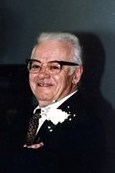
Gerard J. Coleman
31 juillet 1916 – 5 septembre 2012
failure in Chatham. He is survived by his wife of 71 years, Alice Irene (Ryan) of Eastham; four sons,
Stephen and his wife Ann of Munson Ohio, Robert and his wife Susan of Omaha Nebraska, David of Eastham
and Thomas and his wife Rosemarie of Newton; his sister Virgina Woodside of Haverhill; a sister-in-law
Anne Coleman of Ebensburg, PA; six grandchildren, three great-grandchildren and numerous nephews and
nieces. He was predeceased by his sisters Laurian Carroll of Providence, RI; Elizabeth Mallon of Malden; Barbara
O'Neill of Stoneham; his brother John Coleman of Ebensburg; PA and a grandson, Nathan Coleman of
Omaha, NE. Jerry's parents, John Coleman and Mary Kearney, emigrated from Newfoundland in the early 20th century
settling in Malden. Born prematurely, Jerry spent the first months of his life next to the kitchen stove in
the family home on the Fellsway in Malden. Due to several double promotions in grammar school, he
graduated from Boston College High School in 1932 at age 16 and joined the Merchant Marine Service. He
worked on freighters as an engine oiler with his uncle Bill Kearney, regularly traveling from
Baltimore to San Francisco with steel girders to be used in the construction of the Golden Gate Bridge.
After several years, he attended college at Northeastern University and Wentworth Institute in
Boston, but withdrew when funds ran low; he worked construction jobs with his father in Boston and the
suburbs and read cash registers at night for Filene's in Boston.
In 1937, he met Alice Ryan on a blind date and set aside his romance with the sea. He resumed his
education with evening courses at Bentley School of Accounting, receiving a diploma in May, 1941 and
accepted a job with General Electric in Detroit. He and Alice were married in Detroit Nov. 28, 1941, a
week before the attack on Pearl Harbor. Several months later they returned to Malden and in September
1942 Alice gave birth to their first child, Stephen. Jerry joined Lever Brothers in Cambridge, and
welcomed his second son, Robert, into the world in August 1944.
Mr. Coleman was drafted into the US Army April 13, 1945, the day President Franklin Roosevelt died.
During basic training at Fort Jackson, Georgia he broke his left leg; he was discharged in August 1946
with the rank of staff sergeant. Jerry worked for several Boston advertising agencies including
Chambers and Wiswell during the time that included the birth of sons David in 1947 and Thomas in 1951.
The family moved to Stoneham in 1952 in a house he and his father constructed. He joined the
administrative staff at Dana Hall School in Wellesley in 1959; the family moved to Wellesley in 1961 and he became the school's comptroller in 1965, a position he held until his retirement in 1979. Jerry and Alice
retired to Eastham, MA where they could be found walking the paths and beaches of the Cape Cod
National Seashore. Jerry was a private person who disliked the
limelight; his only public service, after the military, was as the Stoneham Little League
Commissioner of baseball in the mid-to-late 1950s. He was, though, an omnivorous reader of biography,
world affairs and European history, especially the English monarchies; American history, such as Bruce
Catton's trilogy of the American Civil War and Morison's multi-volume history of US naval operations
in World War 2; loved the poetry of Robert Browning and Alfred Tennyson and the music of late-Romantic
composers including Cesar Franck, Franz Liszt and Frederic Chopin. He read little historical fiction,
limiting the genre to novels involving the sea, such as Monsarrat's "Cruel Sea," MacLean's "HMS Ulysses," Griffin's "Operational Necessity" and the work of CS Forester in the Hornblower series of novels.
He instilled in his children a curiosity about the world and a love of knowledge, family values and a
sense of fair play in all things. He disliked lazy thinking and did not tolerate halfhearted efforts by
his children or colleagues, though he was gentle and
respectful in his criticism and encouraging about a second effort to achieve and succeed.
He was, by all accounts, a loving and kind husband and father and was especially devoted to his wife,
Alice; in his later years he was fond of saying she "was the best thing that ever happened in my life."
FEATURED STORY
Dad's story – a glimpse to earlier days
Notes from a conversation, May 5, 2012
Jerry Coleman never got to attend his high school graduation in the spring 1932; on graduation day, he was miles off the New Jersey coast in his first days as a fireman on one of the freighters in Bethlehem Steel's CALMAR Line, the FLOMAR. By the time Coleman received his high school diploma in the mail, he was already at the end of the first of a half dozen trips he would make, carrying steel girders to San Francisco for the Golden Gate Bridge.
Coleman was just 16 when he went onto the ships, working in the engine room of the 400 foot FLOMAR, a ship where his uncle was the chief engineer. It was the Depression and with his father unable to find work as a carpenter, having a job was very important for Coleman, the oldest of 6 children, even if it meant long periods away from home. Even though his uncle helped get him the job, Coleman remembers that "I really was on my own. (My uncle) Bill didn’t try to take me under his wing or anything, it was sink or swim, especially how you get on with members of the crew. It would have been a kiss of death if Bill had tried to protect me somehow."
FLOMAR was one of the many ships that carried steel from the East Coast steel mills to San Francisco during 1932-1936. Carrying 2 steel girders bolted down on both the front and rear cargo deck, FLOMAR usually started its trip from a big steel mill formerly located at Sparrow's Point, Maryland. “I can remember many nights sitting on deck with the sky lit up orange from all the smelting furnaces.”
Once FLOMAR left port, it continued down the east coast and across the Gulf of Mexico to the Panama Canal. “That first time through the canal was very special for me. My uncle Bill relieved me from being on duty so I could go on deck and see the placque for the Calebra Cut.” Passing through the Canal, the ship continued up the coat to San Francisco. Once the steel girders were dropped in San Francisco, FLOMAR continued up to the Olympic Peninsula in Washington where it would pick up a load of lumber to carry back to the east coast. The round trip would usually take about 7 weeks.
Although San Francisco was the “big city” in FLOMAR’s route, it was actually Gray’s Harbor Washington that held a special memory for Coleman. “When we got into port that first trip and got on shore leave, well, I think the sheriff knew he might have a problem.” It was a Saturday and the lumberjacks were also in town, the end of a week in the Olympic peninsula woods. “Well, the sheriff took one look at me and decided if he didn’t do something, I would probably get myself killed once the night got going. And so, they threw me in jail for the weekend. I can’t remember exactly what they charged me with, but it was basically for my own good. I had to pay a fine too, $25 and that was a lot of money.”
It was tough work, Coleman recalled. There were 3 boilers in the engine room and each boiler had 3 burners. The tips of each burner had to be cleaned at the end of every shift, Coleman said, or "you could get a problem with one of the boilers - and you had to be careful. On my second trip to Boston, I wasn’t paying attention to what I was doing and I was cleaning a burner and the oil blew out all over me. It was really hot oil! We were coming into the lumber yard in Sullivan Square (in Boston) and somehow the oil didn’t get strained right, and it clogged the tip – and it blew. That was a mess!"
FLOMAR had a crew of about 35-40, including officers, sailors, the engine crew (the “black gang’), mess boys, etc. It was a very tight community on the ship, and each man had his job to do "The ships were the way they’ve always been," Coleman said. "You don’t carry extras, everyone does their work. You got along - you didn’t want to get into “uncertain” behaviors, such as being late to relieve the other man on watch. That happened to me once and, well, he jumped down my throat – let’s just say that I was never late again. I was the youngest person on the ship – everyone else was career merchant sailor. “I was very different. I spent a lot of time in the ship’s library.”
But in the end, Jerry said, “it’s just a job and you did it the best you can.”
"I actually never saw the bridge until years later, somewhere around 1965 when I was out to SF for a meeting with a business associate from Dana Hall named Bill Person. Bill always wanted to be on the go, and so when we were in San Francisco that time we went out into the hills up north of the city and that was the first time that I went over the bridge since when I brought the steel in about 30 years before that. "
Jerry Coleman lived in the Boston area for most of his life. He passed away in September, 2012
.
Montrez votre soutien
Envoyez Vos
Condoléances
Partager
L'avis De Décès
Obtenir les mises à jour
Prestations de Service
Partager l'avis de décèsPARTAGER
- RECEVOIR DES RAPPELS
v.1.18.0