
OBITUARY
Robert Dwain Fields
September 22, 1940 – April 13, 2025
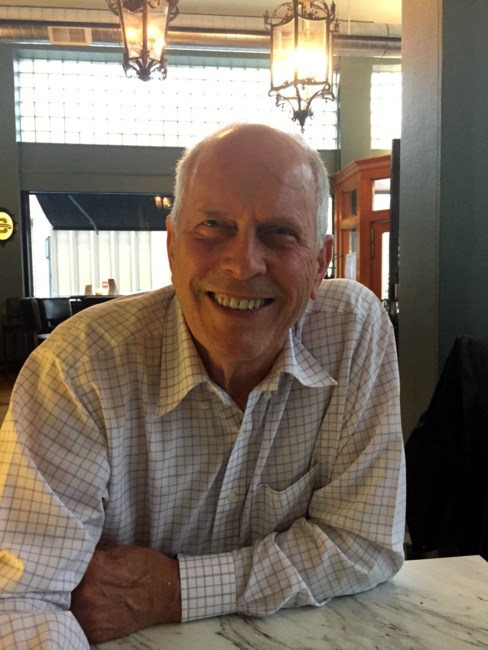
The family would like to share a message from Robert's son, Andrew:
Robert Dwain Fields left our company on April 13, 2025 after a yearlong battle with brain cancer. Born in Snyder, Texas on September 22, 1940, he was one of four children of Hollis and Evelyn Fields (née Thomas). Robert dedicated his life to the service of his fellow man. He led a life that was too well lived to touch on every accomplishment and relationship. Some include graduating from Baylor Medical School, serving in the Navy as a Flight Surgeon, and running his own Family Practice Clinic in Hillsboro, OR for 37 years. Arguably, the most pivotal job was running the ER at St. John's Hospital in Longview, Washington where he met Kristina. After marrying Kristina in 1980, they had two children, Andrew and Catherine. Yet again, he took a unique path following his retirement in 2013. He grew his friend group and picked up new hobbies such as Pilates and becoming a whiskey connoisseur. He continued maintaining a beautiful yard and chasing deer away from his rose bushes up until his diagnosis in April 2024. Following his Diagnosis, he continued enjoying walks with Kristina and their dog Remy, wine tasting with Catherine and spending time with friends and family; all hallmarks of his personality and approach to life itself. He is preceded in death by his mother, father, and brothers Roger and Kent and is survived by his wife Kristina, son Andrew, daughter Catherine, sister Betsy and son-in-law Ian.
A message from Robert's sister, Betsy:
The life of Robert Fields can be neatly condensed into birth, career, marriage and manner of death, but since delight, like the Devil, is most often in the detail, I offer up a detail or two about this man you came to know and care about.
The first detail that comes to mind was his quiet pride in being Texan. That might surprise a few of you, but Robert was Texan to the core. He was a boy of his time, and the pull of Texas High Plains culture was strong in him. He was an old soul like his father before him, and the stoic nature of the old ranchers of our childhood days appealed to him. He admired their quiet manners and was drawn to the idea of being a gentleman among gentlemen. He outgrew Texas in some ways, but he was always grounded in the calm, honest strength of the West Texas culture of his youth. Ergo, cigars and good whiskey on the porch.
Even as a kid, he had a calm center. Drama was all around him. There were elements of drama in the family, in the times, in the culture of West Texas itself. But not in this boy, nor in the man he grew to be. He was warm in personality, measured and thoughtful, and capable of an almost Puritanical discipline over himself. It was hard for anyone to get a rise out of him, maybe because it put him out of touch with himself and clouded his thinking. Anger embarrassed him. He was leery of its embrace. He preferred reason and instinctively responded to raised voices by lowering his own.
He had a sense of curiosity that was charming, sometimes hilarious, and essential to his view of life. We often laughed together over our shared penchant for exploring wormholes. He’d send me a website about some 16th century Dutch nun who embroidered tulip petal slippers for the Pope with a notation “Let’s put her on our Amazing Women list.” And when I asked, “Where the heck did you find her?” his explanation might be, “Oh, I was looking at the etymology of the word bugaboo and found her in a wormhole.” There was nothing that failed to spark his curiosity, his interest and appreciation.
He read with abandon. He loved the power and elasticity of words. I never knew what he would be reading next. I only knew I could never keep up with him. I never had to; he always shared. And how I perked up every time he said, “Can I read you something?”
He was fearless in his reading. He rested in the comfort and logic of philosophy and the reliability of a solid piece of history. He regularly revisited his pantheon of old-school Texas historians, constant as the sun — Marquis James, Walter Prescott Webb, Ernest Wallace, William A. Owens — men of the 1950s who wore their scholarship like a comfortable pair of well-worn Levis. Again, a cigars-and-whiskey kind of thing.
The poetry he committed to memory was voluminous, reaching back to the Tennyson of his boyhood and including everything from haiku to limericks. He was very fond of The Girl from Peru. He even dabbled in a bit of poetry himself. My personal favorite of his was “Floating with My Bum Up,” written August 29, 1970 .
“Float with your bum up,”
She laughed and demonstrated.
I tried, failed, laughed –
Glad in failing
At pure things children do.
Today, alone,
Laughter and companion gone,
I floated with my bum up.
There was no joy in it.
Nothing escaped him. He took notes on what he read, shared what he read, and remembered it. So, should you ever crave his company or wonder what else he knew that you haven’t yet discovered, here’s a short list you might want to carry in your billfold, just in case:
• Homer’s Iliad. He spent half a year exploring the impossibly intricate rhymes and war-gloried language of this classic work, going so far as to read two translations in depth — Fitzgerald followed by Fagle — before finally declaring for Fitzgerald.
• The Shahnameh. He borrowed a copiously illustrated copy of this 11th century Persian epic from a treasured neighbor. He read it front to back, all 700+ pages, with astonishment. I heard a lot of “Can I read you something?” from this one.
• Stephen Vincent Benet’s John Brown’s Body, a book-length poem, much-neglected today in spite of a 1928 Pulitzer Prize. Read by everyone in the Fields family. I believe even Mama had a go at this one. A well-balanced, tender homage to the most profound and complex event in American history: The Civil War. If you think you have a pretty good handle on this conflict, make sure you get the annotated version and buckle up.
• Patrick O’Brien’s Aubrey/Maturin series. Robert read and re-read this set of novels more consistently and with more delight than any item in his library, with the possible exception of Heretics and Heroes. And as far as I know, it is the only work of fiction ever allowed on his bookshelves. There are a whopping twenty-one pieces in this series, and twenty-one ways to have your socks blown completely off. An unparalleled journey into the Napoleonic War asea. Be brave; dive in; thank me later.
• Anything Beethoven……
• Nearly anything Archibald MacLeish, especially a lovely nugget entitled Eleven.
• Anything Dylan Thomas, especially Fern Hill. It was here he taught me that poems best reveal themselves by being read aloud and unrushed. Hands down, his favorite poem.
• Lyrics of Randy Newman, Jackson Browne, and Paul Simon.
• Anything to do with you. He never tired of hearing what you thought, how you felt about things, how your plans were going, and what made you happy.
I look at the way Robert lived his life. I look at the way I live my own. And I feel a hope, a need to do better. He made me certain that I could do, would do, was doing better than ever. That’s his gift to all of us who loved him — the purest definition of love, as seen and lived by Robert. He saw us. He listened, and heard, and thought about what we said to him. In that last unexpected, precious year of his life, he was careful to cherish time with each of us. And in a final act of exquisite love, he showed us that death was nothing more than a simple extension of a life well-lived.
A few months before his death, he said, “I’ve lived my life exactly as I wanted to, tried to experience it, to be present in each moment, and I have learned more about love in the last year than I ever knew before. I’m going to die a natural death surrounded by my family, experiencing death as I tried to experience life. I want to be there for all of it. I want to be fully present, fully aware of every moment, and grateful for it all.”
It is my hope — and I believe it was his as well — that you accept this final gift of comfort from a man who loved you. He was many things to all of us, but I knew him from boyhood as a true son of Texas who grew into a gentleman in the truest sense. And because he saw us as beautiful, perhaps we can always find peace in simply remembering Robert.
Robert will be laid to rest in Skyline Memorial Gardens and Funeral Home, 4101 NW Skyline Blvd., Portland, OR 97229-2602.
In lieu of flowers, contributions in Robert's memory may be made to Beaverton Symphony Orchestra, http://beavertonsymphony.org/get-involved/donate/.
Show your support
Visit the Cemetery
Add a Memory
Share Obituary
Get Reminders
DONATIONS
Services
Final Resting Place
Robert Dwain Fields
Share Location
Get Directions
SHARE OBITUARYSHARE
- GET REMINDERS
v.1.18.0