
AVIS DE DÉCÈS
Wayne W. Gingerich
24 mai 1931 – 22 novembre 2011
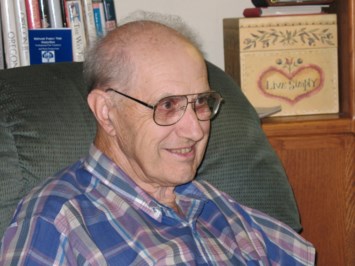
Wayne Walter Gingerich of Portland, Oregon passed away Nov. 22, 2011, age 80 years. He was born May 24, 1931 to Walter and Alta (Snyder) Gingerich. He was the youngest of five siblings. He attended Canby High School, worked for the U.S. Postal Service, was a life-long member of the Portland Mennonite Church, and was an avid hiker and bicyclist. Predeceased by his first wife Ida Louise (Sutter), he is survived by his wife, Vicki Meyer and family dog Sasha; children, Keith (Peggy) and Janet; and granddaughters, Maura, Rachael and Hannah Gingerich.
Wayne was a quiet and gentle man, kind and giving to all he encountered. Wayne was generally the quiet one in the room, but his presence was powerful.
His life centered on his family, church, and work. His life’s story centered on the events of the world he encountered as a child growing up in Portland and Canby, Oregon. These included the early passing of his father, a brother born with a disability, the early passing of an older brother, WWII, and the need to support his Mother, which limited his ability to go to college, and later, after retiring from the U.S. Postal Service, supporting a nephew who needed assistance. Wayne was a dedicated and loving father who helped his children and family in any way he could, always placing others first.
Wayne remembered being part of the Portland Mennonite Mission Church, which began around 1939. In 1955, sixteen years later, the church became an independent congregation known as the Portland Mennonite Church.
Wayne and Ida Louise were deeply involved from the very beginning as Sunday school teachers, as the bus driver for neighborhood children attending Sunday school, and with the camping programs.
Wayne was active in and dedicated to the church all throughout his life, various times serving as an elder and always willing to help on any number of work projects. Throughout his adult life, Wayne was generous in helping other people. No matter what the need, be it to help someone move, paint their home, mow the lawn or provide some financial help, he was there. Helping others seemed to bring a deep sense of satisfaction to Wayne.
Over the years Wayne rode his bike to and from work before it was “the in thing” to do. (See attached article) That way Ida Louise could use the one car they owned. Wayne loved the outdoors and helped to plan hikes all over the Northwest. In his younger years he would lead a group from church on bike rides to and from Lincoln City, a 180 mile round trip.
He estimated he rode between 80,000 to 100,000 miles back and forth to work from SE Portland to NW Portland and to the NE Portland Lloyd Center post office where he worked until he retired. When Wayne retired from the post office, he had the honor of being the longest serving mail carrier in the city of Portland.
A memorial service will be held at 3:00p.m. Saturday, December 3, 2011 in the Portland Mennonite Church, 1312 SE 35th Ave Portland, OR 97214. Arrangements under the direction of Lincoln Memorial Funeral Home, Portland, OR.
* * * * * * * * * * * * * * * * * * * * * * * * * * * * * * * *
Let Evening Come, by Jane Kenyon
Let the light of the late afternoon
shine through chinks in the barn, moving
up the bales as the sun moves down
Let the crickets take up chafing
as a woman takes up her needles
and her yarn. Let evening come.
Let dew collect on the hoe abandoned
in long grass. Let the stars appear
and the moon disclose her silver horn.
Let the fox go back to its sandy den,
Let the wind die down. Let the shed
go black inside. Let evening come.
To the bottle in the ditch, to the scoop
in the oats, to air in the lung
let evening come.
Let it come, as it will, and don't
be afraid. God does not leave us
comfortless, so let evening come.
* * * * * * * * * * * * * * * * * * * * * * * * * * * * * * * *
MENNONITES OF PORTLAND, OREGON RIDE THEIR BICYCLES FOR WORK AND PLAY. BICYCLES, THEY SAY, MAKE THE WORLD PEOPLE-SIZED AGAIN.
By: Marlene Y. Kropf
I’ve heard that there are Mennonite churches where the men gather in the parking lot after church and discuss the relative merits of each other’s cars. In our church they are more likely to be talking about their bicycles.
The bicycle phenomenon at the Portland Mennonite Church started over five years ago with Wayne and Ida Louise Gingerich, who believe in acting when they are convinced that a course of action is the right one. On his city mail-carrying route, Wayne often has to walk upstairs in order to deliver mail. He became aware one day at the age of 37 that he was sometimes short of breath. After a medical checkup which revealed nothing, he concluded that he was simply out of shape and needed something that would keep him fit.
Riding a bicycle to work seemed a possible answer. After a trial trip on his daughter’s bicycle, he bought one of his own and began riding it to work regularly – rain or shine. In so doing, he has discovered some amazing benefits of bicycle riding. The ride to work, 7 ½ miles one way, can be covered in 30 minutes. By car the same trip takes an ample 20 minutes and can be a frustrating, nerve-racking drive during congested rush-hour traffic. By using the bicycle he gets the physical exercise he needs and misses out on commuter tension – a double bargain!
At Wayne’s last yearly medical checkup his doctor was astonished at the incredibly low cholesterol level in his blood, a condition attributed to the combination of healthful exercise and proper diet. Wayne has discovered yet another benefit. On damp mornings he especially enjoys riding past the creek that runs through the valley below their home; he likes the damp smell of the water and the friendly sounds of birds and animals. Whizzing by in a car, he would miss it all.
Besides being healthful exercise, bicycle riding is also economical. One cyclist figured that in 6 months’ time he had paid for his 10-speed bicycle with his bus fare savings. The Gingerichs found that when bicycle riding became a way of life for their family, they eliminated the necessity of a second car. In the past nine months alone Wayne rode 3,400 miles on his bicycle.
Consider their family’s summer work schedule last year. Wayne rode 15-20 miles every day to his postal job and to do errands such as shopping. Keith, 18, rode his bicycle 12 miles a day to and from his gardening job in the central city. Janet, 15, rode 8 miles to and from her grandparents’ home, where she painted their house. That left Ida Louise with the use of the family car, but she sometimes left it parked at home and rode her bicycle to part-time jobs around the city. Obviously a second car or else many trips by bus would have been necessary for them to keep up with their schedule. Besides that there would probably have been wasted hours and miles chauffeuring one member of the family or another to his job.
Freedom from the automobile…
Wayne says, “The thing I enjoy most about the bicycle is freedom from the automobile.” As one could guess, the Gingerich’s viewpoint concerning automobiles is not entirely complimentary. Besides consuming an enormous portion of family finances, Gingerichs see cars as polluters of their city’s air. They are the kind of people who care intensely about stewardship – whether it is of money or the environment or the gospel. As part of their stewardship of the environment, they try to use their automobile only when necessary. In a recent letter to the editor of a Portland daily newspaper, Wayne wrote, “You only need to open your eyes on most of the days in our city to see what the automobile has done to our environment. In contrast, the bicycle is a healthful, pollution-free means of transportation. We need to get serious about the environment and what the automobile is doing to it. The bicycle is one alternative.”
Not content to keep a good thing to themselves, the Gingerich’s began spreading their riding gospel to fellow church members. Soon others followed their example. A sanitarian and an accountant (my husband) were both disenchanted with riding city buses to their downtown jobs. Not long after they began cycling to work, they were both amazed at how much better they felt.
Others in the congregation followed suit, and wives soon began joining their husbands in riding. Bicycle riding became a regular Sunday afternoon activity when groups of men or family groups would go out for 10-, 20-, or 30-mile jaunts. It was only natural, then, that when the congregation wanted to surprise their pastor with a very special gift for his birthday that they would choose a bicycle! Soon Pastor Mark Smucker was seen pedaling instead of driving to committee meetings.
The Sunday afternoon riders began talking about a really long trip, and the idea of the annual Mennonite Tour de Lincoln was born. One summer Saturday in 1970, six men from the church set out to ride ninety miles from Portland to Lincoln City, an Oregon coastal town. Although rain showers plagued the riders much of the way, they arrived – dripping – at their destination within eight hours.
By 1971 ten riders were eagerly anticipating the trip, including one female, Janet Gingerich. She rode the ninety miles in fine form, arriving with the others in 7 ½ hours. This year a fledgling bicycle club is coordinating the various rides, including the ride to the coast. Now the riders talk of even more ambitious outings – such as taking their bicycles to Vancouver Island, British Columbia, and traveling throughout the island.
Cheap Car or Good Bicycles…
In our church all kinds of people ride bicycles: middle-aged housewives, a doctor, a mailman, an X-ray technician, a tire recapper, teachers, young mothers – even children are not left out. If they are too young to ride by themselves, they come along in baskets or on specially designed seats where they are strapped in with safety belts. Some safety conscious parents also provide helmets for their children.
One couple has no car at all. When John and Sharon Miller completed a two-year stint as Voluntary Service leaders in Portland, they had to decide whether to use their limited funds for a cheap old car or good bicycles. They chose bicycles and have accommodated themselves quite comfortably to their life on two wheels. Cardboard boxes attached to their bicycles do double duty as laundry baskets to take clothes to the laundromat or as grocery baskets. Almost anything in the city is accessible by bicycle, but John and Sharon do sometimes ride the bus or ride with friends who have cars. When I asked them if they looked upon their car-less existence as a permanent state, Sharon said, “John plans to ride his bike to work forever – but if we would move out of the city or have a child, we would probably have to buy a car.” For now, though, the Millers get along very well without.
Riding together forms a bond of fellowship in our church. In the impersonal, mechanized city we ride together and become friends. We are bound together, too, by our desire to keep our city clean and beautiful. With others we are doing our part in the fight against pollution which threatens to destroy us.
As long as we must inevitably live in cities, we bicyclists dream of a city that will be home for man more than his technology. Bicycle riding makes the world people sized again. When one rides, he encounters the world at a pace fit for human beings. Blurs whizzing by become people to talk to, and almost forgotten smells of grass and roses tantalize the rider. Like John Miller, we plan to ride our bicycles forever. It’s a great way to go!
Montrez votre soutien
Envoyez Vos
Condoléances
Partager
L'avis De Décès
Obtenir les mises à jour
Prestations de Service
Partager l'avis de décèsPARTAGER
- RECEVOIR DES RAPPELS
v.1.18.0