
AVIS DE DÉCÈS
Peter D. Richardson
22 août 1935 – 21 avril 2020
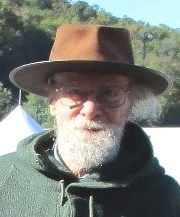
Peter Damian Richardson of Providence was born in West Wickham, Kent, England on 22nd August, 1935. He died at home of natural causes on 21st April, 2020 (age 84). He was the only child of the late Reginald William Merrill Richardson and late Marie Stuart Naomi Ouseley (Molly). He is survived by his former wife, Anne Richardson, also of Providence; daughter Margaret Richardson, of West Hartford, CT; son, Simon Richardson, of East Providence; grandsons Stanwood (Peter) Dolph of Seattle, WA; Damian Richardson of New Hampshire; and Sidney Richardson of East Providence; son-in-law Scott Duncan of West Hartford, CT; step-grandson Ian Duncan of Chaplin, CT; step-granddaughter Shannon Duncan Bodwell, step-grandson-in-law Aaron Bodwell, and step-great-granddaughter Aoife Bodwell, all of Manchester, CT. He is also survived by all of his first cousins in England, and most of their descendants.
When Peter was a small child, WWII broke out, and he lived in an area that was subjected to regular bombing. At one point a nearby bomb blast blew the windows out of his family’s house and he was relocated to a safer area. As he grew, he was very interested in all things mechanical and understanding how things worked. Even as a child, he could identify the make of an automobile by the sound of the engine. He was also a good and accurate artist – one of his childhood drawings of an airplane is housed in the Imperial War Museum in London. The war and its impacts made a huge impression on Peter and later influenced his decision to take a post-doctorate position in the United States, which was thriving economically in the 1950s, and which he reasoned would offer better opportunities.
Peter was a very good student. He was ready to enter college at the age of 16, and applied and interviewed to be considered for a scholarship to the Imperial College of Science, Technology and Medicine in London, despite the rule that the age of eligibility was 18 at the time. The approval committee was so impressed with Peter that they changed the rule for the age of eligibility and awarded him the scholarship. Peter earned his Bachelor’s and Master’s degrees, as well as his Ph.D. in Mechanical Engineering, with a specialty in Thermodynamics and Fluid Mechanics, completing the program when he was just 22 years old. While there, he also took some classes at the London School of Economics. He later earned two D.Sc. degrees as well, in Engineering and Physiology.
Peter’s university advisor, Sir Owen Saunders, was connected with the late Professor Joseph Kestin of Brown, who became Peter’s mentor. Peter came by boat to the United States, anticipating to stay for one year. After his initial year, he was asked to stay on for two more, and then awarded the titles of Associate Professor, Assistant Professor and finally Full Professor in 1968. Along the way, he developed an interest in the relatively new specialization of Biomedical Engineering. This interest led to collaborations with numerous others, notably including the late Pierre Galetti, MD; and the creation of or improvement upon lifesaving devices such as the heart-lung machine, many of which have further evolved into versions that are still saving and prolonging lives today. He was appointed Professor of Engineering and Physiology in 1984. He remained in this role until his retirement in 2015 just before he turned 80. He remained active on the Biosafety Committee and actively participated in Faculty meetings until just prior to his death.
In 1976, Peter was a recipient of the Alexander von Humboldt Senior Scientist Prize. He was elected a Fellow of the Royal Society in 1986, which was a lifelong goal. Peter was awarded the Jung Prize in Medicine in 1987. He was a founding Fellow of the American Institute for Medical and Biological Engineering, a Fellow of the City & Guilds of London Institute, a Fellow of the American Society for Mechanical Engineers, Inaugural Fellow of the Biomedical Engineering Society, Honorary Fellow of the Royal College of Physicians (London). Peter was a member of the American Society for Artificial Internal Organs, American Society for Engineering Education, Honorary Member of the British Atherosclerosis Society, as well as other professional societies. He was a prolific writer, publishing numerous academic papers and contributing to books.
Peter used his engineering expertise and knowledge of fluid mechanics to design artificial lungs and a hybrid pancreas. His study of the interaction between blood vessels and blood flow has advanced scientific understanding of atherosclerosis (thickening of artery walls) and thrombosis (formation of blood clots). To complement his blood flow research, Peter developed the use of ultrasound to diagnose conditions in blood vessels. Peter’s non-biomedical contributions include studies of heat convection for the US Air Force and early computational work for NASA on the effects of radiative heat transfer on the lunar surface.
Peter’s hobbies included drawing, photography, reading, and enjoying the outdoors through cycling and hiking. He also loved music, mainly Classical. His favorites varied widely, but he had a particular appreciation for Organ recitals. Peter traveled extensively for work and pleasure on five continents. He never went to Antarctica, nor to South America. He was also an explorer of New England's natural offerings, making an annual pilgrimage to Mt. Monadnock into his 70s. He traveled back to his home country frequently.
He developed a relationship with Hope High School in the 1990s to early 2000s, where he volunteered in a number of capacities. He acted small parts in Shakespeare plays. He provided academic and career counseling. He believed in a principle he articulated as "education without discrimination". He was delighted when one of his grandsons attended Hope High School as a Special Education student, and experienced no bullying or other difficulties, partly as a result of Peter's status in the community.
Peter favored opportunities for women and anyone who was excluded without good reason. He was a strong believer in traditional methods, such as observation and the direct study of nature. He loved being able to answer questions about science for non-scientists.
Funeral services were held privately for family only, organized through Pontarelli-Marino Funeral Home. A future Memorial Service and reception is planned when large gatherings are safely permitted again (date TBD). In lieu of flowers, memorial donations are suggested to Brown University. For more information: https://brunonia.brown.edu/giving/ways-to-give; please include tribute in comments or memo line.
Montrez votre soutien
Envoyez Vos
Condoléances
Partager
L'avis De Décès
Obtenir les mises à jour
Prestations de Service
Partager l'avis de décèsPARTAGER
- RECEVOIR DES RAPPELS
v.1.18.0