AVIS DE DÉCÈS
Khanh Cao
15 août 1934 – 14 août 2025
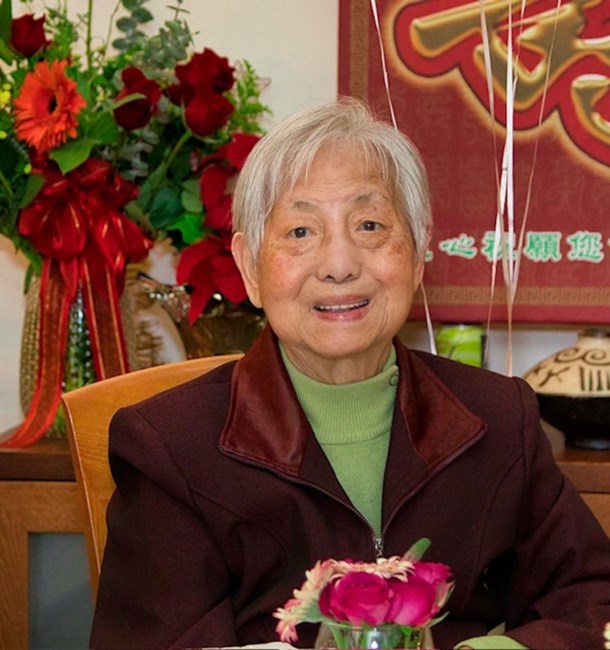
Khanh Cao was born the third of four children to Tin Hung Cao and Tu Ai Truong in Foshan, Guangdong Province, China.
Her childhood in the countryside was spent with her siblings roaming the field, catching small fish and collecting snails to add to the family’s dinner. That idle life in the countryside was cut short when Japanese troops expanded their occupation to her hometown during the second world war. At the age of 8, along with her mother and two siblings, Khanh embarked on a journey south seeking refuge in Vietnam. Merely two years after arriving in Vietnam, she was separated from her two siblings after the death of her mother. Khanh was sent to live with her aunts in My Tho, a town in the Mekong Delta. While unable to attend school to gain a formal education, she began learning Chinese characters by listening to songs and seeking help from whomever was willing to teach her. Gradually, she was able to read Chinese news articles and books.
A few years later, at the age of fifteen, Khanh reunited with her two siblings in Saigon where she started her apprenticeship in a textile workshop. She quickly mastered her skills and started to work in a local textile factory earning her living as a weaver. Khanh soon settled into her new life in the city. she enjoyed making new friends and taking on new interests including many activities at the Worker Union Hall where she met the handsome Tu Anh La, whom she subsequently married and started their family life together.
Khanh’s love for family was evidenced by the birth of her eight children over subsequent years. Raising her children in war torn Vietnam was not an easy undertaking but she was happy with a large family – keeping everyone clothed, fed and safe. Most of all, she did her best to fulfill her promise of giving her children the education and opportunities that were not afforded her. Aside from being a mother, she was also a keen partner to her husband as they started their own printing business – Chi Thanh Printing in Chinatown of Saigon.
Khanh’s domestic life did not stop with her children. She took on the care of her nephew and niece along with her mother-in-law in her later years. Her willingness to lend a hand, to whomever and whenever needed, earned her the love, trust and respect of her extended family as well as her neighbors. She earned the endearing term “Aunty Seven” (seven is for her husband’s birth order).
After the Vietnam War ended, life became significantly more challenging due to economic hardships faced by ethnic Chinese. She and her husband decided to work on a plan to repatriate their family to China. However, their plan did not materialize. After many attempts, three of her children joined the wave of refugees eventually settling in Seattle after spending time in refugee camps – The family was separated once again.
Subsequently, the rest of the family immigrated to Seattle – family together at last. To Khanh, it was a start to a new life; once again in a country with a different language, customs and unfamiliar foods. Yet, always looking toward the brighter side of life, she was determined to make the most of her new life. In her 60s, she attended classes to learn basic English and managed to pass the exam to gain her American citizenship. She enjoyed meeting new friends at the senior center, taking trips to state capitol in Olympia for Legislative Days and singing and dancing at weekly luncheons at Legacy House.
Despite some health setbacks, Khanh continued to be a fighter exemplified by beating cancer and later regaining most of her mobility after a stroke. She refused to shy away from her joy of cooking, crafting and caring for her family. During the COVID 19 pandemic, she suffered another stroke that confined her to a wheelchair. She worked hard to adapt to this reality, training her left hand, exercising moving from room to room and helping with cooking and prepping meals for her family.
Throughout her life, her happiest moments were those when she was surrounded by family, sharing meals and the laughter that came with them. In the last few years of her life, often times, she beamed with pride hearing about the travel tales and small accomplishments of her children and grandchildren. Before she passed, she smiled with content seeing the faces of her children and grandchildren in the room. Khanh’s positive and resilient legacy lives on through her family.
Montrez votre soutien
Envoyez Vos
Condoléances
Partager
L'avis De Décès
Obtenir les mises à jour
Prestations de Service
Partager l'avis de décèsPARTAGER
- RECEVOIR DES RAPPELS
v.1.18.0