
AVIS DE DÉCÈS
Hildegard Casebeer
11 février 1923 – 24 septembre 2016
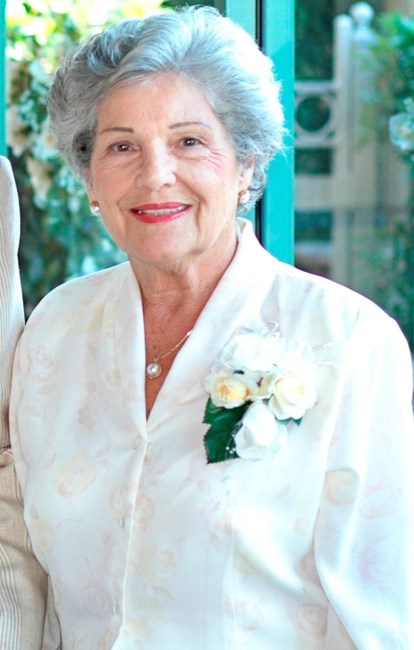
Like many Germans, her coming-of-age years were consumed by the fires of World War II. She was drafted into the Arbeitsdienst, a domestic cadre of teenage men and women who kept the country running, after millions of men were conscripted for military duty. Hildegard worked on farms, slept on straw-filled mattresses in cold barracks, wore brown uniforms made of rough cloth, and endured conditions that approached those imposed on Allied prisoners of war.
Later, she served in a German military command center, plotting locations of enemy bombers on a large, transparent display board. At one point, Germany’s top leaders—including Adolf Hitler and Hermann Goering—were in the room, monitoring waves of incoming British and American warplanes.
Bright and ambitious, Hildegard subsequently worked as a draftsman for Siemens, a major German company. She learned quickly, was intrigued by the challenges of high technology, and might have become an engineer in different times.
Hildegard met her husband-to-be under unlikely circumstances, shortly before the war ended. Walking to the bakery after a curfew was lifted, she and her sister were stopped by a handsome young American officer riding in a Jeep. Fortunately, Gayle Casebeer’s enlisted driver spoke German and soon coaxed a home address from the frightened girls. The next day, U.S. Army Lt. Casebeer appeared at the Norterhauser home, ostensibly to “search for weapons and contraband.” Even though he only spoke English and she only German, they managed to communicate. Mutual attraction sparked a brief courtship, before Gayle was transferred to other posts in Germany.
Hildegard had found her man and wasn’t about to let mere distance keep them apart. She grabbed a suitcase and walked miles along railroad tracks, until she caught up with the young officer. A few days after Germany surrendered in May 1945, Gayle and Hildegard were married by a frightened “monk.” Whether the wedding ceremony was legal or not is still uncertain. A few years later, when they landed in New York, Hildegard’s cousin insisted they be re-married immediately, just to be sure.
Gayle commanded a unit of prison guards, during the Nuremberg war crimes trials, keeping the couple in Europe for another two years. Their first child, Rita, was born in Duren, Germany, on March 5, 1947, beginning a pattern typical of post-war Army life. Gayle and Hildegard’s four children were born in three different countries: Rita in Germany, Linda at Fort Knox, Kentucky, Gary in Hokaido, Japan, and Gayle Tom at Dugway Proving Grounds, Utah.
Throughout her 93 years, Hildegard’s top priority was caring for her family. She often handled the home front alone, while Gayle was deployed or on duty. Kids were always clean and neat, floors scrubbed and waxed, and dinner ready when Gayle got home. Young and vibrant, Hilde enjoyed dressing up and going to the officers’ club, always elegant and the quintessental Army wife.
Gayle retired from active duty in 1963, while again stationed in Germany. He landed a civilian position with the military exchange system, allowing the family to remain in Europe two more years. Ultimately, though, he and Hildegard wanted their children to become “American kids,” prompting a final move to Sacramento in 1965. They bought a house in the Carmichael area, where they lived for almost 50 years.
Hildegard enjoyed gardening, and her flower beds, bushes and lawn reflected her staunch German standards: Everything was orderly and neat. Weeds barely peeked through the dirt, before they were yanked out by the sharp-eyed frau, and bushes, trees and lawn were clipped, trimmed and edged just so.
Although she claimed to disdain cooking and housework, Hildegard never failed to whip up tasty, bountiful holiday meals for a family that seemed to keep growing, and her home was invariably picture-perfect—until grandkids appeared. Then order and neatness gave way to fun and hearty laughter. Hildy loved being surrounded by family, and was known to become a bit crotchety, when kids and grandchildren had to return to their own homes.
Hildegard experienced hardship and challenges that would have broken a weaker person--the loss of her parents, brothers, a sister, both of her sons, and a grandson. She took care of her husband, Gayle, as his health failed, refusing to accept in-home assistance, and was with him when he passed peacefully in June 2010. She lived alone for several years, but time and a lifetime of trials began to take their toll on Hildegard’s mind. She lived her final years in an Alzheimer’s care center, but never quite gave up on the idea that she was going home soon. After all, she had to take care of Gayle and her boys and girls.
Hildegard was preceded in death by her parents, Dionys and Gertrude Norterhauser; brothers Peter and Willy; sister Gertie; sons Gary and Gayle Tom; and grandson Erik Scott.
She is survived by daughters Rita (Randy) Lavelock, Linda (Bill) Scott, grandchildren Kevin (Allison) Scott, Robert (Debbie) Lavelock, Ryan Casebeer, Heather (Vince) Aginaga, six great-grandchildren, and several German nieces and nephews.
Montrez votre soutien
Envoyez Vos
Condoléances
Partager
L'avis De Décès
Obtenir les mises à jour
Prestations de Service
Partager l'avis de décèsPARTAGER
- RECEVOIR DES RAPPELS
v.1.18.0