
AVIS DE DÉCÈS
Enrique Gómez Garcia
3 septembre 1945 – 5 mai 2017
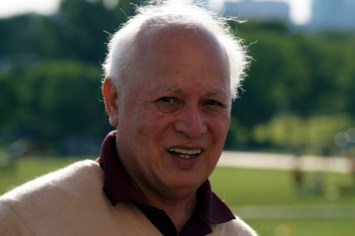
Enrique Gómez García, 71, passed away on Friday, May 5th, 2017, in San Antonio, Texas, where he lived the past 20 years. Enrique was born in Mexico City to Esperanza García Ortega, a seamstress and Rubén Gómez Prado, who was a colonel in the Mexican Revolutionary army of Venustiano Carranza and was also a politician who was a cofounder of the Authentic Party of the Mexican Revolution (PARM). Enrique was named after a close friend of his father, who died in battle during the Mexican Revolution, and had asked Rubén to name his first son after him shortly before dying.
As a child, Enrique was interested in sports, playing baseball, soccer, and American football. Enrique enjoyed attending live sporting events as a child, particularly the college football games from the National Polytechnic Institute (Instituto Politécnico Nacional or IPN) and the National Autonomous University of Mexico (Universidad Nacional Autónoma de México or UNAM), as well as betting on Jai Alai and horse racing at the age of 8. He apprenticed at age 5 to a carpenter, a skill he used the rest of his life. Starting at the age of 11, with his friends and brother, they would organize excursions to climb to the top of Mexico’s second highest mountain, the Popocatépetl volcano (17,802 ft), inventing his own climbing shoes, one of his many inventions and contraptions throughout his life.
Growing up in a political family, Enrique accompanied his father across Mexico, helping his father campaign for office, providing an experience that taught him about politics, writing and delivering political speeches. Most importantly, this put him in direct contact with the most humble and vulnerable people of Mexico and helped him understand their needs thus developing in him a strong social justice conscience.
Enrique graduated from the UNAM’s school of Political and Social Sciences with a degree in Sociology, in one of the first classes to graduate from UNAM’s Sociology department. He also received a diploma from the Instituto Matías Romero’s of the Secretariat of Foreign Relations in Mexico. Aware of the need of democratic change in a government dominated for decades by a single party, he participated in one of many brigades during the student protest movement of 1968. On October 2nd, 1968, Enrique was arriving to a student political rally being held in the plaza of Tlatelolco in Mexico City, only to find it cordoned off by the military who had enclosed ten thousand students in the plaza and had begun shooting hundreds of the participants, requiring him to stay on the ground until the shooting stopped. This event became known as the Tlatelolco Massacre, which would shape the political landscape of the country and the experience of his generation for decades to come. Enrique maintained his desire for a fair government of laws free from corruption that was of the people and accountable to the people. Even though he lived in the United States, he would assist the Mexican community to participate in the Mexican presidential elections and supported efforts to raise its political consciousness. To this end, he most recently participated in various political movements such as the international movement to demand justice for the families of 43 forcibly disappeared education students of the Ayotzinapa Normal School in Mexico by authorities as part of a strategy of political repression by the groups in power in this country.
His professional life included working for Mexico’s National Social Security Institute (Instituto Mexicano del Seguro Social or IMSS) where he enjoyed working with like minded individuals, such as his friend Marcelino Lara, the Rural Credit Bank (Banco de Crédito Rural), Mexico’s Department of Water Resources (Secretaría de Recursos Hidráulicos), and the Mexican Consulate in San José, California.
Enrique met his beloved wife and companion of the next 44 years, Elizabeth, in Mexico City in 1971 and were married December 23, 1972. Enrique believed that the transformation of the world begins at home which showed by his devotion to his family. Early memories of his children involved their father playing the guitar, recreating a song on the piano by ear, singing, and painting portraits of his wife and children. As well as ensuring that his children received a good education, he encouraged and learned more about their interests throughout their lives and urging them to develop a sensibility for social justice regardless of their career choice. He worked tirelessly to provide for his wife, children and grandchildren, always making sure that his family was comfortable and had what they needed materially and emotionally.
Every person who engaged Enrique in conversation became more knowledgeable about history and world politics developing more compassion and understanding for the plight of others. We will truly miss his sense of humor, meeting every situation with wisdom, wit and a song. His family is committed to continuing Enrique’s tradition of meeting at the breakfast table to discuss politics, philosophy, sociology, psychology, history, theoretical frameworks, the nature of the universe, social problems and to challenge each other’s paradigms.
Enrique was extremely loving, supportive and proud of his three children, Dr. Enrique A. Gómez (Jennifer Abbey and Ivy) from Sylva, North Carolina, Ing. Eduardo R. Gómez from Corpus Christi, Texas, Carla L. Gómez Ortiz (David Ortiz) from San Antonio, Texas, as well as his many nieces and nephews.
He is survived by his wife, Elizabeth Gómez of San Antonio, sisters, Martha Gómez García, Silvia Gómez García and brother, Dr. Rubén Gómez García from Mexico City, and sister-in-law, Margaret Benson of Los Gatos, California.
The family would like to thank all of the outpouring of support and above and beyond effort from the immediate family to be with us and all the friends that have reached out.
We also would like to give a special thank you to Northeast Methodist Hospital in San Antonio, Texas, for their loving care and support.
¡HASTA SIEMPRE PAPÁ!
Montrez votre soutien
Envoyez Vos
Condoléances
Partager
L'avis De Décès
Obtenir les mises à jour
Prestations de Service
Partager l'avis de décèsPARTAGER
- RECEVOIR DES RAPPELS
v.1.18.0