
AVIS DE DÉCÈS
Frank Francis William Jennings
17 juin 1917 – 16 août 2009
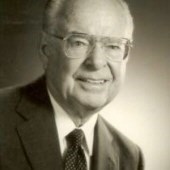
He was born June 17, 1917, in Missoula, Montana, to the late Harry W. and Lamberta Jennings.
His father was an accountant in Missoula with the Northern Pacific Railway and spent more than 40 years in military service. Frank served in the US Army as a commissioned information officer and later as a civilian employee successively in the US Army, the Office of Secretary of Defense and the US Air Force. He retired as a Lieutenant Colonel in the Air Force Reserve in 1972 and as civilian GM-15 in the Office of the Secretary of the Air Force in 1985.
A professional writer since his retirement from the US Air Force, Jennings was the author of SAN ANTONIO: The Story of an Enchanted City, a widely used 400-page history and guide, published in 1998 by the San Antonio Express-News, and in June 2001 by Eakin Press in Austin, Texas. In 1988, he began writing a column on San Antonio history for the monthly Senior Sentinel, published by the Senior Citizens Council of Bexar County.
He also wrote historical articles, from time to time, in the San Antonio Light, the San Antonio Express-News and Texas Highways magazine, as well as the San Antonio Conservation Society News. In 1986, he began writing a monthly or bi-monthly newsletter for Oral Designs Dental Laboratory, which is distributed to dentists throughout South Texas.
He also wrote a number of articles on military doctrine for Airpower Journal and later, Aerospace Power Journal, the professional journal of the Air Force, published at the Air University in Montgomery, Alabama; for Air Force Times, a commercial national newspaper, and book reviews for Southwestern Historical Quarterly, published by Texas State Historical Association.
He wrote a major article, titled "Genesis of the Aerospace Concept," published in May 2001, in the spring issue of Air Power History, a journal of the US Air Force Historical Foundation. Jennings initiated and obtained approval for an official Texas Historical Marker at San Pedro Creek on Houston Street, which was dedicated on May 1, 1996, to commemorate the founding of San Antonio, with the establishment of Mission San Antonio de Valero and Villa de Bexar on the creek in May 1718.
He also initiated and obtained approval for a Texas Historical Marker commemorating the first successful demonstration to Texas cattlemen of barbed wire in Alamo Plaza in 1876. The marker, dedicated on November 5, 2000, faces the plaza on an outer wall of the Menger Hotel, where some of the participants stayed during the event that changed Texas economic history.
Jennings began a years-long effort in 1987 to arouse interest among historic preservationists and County and City leaders in the need to save, restore and beautify San Pedro Creek, the most historic creek in Texas, but one that had been virtually shunted out of sight by downtown buildings for decades. Finally, at a meeting with area civic leaders on October 26, 2001, the San Antonio Conservation Society assumed responsibility for the project and prompted concrete actions that could eventually bring development of a linear park and walkway on the restored creek.
Jennings was active in the San Antonio Historical Association for many years and in the Vaqueros, a chapter of Westerners International; and the Texas State Historical Association, as well as the San Antonio Conservation Society. On January 25, 2001, he was presented the Award of Merit 2000, voted by members of the San Antonio Historical Association. This annual award is "in recognition of outstanding contributions to the preservation of South Texas history."
Jennings attended the University of Nebraska in Lincoln before joining the National Park Bank in Livingston, Montana. He was drafted during World War II and graduated from Quartermaster Officer Candidate School in Fort Lee, Virginia. After serving in 1945, as Chief Information Officer for Headquarters Central Engineer District, Army Forces Western Pacific, Manila, he was released from military service in 1946 and appointed civilian director of Information Services, G-3, Hq PHILRYCOM, charged with directing and supervising the Troop Information Program for Army forces in the Philippines and Ryukus Okinawa.
He returned to the United States in 1949, and served as Editor in Chief of the Armed Forces Talk pamphlet series and pocket guides to foreign countries in the Armed Forces Information and Education Division, Office of the Secretary of Defense, until 1954. He helped establish the Air Force Internal Information Program in the Office of the Director of Information, Office of Secretary of the Air Force, beginning in March 1954. Soon after he transferred to the Air Force as a civilian, he transferred his Army commission to Air Force.
He retired as an Air Force Lieutenant Colonel in the Air Force Reserve on October 1, 1972. During his service as a civilian in the Air Force, he wrote and edited the Air Force Policy Letter for Commanders the Blue Letter, published by the Director of Public Affairs in the Office of the Secretary of the Air Force. From June 1959 to April 1985, he wrote the twice-monthly, four-page letter, which reported on national, defense, and Air Force policy for commanders and key staff officers throughout the Air Force. From 1954 to 1959, as a writer of editorials and features for Air Force News Service, providing news and opinions to Air Force base newspapers world-wide, he wrote about the concept of the sky as a limitless military operational medium, and in 1957 coined the word "aerospace."
In 1984, Jennings received the Citation of Honor from the Air Force Association for making a "major contribution to the effectiveness of the Air Force and the national security of America." The award was presented at the luncheon honoring the Secretary of the Air Force during the AFA's 38th Annual Convention in Washington, D.C. In 1972, he was awarded the Decoration of Exceptional Civilian Service to the Department of the Air Force, and in March 1985, he was presented with a second decoration for Exceptional Civilian Service,
this time by the Secretary of the Air Force, Verne Orr, at a ceremony in the secretary's office in the Pentagon.
On April 21, 2001, at the Annual Banquet of the Air Force Public Affairs Alumni Association in Alexandria, Virginia, he was presented with the President's Award on behalf of the current and past presidents of the national organization. He was declared a "Public Affairs Pioneer" for "having coined the term 'aerospace' to define the Air Force's operating environment," and "for decades of editing the Blue Letter, which helped commanders speak with single voice." He also was cited for his work as "a writer, editor, historian and author."
For many years Jennings was active in programs for the San Antonio Historical Association, and in 2004 he planned and organized San Antonio's first annual Founders Day to celebrate the 20+ cultural groups who shaped its history and unique character. The parallel purpose of the Founders Day program is to promote and reward more reading and learning among our youth about our local and Texas heritage in its national context.
Jennings is survived by his wife, Isabel Lita Yumol Jennings of Manila, Philippines; his four children from his former marriage to Grayce L. Siderius of Kalispell, Montana; Gretchen Fallon and husband, Jerome Jim of Washington, D.C., Gregory Jennings and wife, Linda of Alexandria, VA and Sanibel, FL, Frances Gibson and husband, Kenneth of Potlatch, ID, Joanne Kahn and husband, Clark West of Westminster, MD; grandchildren, Kevin Bobbitt of NC, Michele Bobbitt and husband, Jean Samuel Sallah of Flagstaff, AZ, Lauren Kahn Cleary and husband, John of Plainfield, VT, Mathew Kahn and wife, Maren McBride of Washington, D.C.; great-grandchildren, Sophia, Eliza, Rowan and Marianna.
In lieu of flowers, the family requests memorials in Frank's name to his special project, San Antonio Founders Day Association, P.O. Box 700767, San Antonio, Texas 78270.
Montrez votre soutien
Envoyez Vos
Condoléances
Partager
L'avis De Décès
Obtenir les mises à jour
Prestations de Service
Partager l'avis de décèsPARTAGER
- RECEVOIR DES RAPPELS
v.1.18.0