AVIS DE DÉCÈS
Philip Rodney Larson
26 novembre 1923 – 29 avril 2023
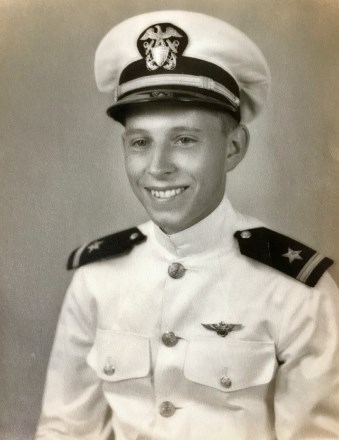
On November 26, 1923, Philip Rodney Larson was born to Eric Gunnnar Larson and Anna Ruth (Fagerstrom) Larson, becoming the youngest of three children and the couple’s only son. After the death of his mother in 1927 from tuberculosis and the remarriage of his father, Philip and his two sisters were raised by their maternal grandparents, Otto Wilhelm Fagerstrom and Wilhelmina Erstina (Schmidt) Fagerstrom in North Branch, MN, then a rural farming community of 200 souls.
Phil’s early life was a typical one comprised of many chores, especially gathering, chopping, and storing firewood, and caring for an acre of oak-filled lawn. In his free time, Phil enjoyed hunting, fishing, and hiking in the surrounding woods and fields and reading his grandfather’s National Geographics that offered glimpses into a large and exotic world well beyond the confines of a small midwestern town. A high school class in agriculture raised the idea of forestry as a potential career choice for Phil, though after high school graduation, a year’s work in the local U.S. Post Office led Phil to believe working there would become his career.
The bombing of Pearl Harbor and the United States’ entry into WWII changed all that. Like so many other young men who answered the call, Phil enlisted in the Navy on May 28, 1942, becoming, on June 23, 1943, the first Naval Aviator Cadet to graduate from TS-13C in Beeville, TX. During active duty, Phil flew anti-submarine and torpedo bombers in the Atlantic and Pacific theaters, flying primarily the TBM Avenger, the Grumman TBF Avenger, and PBY5-A Catalina while assigned to U.S.S. aircraft carriers Anzio, Bogue, Core, Guadalcanal, Kasaan Bay, Long Island, and Tripoli. Phil’s Composite Squadron Thirteen was awarded the Presidential Unit Citation Award for action in the Atlantic from July 13, 1943 to January 16, 1944. Phil was presented with an Air Medal and with two Gold Stars for action in the Okinawa area, the first for action during early spring, 1945 and another for action in late spring, 1945. Phil was honorably discharged from active duty on January 3, 1946 with the rank of Lieutenant Junior Grade. He served in the U.S. Naval Reserve until November 4, 1948, retiring with the rank of Lieutenant.
Phil was later to say that joining the Navy was the first major turning point in his life and in his later career. His military service also enabled him, through the G.I. Bill, to enroll at the University of Minnesota’s School of Forestry in 1946, where he received his B.S. and M.S. degrees in 1949 and 1952 respectively. During the next summers, Phil worked at the Southeastern Forest Experiment Station in Lake City, FL where he conducted research on slash and longleaf pine silviculture and on problems of oleoresin extraction related to the naval stores industry in the Olustee National Forest. One summer, Professor Harold Lutz from Yale University visited this station. He inspired Phil to continue his studies at Yale. Here is where Phil claimed to have experienced a second major turning point in his life and career, stimulated by his graduate studies and Yale’s excellent library. In 1957, Phil earned his Ph.D. from Yale with a degree in Silviculture and Plant Physiology.
After graduation, Phil began working for the U.S. Forest Service in Rhinelander, WI, at what was then the Institute of Forest Genetics and, after any number of name changes, is now the Northern Research Station’s Forest Services Laboratory. Phil was a founding father of this research station and laboratory. His first office was located above the Merchants State Bank in Rhinelander while the laboratory’s greenhouse and then main building were being constructed in 1960.
In 1962, the Forest Service awarded Phil the designation of Pioneering Scientist which granted him relative freedom and broad authority to conduct research on the physiology of wood formation. Research topics under the Pioneering concept had to be unique, so Phil focused his research on wood formation which was, at the time, being pursued internationally only sporadically and unsystematically while theoretical concepts unifying wood formation with other aspects of tree growth were almost nonexistent. This line of research led Phil to the discovery of crown-control wood formation, a new concept that provided valuable perspectives on tree growth and allowed for the reinterpretation of past research on large trees to elucidate some of the consequences of then current practices in silviculture. Scientists added to Phil’s physiology of wood formation project included J.C. Gordon in 1965, replaced in 1970 by R.E. Dickson, J.G. Isebrands in 1968, and D.I. Dickmann in 1969.
Phil next undertook to study how wood is formed by conducting research on primary vascularization. This led to investigations into the vascular cambium, the source of wood formation, utilizing the then new research techniques of microautoradiography and biochemical research. One of the last areas Phil and his research team tackled was the simultaneous study of anatomical structure and physiological function as they related to wood formation. This structure/function approach to wood formation and tree growth added not only to then current academic knowledge, but it also proved useful to silviculturalists in managing forest stands in National Forests as well as in other forestry disciplines involved with the growth of trees.
During his 35-year career in forest research, Phil published over 150 scientific papers and reviews, presented numerous university seminars, and lectured widely at conferences across the United States and at international scientific organizations in Australia, Austria, Germany, Israel, France, Philippines, Sweden, Scotland, and Canada. Phil mentored nine doctoral candidates and was a member of the Society of American Foresters, the Botanical Society of America, the American Society of Plant Physiologists, the International Association of Wood Anatomists, and the International Academy of Wood Science. In recognition of his scientific accomplishments, Phil was the recipient of the U.S. Department of Agriculture’s Distinguished Service Award presented by Secretary Earl Butz in Washington, D.C. (1975), the Society of American Foresters’ Barrington Moore Award (1975), and the New York Botanical Garden Research Award (1977) among others. Recognition by the U.S. Forest Service came in 1976 when Phil was promoted to grade GS-17. This promotion was notable because the GS-17 grade did not exist. It was created for Phil, who was also asked to write the job description for this new grade. Phil’s career with the Forest Service began modestly in 1949 as a GS-3 Forestry Aide.
After retiring in March, 1986, Phil worked on writing his book, The Vascular Cambium: Development and Structure, published in 1994 by Springer, the second book in Springer’s Series in Wood Science. In retirement, Phil and his wife Yvonne enjoyed playing duplicate bridge, X-country skiing, hiking, attending Elder Hostels, and traveling in the U.S. and abroad. Phil continued to enjoy spending time in his wood lot, gathering, chopping, and stacking firewood for the long Northwoods’ winters until the couple moved to the Phoenix, AZ area for a second retirement.
In the evening of April 29, 2023 at the Memory Care Unit at Adante Senior Living facility in San Antonio, TX, Phil passed peacefully with his two daughters at his side, along with a number of Memory Care and hospice staff who had come to adore this unique individual. A heartfelt thank you is extended to each one of the exceptional staff members at Adante Memory Care for their devoted and loving care of Philip Larson beginning on February 8, 2022. Our thanks also go to the staff of Freedom Hospice for their kind and dedicated services on Phil’s behalf commencing in late September, 2022, and to the staff of Comforcare, whose loving and attentive administrations began in late March, 2023. Our thanks also extend to the thoughtful and caring staff at Independence Hill’s independent living community in San Antonio where Phil resided for nearly 13 years in contentment and in safety throughout the pandemic. Deep gratitude goes to Timothy A. Hernandez, MD, Pasteur Medical Associates of San Antonio, for his many years of trusted caring for and interest in Phil’s health and well being. A special thank you goes to Dr. Jud Isebrands, Phil’s friend and research partner, who provided welcome facts and memories.
Phil was predeceased by his two sisters, Janice Mae Chambers and Estella Wilhelmina Sumner, niece Louisa Elaine (Sumner) Morales, along with his beloved and cherished wife of nearly 60 years, Yvonne Evelyn (Sybrant) Larson. Left to cherish his memory as a devoted family man and father are daughter Cynthia Marie Larson and son-in-law Mark Chamberlain of Tucson, AZ, daughter Paula Rae Larson and son-in law Alan Farris of San Antonio, TX, and the nieces and nephews from the Chambers family (Rodney Dale, Allen Ruston, Nancy Jane, Ruth Ann) and Sumner family (Cathy Jean) and their descendants.
Inurnment to follow at Arlington National Cemetery.
Montrez votre soutien
Envoyez Vos
Condoléances
Partager
L'avis De Décès
Obtenir les mises à jour
Prestations de Service
Partager l'avis de décèsPARTAGER
- RECEVOIR DES RAPPELS
v.1.18.0