
AVIS DE DÉCÈS
Tewolde Woldu
29 décembre 1937 – 27 février 2026
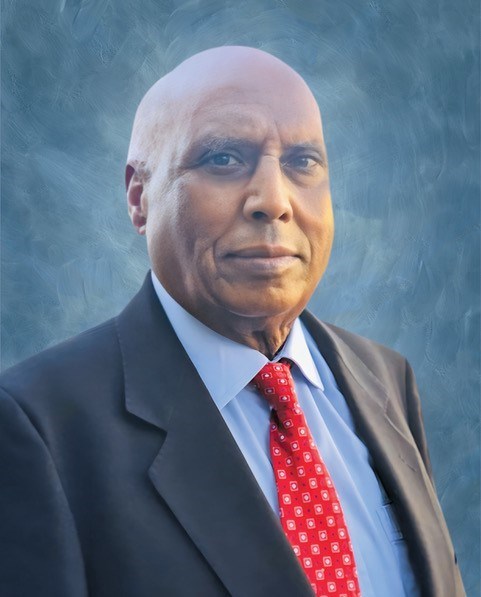
Tewolde Woldu Tewoldemedhin, affectionately known to many as Tewoldino, lived a life defined by service, generosity, and deep human connection. His father, Woldu Tewoldemedhin, originally from Adi-Ke—a small town outside Asmara—later relocated with his family to the southern region of Eritrea.
Tewolde “Tewoldino” was born on December 29, 1937, in the small village of Adi Gania, near Adi Qwala in Eritrea. He was the youngest of five children born to Woldu and Medhin, growing up in a close-knit family that instilled in him the values of humility, hard work, and care for others.
Tewolde’s early life was shaped by both hardship and resilience. He lost his father when he was only one year old and was raised by his devoted mother, Adey Medhin Gebre Mariam, alongside his siblings: Abrahatsion Woldu, Haile Woldu, GebreMichael Woldu and Eqube Woldu. Despite the challenges of losing his father at an early age, he grew into a young man full of curiosity, courage, and a deep sense of purpose.
As a middle school student, he moved to Asmara, where he attended Bet Giorgis Middle School, and later graduated from Asmara Secondary School. He continued his education to become a teacher in Asmara at Teacher’s Training Institute (TTI) and began his professional life as an educator. His first assignment took him to Dekeamhare, where he worked as an elementary school teacher before returning to teach in Asmara.
At the age of 24, Tewolde embarked on a remarkable journey of service. As a pioneer for the Bahá’í Faith, he traveled to the Kunama region of Eritrea to share the teachings of his faith. What began as a spiritual mission became one of the most transformative chapters of his life. For five years he lived among the Kunama people, working the land as a farmer alongside them, eating what they ate, and forming deep friendships and lifelong bonds. His time there reflected the essence of who he was. A man who believed in unity, humility, and walking alongside others rather than above them.
After this period of service, Tewolde pursued a new professional direction and joined the National Soft Drinks Factory in Asmara as an accountant. This opportunity opened another chapter in his career when he later joined Handelsvereniging Amsterdam (HPV) as a sales associate. As the company expanded the Wonji Sugar Factory and later operations across Ethiopia, Tewolde’s work took him across the country. His travels carried him from north to south and from east to west, allowing him to discover the rich diversity of Ethiopia and build friendships wherever he went.
In 1974, he settled in Dessie, Wollo, where he served as a branch manager. During his twelve years there, life brought him another great blessing when he met his wife, Nigist Berhe. Together they built a family and welcomed their two daughters, Leleda and Carmel.
Tewolde was deeply intentional even in the names he gave his children. He named his first daughter Leleda, meaning Dawn, inspired by the Kunama language and the spirit of new beginnings it represents. His second daughter, Carmel, was named after Mount Carmel in Israel, reflecting his spiritual devotion.
As the Ethiopian Sugar Corporation expanded its operations to Metahara and Shoa, Tewolde moved to the company’s headquarters in Addis Ababa, where he continued his work until his retirement.
In 1998, Tewolde began the second major chapter of his life when he immigrated to the United States. He settled in Boston, Massachusetts, where he worked at Fleet Bank and built new friendships and community during the eight years he lived there. In 2006, he moved to San Diego, California, where he would spend the remainder of his life.
While his life story includes many places and professions, what truly defined Tewolde was the lasting footprint he left in people. He was a father, grandfather, brother, son, and uncle. But above all, he was a devoted friend and confidant to countless individuals whose lives he touched.
Tewolde carried himself with dignity, warmth, and an open heart. His generosity was not something he practiced occasionally. It was his identity. He gave of himself freely and wholeheartedly, always extending kindness and support to others. His greatest gift was his ability to connect with people across generations, cultures, and backgrounds.
He loved bringing people together. Family members and friends would travel from the far north to the far south simply to spend time with him because they knew they would be welcomed. His home was always open to anyone in need, and many found comfort, guidance, and belonging there. To his extended family, he was home.
As a father and grandfather, he led not through words alone but through the example of the life he lived. A life grounded in integrity, service, and love. His affection was evident in the small but meaningful ways he cared for others. A simple phone call from Tewolde wouldn’t be complete without a thorough investigation of everyone’s wellbeing. His attention to each person made everyone feel seen and valued.
Service to humanity remained a guiding principle throughout his life. As a steadfast believer in his faith, he sought opportunities to serve wherever he was needed. His dedication took him to places such as Keren, Barentu , Kunama, Wollo, Ambo, and many parts of southern Ethiopia during different periods of his life. His life itself became a testimony to the belief that service to others is the highest calling.
Beyond his work and service, Tewolde had passions that brought him great joy. Soccer was one of his lifelong loves. He played the game in his younger years, coached several teams in both Eritrea and Ethiopia, and remained a devoted fan throughout his life. He especially admired the brilliance of Diego Maradona. Soccer was not just a sport to him; it was another way to connect with people and build community. His home was World Cup central where the neighborhood youth gathered to watch the beautiful game on Television.
He also loved traveling throughout Ethiopia with his children, proudly showing them the places that shaped his life, his workplaces, the towns he lived in, and the friends and family he cherished. Those journeys became treasured memories for his daughters and reflected his deep love for both family and country.
Tewolde lived fully and on his own terms. He cherished his independence, valued his friendships, and found joy in meaningful conversations, family gatherings, and the simple act of being present with the people he loved.
He is lovingly remembered by his daughters Leleda and Carmel; his sons-in-law Jamaal and Sehul; and his beloved grandchildren Semayan, Melaya, and Kalan. He is also remembered by his 14 nieces and nephews, as well as extended family members and dear friends scattered across Eritrea, Ethiopia, Europe, Canada, and the United States, all of whom loved and respected him deeply.
Although his life on earth came to a close following a sudden illness, the legacy he leaves behind of kindness, service, and human connection will continue to live on in the hearts of those who knew him.
As written in the Bahá’í Writings:
“O Son of the Supreme! I have made death a messenger of joy to thee. Wherefore dost thou grieve? I made the light to shed on thee its splendor. Why dost thou veil thyself therefrom?”
Tewolde’s life was a testament to love, dignity, and service. His memory will remain a guiding light to all who were blessed to know him.
Montrez votre soutien
Envoyez Vos
Condoléances
Partager
L'avis De Décès
Obtenir les mises à jour
Prestations de Service
Partager l'avis de décèsPARTAGER
- RECEVOIR DES RAPPELS
v.1.18.0