AVIS DE DÉCÈS
John Edward Hirten
2 novembre 1925 – 15 septembre 2016
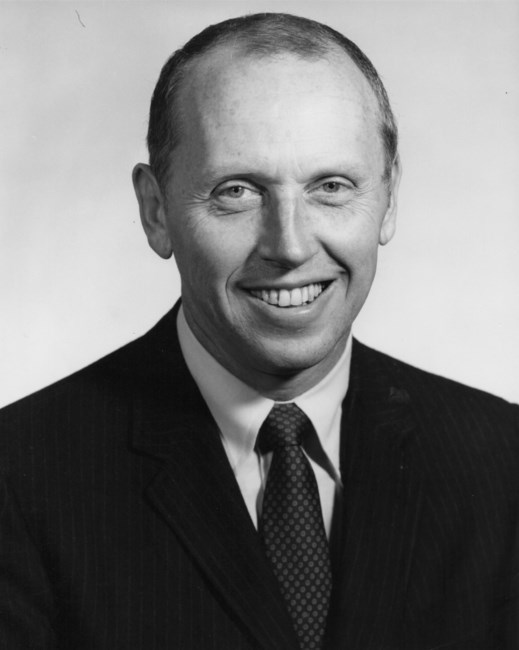
John Edward Hirten, first Executive Director of the San Francisco Bay Area Planning and Urban Research Association (SPUR) and a lifelong champion of public transit, died on September 18. He was ninety years old.
Mr. Hirten had a long and distinguished career as a city planner, administrator and activist for public transportation in both the public and private sectors. His work with SPUR in the 1960's resulted in initiatives creating the San Francisco Bay Conservation and Development Commission, the Metropolitan Transportation Commission, and the return of the Port of San Francisco to city control.
Joseph Bodovitz, his colleague at SPUR and later first director of the San Francisco Bay Conservation and Development Commission (BCDC), said of Mr. Hirten, "SPUR has become what John envisioned all those years ago—a broad-based, effective, citizen organization working for good city and regional planning and action. In a sense, John's work helped lay the foundations of the San Francisco of today."
Born in Brooklyn, NY, and raised in Valley Stream on Long Island, Mr. Hirten served as a corporal with the U. S. Army's 66th Panther Division during World War II's Battle of the Bulge. After war's end, he stayed in Europe with the occupation forces until 1946. He later graduated from new Mexico State University with a degree in Public Administration.
After several jobs for the federal government in Washington, D.C., including a clerical position with the Federal Crime Committee, headed by Sen. Estes Kefauver, he obtained a position on the State Department's Point IV Technical Aid Program. In 1951, he was sent to Tehran, Iran, and spent several years there, eventually working as the Administrative Officer of the newly formed Public Statistics Cooperative, whose mission it was to undertake Iran's first national census.
Tehran was also where he met his wife of 62 years, Mina Malaguti, an Italian singer who was performing with her band at the main hotel there. After a whirlwind courtship, despite a significant language barrier, they married in 1954 at a little church in Bologna, Italy, and moved back to the States, eventually to San Francisco.
In 1959, Mr. Hirten was appointed Executive Director of the newly reconstituted San Francisco Planning and Urban Renewal (later "Research") Association (SPUR). A citizen-based group, SPUR was formed from the San Francisco Planning and Housing Association (which was originally formed in 1910 as the San Francisco Housing Association) out of a need to confront rampant suburban development by exploring ways to improve urban housing and transportation. In the early 60's, he persuaded Mayor George Christopher to make SPUR the city's official citizen advisory committee for housing and transportation.
In 1963, State Senator Eugene J. McAteer of San Francisco authored a bill to study the feasibility of an additional bay bridge from North Beach to Marin County by way of Angel Island. Mr. Hirten was one of a small group of people who went to the senator and convinced him to scrap the idea and instead support a commission to study the bay, resulting in the McAteer-Petris Act of 1965, creating the San Francisco Bay Conservation and Development Commission. Other projects he had a hand in included the Market Street Subway (MUNI and BART stations) and the Chinatown Gate.
Mr. Hirten became known for his ability to follow through aggressively on every project he undertook, often with great tenacity. He was one of the first to call for a Bay Area transportation agency, and once even "crashed" Mayor Christopher's staff meeting to urge him to take a leading role in transportation issues. After being thrown out of that meeting, he continued to work to help create what is now the Metropolitan Transportation Commission.
Mr. Hirten left the Bay Area in 1969 to work in a similar position in San Diego, where his organization, San Diegans, Inc., focused on making public transit, including light rail, more viable in a city that was becoming overrun with freeways. After three years, he was appointed to a position in the U. S. Department of Transportation, eventually becoming Deputy Administrator for Urban Mass Transit. He returned to Tehran in 1975 as a Senior Advisor to the Iranian Minister of Plan
and Budget under the auspices of the Harvard Institute for International Development.
He also worked as a transportation consultant for several companies, became President of the American Institute of Planners (now AICP), and served for several years as the Director of the Department of Transportation Services for the City and County of Honolulu. He returned to the Bay Area in 1991 as the head of the SF regional ride sharing agency, Rides for Bay Area Commuters, Inc. After retiring from that position in 1998, he was appointed by Mayor Willie Brown to voluntarily chair the New Muni Task Force.
He had published and lectured extensively on transit and transportation and was the recipient of numerous honors and awards. In the 1970's, he voiced concern about America's reliance on automobiles, saying, "We must challenge the idea that unlimited mobility is an end unto itself. The private automobile is, in fact, a form of public transportation; it uses a public right-of-way, it is licensed by a public agency, it requires public space and public air, it makes noise which has an impact on the public and it pollutes the air which belongs to the public. The vehicle is privately owned, but it would be of very limited utility without an enormous public investment."
Mr. Hirten is survived by his wife, three children, and eleven grandchildren. A Funeral Mass will be held on Thursday, September 22, 10:30 AM at Old St. Mary's Cathedral, 660 California St., SF
Montrez votre soutien
Envoyez Vos
Condoléances
Partager
L'avis De Décès
Obtenir les mises à jour
Prestations de Service
Partager l'avis de décèsPARTAGER
- RECEVOIR DES RAPPELS
v.1.18.0