
AVIS DE DÉCÈS
Asrat Felleke
26 juin 1935 – 21 avril 2011
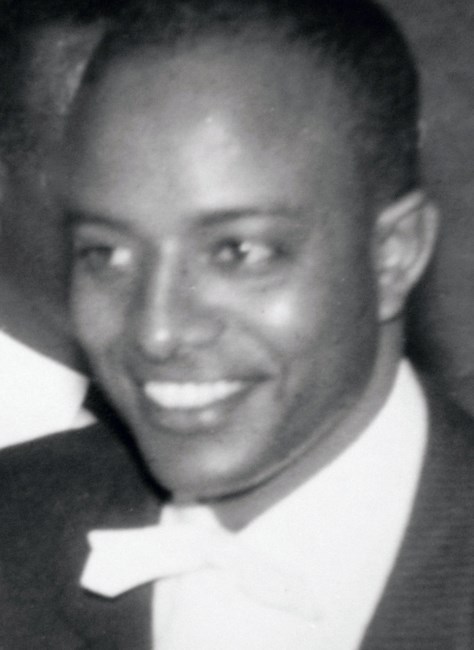
Asrat Felleke came into this world on June 26, 1935, while his father was engaged in the battle defending his country from the Italian occupation. He was born in Bale Goba in South Central Ethiopia to his mother, Debritu Habtewold and his father, Felleke Degefu, both of Jiru, Shoa.
He spent his early childhood in the Lagare district of Addis Ababa and then spent his later childhood in the Merkato district about which he fondly reminisced. He was one of ten children and was the only one to survive past childhood. Asrat as a child was gravely ill for one year and narrowly escaped death. This unyielding determination to survive against all odds served him well for the remainder of his life. His incredible drive propelled him from humble beginnings as a child struggling to survive in the streets of Merkato, to a highly educated and eminent researcher, scholar, and expert in his field.
From his earliest days, Asrat showed signs of brilliance and resilience. Those who knew him from primary school through the completion of his graduate studies have noted his intellectual curiosity and academic excellence. He completed his primary education at Beyene Merid School in Addis. He attended Teferi Mekonnen Secondary School in Addis for one year, and then enrolled in the Teacher Training Secondary School of Harar for another year. He completed the last two years of his secondary school education at Jimma College of Agriculture, where he graduated at the top of his class as valedictorian. He pursued a Bachelor of Science (BS) in Agriculture at Alemaya Agriculture College in Harar. After graduation, he taught there for one year. Asrat received a scholarship to attend the Master of Science program in Agronomy at the University of Nebraska and pursued this degree from 1960 to 1962.
In 1962, he returned to Ethiopia and worked at the Branch Experiment Research Station in Debre Zeit, where he conducted research to improve agricultural output and improve food security in Ethiopia. In 1964, he returned to the U.S. to pursue his doctoral studies at Purdue University in West Lafayette, Indiana. Although he was given a three-year scholarship, he completed all of the requirements for the PhD program in two and one-half years. His intense motivation, work ethic, and dedication to mastering his science enabled him to complete his dissertation by December 1966. He was prodigious and relentless in the pursuit of excellence in both research and academics.
Upon returning to Ethiopia, Dr. Asrat began working at the Ministry of Agriculture in the Agronomy Department. He then transferred to Awash Valley Authority as a coordinator of commercial farms in the region. In 1973, he established the Washed Coffee Project, which was funded by the World Bank in Awasa and managed the project for two years.
He was appointed as the Minister of Agriculture in 1975 and relocated to Addis Ababa. As the Minister, he worked towards improving the quality and quantity of agricultural output in Ethiopia. In this position, he represented Ethiopia at numerous international forums around the world.
"During the late 1970's he worked at the International Development Research Center (IDRC) and International Agriculture and Development Service (IADS) in Nairobi, Kenya prior to moving his family to Washington D.C. to work at the World Bank. After retirement, he spent his time pursuing one of his many passions, Ethiopian history, and had amassed quite an impressive collection of historical photographs.
Asrat Felleke married Kibrework Dessalegn in 1964 in Addis Ababa. The young married couple filled with big dreams, jointly went to Indiana to pursue their graduate studies at Purdue University. After completing their degrees, they settled in Addis Ababa and were blessed with three children, Mekonnen, Welansa, and Lily. He has also been blessed with two grandchildren, Demetrius and Samuel Asrat.
One can say many things about Dr. Asrat Felleke’s character. Most would say that he was sociable, loved people, and was a fiercely dedicated and loyal friend. Others would say that he was headstrong. All would agree that he left an indelible impression on those who knew and interacted with him. His humor, personality, and character were unique. His absence will leave a palpable void to all those who have felt his presence in this world. He will be dearly missed by his family and friends. Today, April 30, 2011, we bid him farewell and pray that his soul rests in eternal peace.
Montrez votre soutien
Envoyez Vos
Condoléances
Partager
L'avis De Décès
Obtenir les mises à jour
Prestations de Service
Partager l'avis de décèsPARTAGER
- RECEVOIR DES RAPPELS
v.1.18.0