
AVIS DE DÉCÈS
Helene Farras Joseph Weil
19 janvier 1942 – 18 juillet 2021
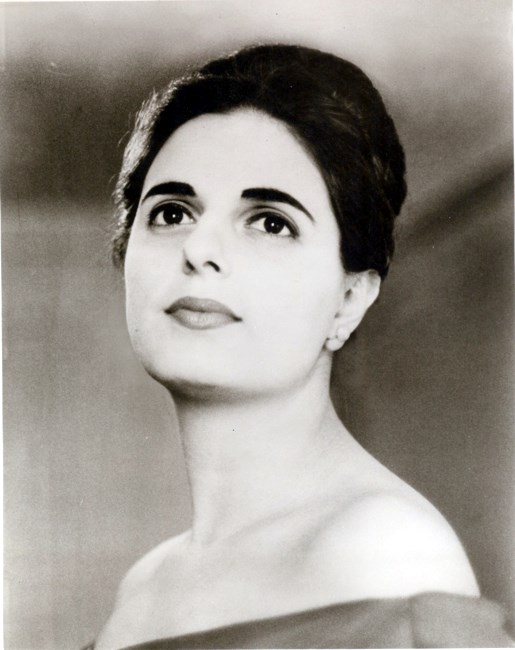
Helene Farras Joseph Weil was an internationally-acclaimed opera singer and voice professor. She was a devoted singer, teacher, opera director, wife, mother, friend, scholar, author, pianist, and supporter of the arts and nature. She was born in Chester, Pennsylvania on January 19, 1942, to Joseph Maron Joseph and Doris Joseph. She lived in New York, Austria, Germany, Central California, and the San Francisco Bay Area. Helene debuted and sang at the Metropolitan Opera and Tanglewood as Helene Farras. She sadly passed away on July 18, 2021, from complications of Parkinson’s disease and is deeply missed.
A child prodigy, Helene began singing at the age of 6, studied at the Philadelphia Academy of Music at the age of 13, became the featured soprano soloist in the churches of Pennsylvania, and enrolled in Oberlin’s Conservatory of Music at the age of 16, skipping her final year of high school. Her junior year, Helene studied opera singing abroad in Salzburg, Austria at the legendary Mozarteum University, an experience that would change her life forever. She was a winner of the 1961 Mozarteum Mozart Competition. Helene stayed in the Von Trapp family estate in Salzburg later made famous in the Sound of Music film.
Helene then won the Metropolitan Opera National Council Auditions at the age of 19 and moved to New York City to join the Metropolitan Opera Studio. She performed many preeminent opera roles in New York and on tour. While at the Met, she sat in on the rehearsals and performances of the leading singers of the time including Renata Tebaldi, Joan Sutherland, Birgit Nilsson, Tenor Nicolai Gedda, Leontyne Price, Jerome Hines, Tenor Franco Corelli, Eileen Farrell, Tenor Richard Tucker, and Irene Dalis who went on to establish and lead Opera San Jose.
Helene sang in many operas and concerts throughout her career including The Marriage of Figaro (Susanna, Marcellina, Cherubino and Barbarina), La Boheme (Mimi and Musetta), The Magic Flute (Pamina, Papagena and The First Lady), Cosi Fan Tutte by Mozart (Fiordiligi and Despina) on extensive tours, Carmen (Carmen) with Leonard Bernstein, The Bartered Bride (Marenka) with Conductor Carl Bamberger in New York after which she was compared to Maria Callas in the reviews, Don Giovanni, Der Rosenkavalier by Strauss (Sophie), Arabella by Strauss (Zdenka), Don Pasquale, Faust, Lucia di Lammermoor by Donizetti, Fidelio by Beethoven (Marzelline), Lohengrin by Wagner, many Gilbert and Sullivan operettas including The Mikado, The Gypsy Baron, Handel’s Messiah, The Beggar’s Opera, Brahms’ Liebeslieder Waltzes, Donizetti's The Daughter of the Regiment, The Shepherd on the Rock (Der Hirt auf dem Felsen) by Franz Schubert, Bach's St. Matthew Passion with Anna Hamre, Arianna a Naxos Cantata by Joseph Haydn, early Baroque music such as Dido by Sigismondo d'India, Beethoven’s Choral Fantasy with the Boston Symphony Orchestra, and La belle Helene (Helene).
Helene performed at the Metropolitan Opera Studio, Oberlin Opera Theater, Tanglewood and the Boston Symphony Orchestra with conductor Erich Leinsdorf, Oberlin Highfield Theater on Cape Cod, Chautauqua Opera, Long Island Arts Festival, Salzburg Landestheater, Mozarteum Orchestra in the Great Hall in Salzburg (Grosse Saal), Munich Gasteig Concert Hall, Opera Society of Washington, D.C., Princeton University Orchestra, West Bay Opera, Santa Cruz Symphony, Orpheus Chamber Orchestra, UC Berkeley Orchestra, Scholar Opera in Palo Alto, San Jose Symphonic Choir conducted by Leroy Kromm, Cabrillo Music Festival, Old First Church in San Francisco, Santa Clara University with the Amici della Musica Orchestra, and Stanford University Orchestra.
Helene performed many concerts at the famous Tanglewood Music Festival with the Boston Symphony and Leonard Bernstein, Aaron Copland, and others. She is featured on the RCA Victor recording of Wagner’s Lohengrin with Erich Leinsdorf conducting. One of Helene’s most prized possessions is a letter from Aaron Copland praising her singing at Tanglewood and telling her about his Twelve Poems of Emily Dickinson work which she was preparing to sing.
Helene earned a Master of Arts Degree from San Jose State University in 1967 where she was voted Outstanding Singer. This is where she met her husband Robert Weil, a clarinetist and saxophonist with Symphony San Jose and a mechanical engineer.
Helene sang leading roles with West Bay Opera in the 1970s directed by French Canadian coloratura soprano Pierrette Alarie from the Paris Opera. Pierrette encouraged her to start opera directing, and Helene became the assistant director for several operas in the Bay Area and in Victoria, British Columbia. Later as a tenured professor, Helene directed the Opera Workshop at California State University for two decades, an endeavor she cherished.
She taught voice professionally at Stanford University, the Mozarteum in Salzburg, Santa Clara University, the Merola Opera Program in San Francisco, the International Institute for Chamber Music in Munich, West Valley College, UC Santa Cruz, the Opera Academy of California in San Francisco, and as a Full Professor of Voice at California State University for 28 years. Helene’s students have won many competitions and performed in opera houses all over the world.
Helene performed as the soprano soloist for Mozart’s Requiem Mass in D minor at Grace Cathedral in San Francisco. She was featured in the world premiere of Roger Sessions’ Where Lilacs Last in the Dooryard Bloomed in 1971. Helene was the soloist for the West Coast premiere of Luciano Berio’s Circles which received positive reviews in the San Francisco Chronicle -- a signature role she reprised many times throughout California. She was the soprano soloist in Sondra Clark’s poignant Requiem for Lost Children performed with Leroy Kromm’s San Jose Symphonic Choir.
Helene studied at the Franz Schubert Institute in Baden bei Wien, Austria in 1983. This sparked a great interest in singing the German songs known as Lieder. She traveled to Europe in 1984 and 1985 to teach and perform at the International Institute for Chamber Music in Munich, Germany.
After 25 years in New York and the San Francisco Bay Area, Helene returned to the Mozarteum University in Salzburg in 1986 to teach voice and opera. She had to audition in high German in front of the Mozarteum and won the position. She lived in a beautiful place along the Salzach River, and her daughter came to visit her during Christmas.
At the Mozarteum, Helene taught and performed with the great Austrian conductor and professor Dr. Josef Wallnig, the Chair of the Mozarteum’s Opera Division. She loved the church bells that rang often throughout the city. She was fond of the Austrian culture, the gorgeous Salzburg landscapes, the Austrian marzipan chocolates called Mozartkugeln, the famous Sacher Torte at the Hotel Sacher in Vienna, and the Schonbrunn Palace and gardens.
After a year, Helene was asked to stay on as a full professor. She decided to return home to be with her family in Silicon Valley. Upon departing, she received a tribute from the University and she thanked them and remarked, “It has been exactly 25 years since I was a voice student of Frau Egger in the Mozarteum. This experience has felt like a homecoming for me, and I am honored to have taught with all of you.”
In 1988, Helene established a Summer Music Performance Institute with acclaimed cellist Michael Flaksman in Austria. She then co-founded and co-directed the Mozart Opera Studies Institute (MOSI) with Josef Wallnig in Austria and San Francisco starting in 1990. For the institute, she wrote “A Chronological Listing of Mozart’s Operas, Lieder, & Concert Arias” which showcased the works for voice Mozart composed from his first in 1765 to his last in 1791. The Institute received high ratings in Classical Singer Magazine. Helene then taught and performed at the Ascoli Piceno Music Festival in Italy starting in 1997.
Helene created and performed in many recitals including The Seven Last Words of Christ by Theodore Dubois, An Advent Song Recital in December 1984, and An Instrument of Thy Peace concert based on St. Francis of Assisi's famous Prayer for Peace which begins with "Lord, make me an instrument of your peace.” In 2009, she premiered the Schubert Liederabend concert featuring 24 songs by Franz Schubert in collaboration with pianist Hatem Nadim. She commissioned a song called Stained Glass Spirit that was inspired by the stained glass windows of Grace Cathedral and incorporated a poem written by her daughter and music composed by Benjamin Boone.
Helene was grateful to the wonderful pianists she worked and collaborated with during her career including Hatem Nadim, Andrea Dindo, Rudolf Jansen in Europe, Erik Werba in Austria, Leonard Shure, Sonda Clark, and Eunice Nemeth. She was also an accomplished pianist and took lessons early in life from the teacher of Andre Watts.
Helene was a former Northern California Governor of the National Association of Teachers of Singing (NATS). Helene spoke German, French and Italian, and she taught German lyric diction and the International Phonetic Alphabet to singers around the world including in Munich.
Helene’s vocal idols and role models were Maria Callas, Joan Sutherland, Luciano Pavarotti, Elisabeth Schwarzkopf, Renata Tebaldi, Renée Fleming, Christa Ludwig, Phyllis Curtin, Dutch Soprano Elly Ameling, Jessye Norman, Eleanor Steber, Dietrich Fischer-Dieskau, Nadine Conners and many more.
Helene was a visionary champion of Native American and indigenous causes. One morning she read an article about Ascencion Solorsano de Cervantes, a famous doctor who was the last member of her tribe to speak their Mutsun language fluently. Helene became inspired and wrote the libretto for an opera dedicated to Ascencion’s life. She worked with the award-winning composer Benjamin Boone and acclaimed pianist Hatem Nadim to bring this opera to life. She extensively researched The San Juan Report, the oral history of Ascencion recorded by Smithsonian’s John Peabody Harrington on the doctora’s deathbed in a last attempt to save the language and cultural history.
Helene sang the premiere of the ASCENCION opera in 2008. The opera celebrated Ascencion’s great healing abilities, the cultural heritage of the Amah Mutsun Tribal Band, the traditional art of basketweaving, living in harmony with nature and more. It incorporated the bells of Mission San Juan Bautista where Ascencion is buried. It was featured on NPR’s The California Report and Weekend Edition on March 29, 2008 in a segment called “A Native American's Last Testament: Opera” and received many accolades.
Helene felt special gratitude for her teachers throughout her career including Louise Toth, Thelma Votipka at the Met, Phyllis Curtin, Frau Lislotte Egger Poetschke, Ellen Repp, Marie Gibson, Donald Stenberg, Barry Vaughan, and Walter Berry.
Helene wrote and published the Golden Rules of Singing, a summary of the best singing techniques she learned from her teachers and experiences worldwide. It contains wisdom such as “Vowels are the rivers of sound, and consonants are the banks,” which originated from Italian conductor Arturo Toscanini and from Helene’s voice teacher Thelma Votipka, an American soprano who sang 1,422 performances at the Met.
Helene won many awards from California State University including the 2008 Dean’s Award and the 2009 Provost’s Award. She won scholarships from the Martha Baird Rockefeller Fund for Music, Fromm Music Foundation, 1962 Kate Neal Kinley Memorial Fellowship and more. She was presented with the Una Vita in Musica (A Life in Music) Award at the Ascoli Piceno Music Festival in Italy in 2008 honoring her contributions to the musical arts as performer and teacher for 50 years.
Upon retirement from California State University, Helene’s students produced a surprise and moving concert dedicated to her legacy. It featured her students and most beloved songs including Ave Maria by Franz Schubert and Alleluia from Exsultate Jubilate by Mozart. She treasured her students and was proud of all of them.
Helene loved big cats including lions and tigers, small cats, birds, gardening, roses, cooking, holiday traditions, and international travel. She found joy in hummingbirds, ospreys and other nature and in supporting avian organizations including the Cornell Lab of Ornithology. An avid reader, Helene loved mystery novels, the New Yorker, the Smithsonian Magazine, and the books by her cousin Robert F. Joseph, who is an expert opera scholar.
She is survived by her husband Robert Weil, her brother Peter Maron Joseph and his wife Susan Rittenhouse Joseph, her cousin Robert F. Joseph, and her daughter Nadine Weil.
Donations in Helene’s memory can be made to Opera San Jose, San Francisco Opera, or the Metropolitan Opera.
Montrez votre soutien
Envoyez Vos
Condoléances
Partager
L'avis De Décès
Obtenir les mises à jour
Partager l'avis de décèsPARTAGER
- RECEVOIR DES RAPPELS
v.1.18.0