
OBITUARY
John Raymond Harrison
June 8, 1933 – April 26, 2025
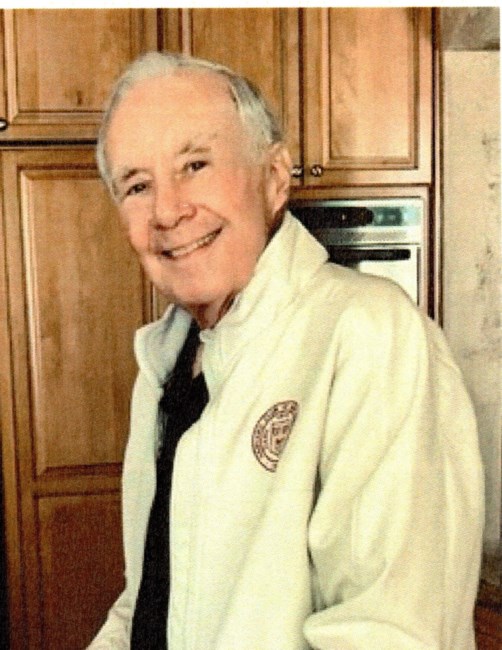
John R. “Jack’’ Harrison, a Pulitzer Prize-winning journalist and retired vice president of the New York Times Company, died April 26, 2025, at Tidewell Hospice in Sarasota. He was 91 years old.
He was born in Des Moines, Iowa, to Judge Ray Harrison and Dorothy Stout on
June 8, 1933. His parents divorced early in his life and both remarried. Because of the contentiousness of the divorce, he was never allowed to meet his birth father when his mother was alive, but he finally did make his acquaintance with Judge Ray as an older adult. He also came to know his half-brother, Frank Harrison, at their father’s funeral in 1973 and they have remained close since that meeting. Jack said of his brother: “His compass is always pointed due north.”
Harrison graduated from Phillips Exeter Academy in 1951 and Harvard College in 1955 with a degree in English Literature. After graduation, he married Lois Harrison of Des Moines, daughter of media mogul Gardner Cowles, president of the Register and Tribune Company, owner of the Des Moines Register, and founder of LOOK magazine.
Harrison’s entire career was in the newspaper business, starting as a “printer’s devil” in 1956 at the News-Tribune in Fort Pierce, Florida. He worked in all positions for that paper, with several employees remaining lifelong friends. The job paid $40 a week. “Harvard said I ruined the curve,’’ he reported of his salary compared to other graduates. Harrison was active in the Fort Pierce community, where he was the first president of what is now the A.E. Backus Museum & Gallery and was primarily responsible for fundraising.
Harrison and Lois in 1957 moved to New York City, where he went to work for LOOK magazine. Gardner Cowles placed him in a small financial unit that performed operations analysis of all the LOOK divisions: LOOK, Family Circle, Quick, Flair, medical publications and broadcast properties. After three years learning accounting principles, Cowles sent Harrison back to Fort Pierce as a publisher. Harrison, then 26, told Cowles, “But sir, I am not qualified to publish a paper.” Cowles responded,
“I know… but you’ll learn.”
Harrison then bought for the Gainesville Sun for Cowles and moved his growing family there in 1962. As publisher he pulled the paper together and increased distribution but also was dedicated to improving the community at large. He began writing at night and on weekends on issues that directly affected his community.
As a crusading newspaperman early in his career at the age of just 31, he won the 1965 Pulitzer Prize for editorial writing for championing federal urban renewal funds to improve deplorable housing conditions in the Black neighborhoods in Gainesville.
His series upended a ten-year struggle for a minimum housing code and brought federal funds for improvement of housing for the Black population there.
In addition to the Pulitzer Prize, Harrison won seven other national writing awards: the Sidney Hillman Foundation Award for Humanitarian Ideals in 1964; Sigma Delta Chi Bronze Medallions in 1970 and 1972; a National Headliners Award in 1973; Scripps-Howard Distinguished Journalism Citations in 1974 and 1976; and the Gavel Award of the American Bar in 1977.
As president of the New York Times Regional Newspaper Group, he spearheaded the acquisition of 33 regional newspapers during the golden age of newspapers of the 1970s and ‘80s.
Harrison said he made plenty of mistakes along the way but did well enough that his father-in-law began buying other small newspapers in Florida.
“Follow the sun’’ Harrison remembered Cowles telling him. With Harrison doing much of the research and leading the negotiations, Cowles Communications bought the Gainesville Sun in 1962, the Ledger of Lakeland in 1966 and the Ocala Star-Banner in 1969. “You don’t buy just a newspaper. You buy a market’’ Mr. Cowles counseled.
Harrison and his family of four children lived in Gainesville for four years before moving to Lakeland in 1966, where he oversaw the three Florida papers.
JOINING THE NEW YORK TIMES
In 1970, Cowles sold the three Florida newspapers, Family Circle magazine and Memphis television station WREC-TV and other publishing assets to the New York Times Company in a deal that gave Cowles Communications $50 million in New York Times stock.
With the transfer of the papers, Harrison was offered a position at the New York Times Company, continuing to oversee the three Florida papers. During a meeting early in the transition with Times Publisher Arthur Ochs “Punch’’ Sulzberger, Harrison tried to sell him on the idea of purchasing additional smaller newspapers, especially in the south, to provide an additional revenue for the company in addition to national New York Times.
At the time, the industry was undergoing a shift, as newspapers long held in families were sold off to chains that could modernize equipment but reduce costs by consolidating operations. Afternoon newspapers, competing with television evening news, either closed or switched to morning publication, a shift that virtually eliminated newspaper competition in small markets. Because smaller papers generally did not have unions, which were common at big city papers, labor costs were lower, increasing profit margins.
Within a year of the Cowles sale, what would become known as the New York Times Regional Newspaper Group was born. Harrison was named as president of the division and a vice president of the New York Times Company. The division was operated out of Lakeland, with Harrison making monthly visits to New York.
And so began a buying spree of 33 newspapers that resulted in the creation of a highly profitable division for the company that sometimes approached revenue for the New York Times itself. The purchases were frequent enough that Harrison assigned one of his vice presidents, Jim Weeks, the primary task of exploring future acquisitions.
The newspapers purchased were mostly in the southeast and included newspapers in places like Wilmington, N.C., Tuscaloosa, Ala., and Spartanburg, S.C. Two newspapers were also purchased in California, in Santa Rosa and Santa Barbara.
Not all New York Times board members understood the strategy of getting into the small newspaper business, including Iphigene Ochs Sulzberger, mother of Punch Sulzberger. To get her better acquainted with the regionals, Sulzberger sent his mother, then in her 80s, to Gainesville to spend three days with Harrison. The visit was persuasive, and Harrison and Mrs. Sulzberger remained friends until her death in 1990.
Harrison also worked closely with Punch Sulzberger’s son, Arthur Sulzberger Jr., arranging for one of his first jobs in the company in the newsroom of the Gainesville Sun. Sulzberger Jr. eventually became publisher of the New York Times and chairman of the company.
It was the purchase in 1982 of the long sought-after Sarasota Herald Tribune from the Lindsay family that Harrison viewed as a crowning achievement. The newspaper became one of the most profitable in the group.
As a reward for Harrison’s service and achievement in building the New York Times Regional Group, Punch Sulzberger got Harrison a seat on the board of the International Herald Tribune , owned jointly by The New York Times and Washington Post. During his 17-year tenure on the board of the International Herald-Tribune from 1973 to 1990, Harrison forged friendships during quarterly meetings help in Paris with board members such as Washington Post Katharine Graham and CBS Bill Paley.
With newspapers in seven southeastern states and California, Harrison in 1983 moved the New York Times Regional Newspaper Group to Atlanta to more readily access its newspapers in seven southeastern states. Harrison, who once estimated he spent 60 percent of work week on the road visiting the regional newspapers, retired in 1993.
In Atlanta, Harrison served on the Board of Councilors of the Carter Presidential Center and on the Boards of the High Museum of Art and the Westminster School, a position he resigned when Westminster refused to change its policy of hiring only Christian faculty.
Harrison helped bring Westminster’s faculty hiring practices to public attention, which prompted schools such as Georgetown University to quit sending recruiters to the prestigious college preparatory school. After months of pressure, Westminster’s board relented in 1993 and agreed that faculty members of other faiths could be hired who “have a deep respect for Christian principles.’’ The Atlanta chapter of the American Jewish Committee honored Harrison for his “courage and determination in combating bigotry and discrimination”.
Harrison also served as chairman of Visitors of Emory University and as a trustee of the Kennesaw State University Foundation. He belonged to the Piedmont Driving Club, the Capital City Club in Atlanta, the Knickerbocker Club in New York, the Harvard Club of New York, and the Somerset Club in Boston.
In 1995, Harrison’s fellow Harvard alumni elected him to the Harvard Board of Overseers, one of the university’s two governing bodies. He later served as president of the Board of Oversees.
Harrison divorced from Lois in 1980. He married health care consultant Bonnie Anderson in 2000 and the couple moved to Osprey. He was the latest in a string of former Times executives who had retired to the Sarasota area, including
executive vice president Ivan Veit, president and chief operating officer Walter Mattson, and senior vice president Ben Handelman.
Harrison and his wife have been a major source of support for Ringling College of Art and Design and Take Stock in Children of Sarasota County. Harrison served as a lifetime trustee for the college, and Bonnie served as a board member for Take Stock and a mentor for financially disadvantaged children who wish to attend college. They have established annual scholarships at Ringling College, Harvard and Take Stock in Children.
In a late-life interview, Harrison commented that, “Exeter and Harvard helped me combine knowledge and goodness to lead a purposeful life. And…, I stood on the shoulders of giants: my Harvard tutor William Alford, Gardner Cowles, Walter Mattson, the Gormley family of Des Moines, and Times chairman Arthur Ochs Sulzberger.’’
Besides his beloved wife Bonnie of 25 years, Harrison is survived by his “extended family”: his brother Frank and Franks’ wife, Pam Harrison of Des Moines; his daughter, Lois E. Harrison of Sarasota and her partner Daniel McDougal of Sarasota and her sons Niko and Julian Minigiello and daughter Shawna Itakura. His son Gardner Mark Harrison and granddaughter, Lois J. Harrison. He was predeceased by sons Kent in 1981 and Pat in 2025. Harrison’s extended family from his marriage to Bonnie include: Bonnie’s daughter, Jennifer Stuart, and husband Shawn and their three children Emma, Michael and Jacob; and Bonnie’s son, Michael Anderson, and wife, LeeAnn, and their son, James Dutch Anderson.
A celebration of life will be held in late October in Sarasota.
Robert Toale & Sons Funeral Home of Sarasota is handling arrangements.
Memorial donations may be made to Take Stock in Children of Sarasota County. P.O. Box 48186, Sarasota, FL 34230. or Ringling College of Art and Design, Scholarship Department, 2700 N. Tamiami Trail, Sarasota, FL 34234.
Show your support
Add a Memory
Share Obituary
Get Reminders
Services
SHARE OBITUARYSHARE
- GET REMINDERS
v.1.18.0