AVIS DE DÉCÈS
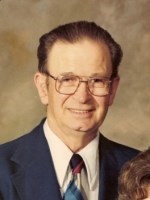
Milton Verner Jokela
16 février 1917 – 12 février 2010
MILTON VERNER JOKELA (Obituary)
Milton Verner Jokela, age 92, peacefully passed away at home with his family on February 12, 2010 in Seattle, Washington. He was born on February 16, 1917 to Kalle Werner and Irene Adeline (Holsti) Jokela in Kintyre, North Dakota.
Milt was an avid outdoorsman with a passion for hunting. He proudly served our country in the Army and proud of his Finnish heritage. Milton was known for his fine carpentry skills and the great friendships he kindled.
Milton is preceded in death by his wife, Ruth, who passed in 1990 and a son, Karl Jokela.
Sisters Verna (Jokela) Irvine and Hilma (Antti) Whitehead. And brother Raymond Antti, Grandson Dale Jibes, granddaughter Trina M. Beus, son-in-law Paul D. Beus. He is survived by his children and their spouses: Kathlyne Beus of New Plymouth, Idaho, Carolyne and Michael Walsh of Ellensburg, Washington, Richard and Crystal Jokela of Montana, Howard and Becky Jokela of Seattle, Washington, Marilyne Jokela of Seattle, Washington; 26 grand children; 55 great grandchildren, and 1great great grandchild, his sisters Pauline (Jokela) Albaugh of Carnation Washington, Alice (Antti) Pringle of Portland Oregon, and Maybelle (Antti) Taylor of Seattle Washington, brothers Alvin in Arlington Washington and Art Antti in Portland Oregon; and many loving extended family and friends.
MILTON VERNER MILTON (Eulogy by Milton's daughter Carolyne Walsh)
On the cold windy prairie in Kidder County North Dakota in a tar papered cabin in the winter of 1917 on February 16 dad was born, the second child of Carl and Irene Jokela.
They didn't have paper to write a record of the birth so it was written in the snow. Carl and Irene named their son Milton Verner Jokela.
Dad passed away just 4 days shy of his 93 birthday with a life full of adventures and experiences.
At about 2 ½ years of age in 1919 his father was killed in a farming accident leaving his mom, older sister Verna and younger sister Pauline to carry on. They stayed with his mother's brother, John Holsti for a while and then to a small house on another farm where she met and married Ernest Antti. Dad had a new papa, a very good man. As a young boy in a Finnish family on a farm he shared the workload and was proud to do it. He milked the cows, fed the chickens, pigs, calves and horses. His first job, before he was old enough to go to school was to take lunch to his dad and hired men in the field where they were working. His second job was to herd cattle.
He started school at the age of 6 and there he learned to speak English and after school the chores began, bringing in water and coal and milking the cows. At age 9 or 10 he started his first fieldwork walking behind the harrower, a 25foot wide rig pulled by two horses. Walking the plowed field was a little too much for him so his dad and the hired man built a two-wheeled cart with a seat so he could direct the horses from there. Though when he would hit a rock he would go flying. There was much work to be done and dad learned a great work ethic, which stayed with him throughout his life.
As a kid he would hunt and trap weasel and skunk for spending money. He bought his first
.22 from Montgomery Ward for $4.98 when he was about 11 or 12. He shot rabbit and gopher. He would get .01c for each gopher tail, .25c for 3 rabbit skins, skunk .75c - $1.50, weasel $1. - $3.
Dad told us of a time when he and his friend crawled under a shack to catch some skunk they got about 6, stuffed them in the sack. His friend crawled out first. He started to cough and gag and couldn't stand up and all the time dad was laughing and laughing at him. Then it was dads turn to crawl out and when he hit the fresh air he started to cough and gag and couldn't stand up and it was his friends turn to laugh at him. Needless to say they were not welcome when they brought the skunks home. They would have to bury their clothes and take a sauna for a couple of hours.
When dad would tell his stories it was fun to watch. He would laugh and hold is sides and laugh some more just like it just happened.
Dad had a great sense of humor in a little bit of a mischievous way. We would hear stories how he put a frog in one of his co-workers empty lunchbox because he new the wife was afraid of frogs and waited for the next day to hear how much trouble his co-worker got into and how he nailed a co-workers shoes to the floor as he was working.
He never lost his wit. The day before he passed away the hospice nurse came for a visit.
She care fully bent close so he could hear and ask him "How do you feel Milton" his answer was " with my fingers" and got a big grin on his face.
He loved to get a hug and get his arms stuck. "My arm is stuck and I can't let go. We've had a lot of laughs with him.
Dad had 3 half sisters, Hilma, Alice and Maybelle and 3 half brothers Alvin, Arthur and baby Raymond who died at 7 months from bronchitis.
In 1925 they got their first car a Model T Ford brand new and didn't have to use the horse and buggy any more.
They would go to church whenever there was a preacher around. Sometime they would have Sunday school in their home. At age 14 & 15 he went to Lutheran confirmation school and after that he didn't have to go to Sunday school anymore but he had to behave no one could swear or play cards or tell lies and there were no alcoholic beverages aloud in the house mother would not permit it.
Hard work and family loyalty kept them going. During the 30's they lost the farm. The day they had to leave dad had a baseball game he was suppose to pitch for and he was not able to participate and that was very hard for him. I think he felt he let them down. Dad had a very strong sense of responsibility that carried through his life also.
All but his oldest sister Verna moved to Carlton OR in 1934 were they had friends. They rented a home and found work. Milton and his dad hauled and cut cordwood. He picked strawberries and cherries and raked hay, which he did not like so he hopped a freight train with his uncle Eli and headed out for North Dakota. On the way they stopped at Portland. It happened to be the day Will Rogers and Willy Post were killed. This was the first time dad had been in a large city and all he could hear was people shouting "Extra Extra" which he though was strange. He had other adventures along the way before they made it to North Dakota.
When he got there he found work on the farm, did some herding and branding and helped in his uncle's blacksmith shop.
A friend wanted dad to go with him to Seattle. So they hopped a freight train. Dad had $18.00 in his pocket planned to stay two weeks but he never got away from Seattle. During this time he met our mom on a blind date, got married started a family. Kathlyne was the first then Karl but they lost Karl do to an accident at 10 months old. Dad never got over the loss of his son and always had a soft spot for babies. Then came me. He was hoping for a boy but got me, a girl, but he never complained he loved us all. Then he got his boy Richard and another boy Howard and another girl Marilyne.
Dad went into the Army 1945, did well as a marksman. He said he got all 30 rounds in the bulls eye. During practice someone dropped a grenade where the group was standing and he ran and laid on top of it to protect the group. Thank goodness it was a blank. He had gotten pneumonia and almost died. While in the military hospital he looked around and noticed how the other men were given the medicines and just slept and didn't get better and that was happening to him. He refused to take the medicines next thing he new the room was full of brass stars and they wanted to know why he was disobeying orders and would not take the medicine he told them and he got better enough to be sent home and was honorably discharged.
Mom and dad were introduced to the Church of Jesus Christ of Latter-day Saints and were baptized in 1951 where we attended church here at 3rd ward building. Dad served a stake mission for the Marietta Indians. He also worked and loved being part of the Boys Scouts.
He built the Pinewood Derby track when Richard was a Cub Scout. He was there over the years and made sure it was set up right and all boys had an equal and fair chance to race their cars. His grandsons and maybe even great grandsons used the track. It has been part of the pack and may even be in use now by other church Wards Dad was a quiet man and had a strong testimony of the truthfulness of the gospel as with mom.
Mom had some health issues over the years and he would be there for her as well as the family. He almost lost her a couple of times it was very hard on him he loved her so much.
Dad was always hard working and provided for the family and others too. He liked baseball, boxing and wrestling, hunting and fishing. Every year he would get buck fever.
We have a picture to prove it. When he was hunting he would observe nature he would even talk to the animals. One time he was confronted with a bobcat. It came walking straight at him he told the bobcat " if you keep heading for me I'm going to shoot you". It did and dad shot him. He loved to go fishing especially with one of his very good friends, Frank Rogers. Dad would always share his hunting and fishing bounty but thinking about it I'm sure it included a story too.
Dad had a remarkable memory of dates and people, their names where they were. Even the kids he went to school with in North Dakota at the little Tell one room schoolhouse. He would be concerned about them.
He made grandmother clocks. While in Finland he saw the clocks His cousin's wife's uncle made and came home and started making them for family and old friends. He would drive across the country to deliver them. As he advanced in years and the memory started to fad it bothered him a lot. These past few years he would get mixed up sometimes and he would realize it and acknowledge it.
Dad loved a Sauna. We grew up going to Pat and Polly's, dad's sisters, just about every Saturday for a steam bath. It was like having a family reunion every weekend. We would also go to sauna at Alvin and Cecilia Rouses, dad's life long friend and my godparents, for a sauna. We would always pick up ice cream on the way to share after the sauna.
Dad went to Finland twice and met with family there that meant a lot to be able to see where his family came from. I went to Finland with dad one time. I think we have just as much family there as we have here. It was interesting traveling there. Dad's first language is Finn but mine is not so dad would have to translate for me and sometime he would turn to let me know what was said and he would say it in Finn and they would all get a good laugh.
I traveled with dad in 2006 back to North and South Dakota to visit friends and relatives and to try to find the spot where he was born. He had me driving thru fields and stopping at farms and visiting with complete strangers. We never did find what he was looking for but we had a marvels trip. He said "we travel well together" He wanted to go to Finland one more time and he wanted to go to the Dakotas again.
He liked to travel he went back and forth to South Dakota many times in his pickup. He would throw his stuff in the back with his carpentry tools and 6 pack of Insure on the front seat to keep him awake and off he would go. While he was there he would work helping with building a house or making repairs or what ever he could help out with. He was even thinking about moving there at one time. He said he liked rubbing shoulders with some of the gals there.
Dad started out working here in Seattle as a cook he also washed windows. He got into Millwork and was in the union but he wanted to do carpentry so he went to the carpenters union hall with his hammer put his mill workers union book down on the counter laid his hammer on top and told them he was a Finnish carpenter and needed work. He got work and that was the start of over 60 years with the carpenters union.
He has had only one phone that we know of and his Chevron card is dated from 1941.
Our dad was a special man and we have learned so much from him and I hope we all can show how much we love him by embracing the good he has try to teach us by his example and be good people like him. We love and miss him.
LIFE STORY OF MILTON JOKELA (By Milton about 1980)
I, Milton Jokela, am writing my life history at this- time to the best of my ability and as I remember it. My father, Karl Verner Jokela, was born in Finland, came to the U.S. about 1913, and somehow made his way to North Dakota and to Emons County and the towns of Kintyre and Braddock. There he found a young girl by the name of Irene Holstis, who he took for his wife. They got some land and started to farm with a tar paper shack for a house. The barn and sauna were dug out of a hillside. This is where three children were born. The first, a girl, was named Verna. Then the stork came with me on a cold winter night, February 16, 1917. They didn't have anything to write my birth date on, so they wrote it on the snow. That's why I had a hard time getting my birth certificate at the time of World War II.
About two years later another girl, Pauline, was born, around February 1, 1919.
They farmed there until Oct. 20,
1919, when my father was killed, He had been hauling grain to the town of Kintyre about, ten miles away, using his tractor to pull two or three wagons. On his way home his coat got caught on one of the lugs of the tractor's wheel. He is buried in the Finnish Lutheran Cemetery nine miles south of Kintyre. H. Dakota.
Then my mother stayed with her brother, John Holstis, for awhile, and my oldest sister Verna went to school from there.
Finally Mother got a place on a farm which had two houses in one
yard. The house we lived in had a kitchen and a bedroom and a porch. It was a white house. We had a horse by the name of Buck-skin and a buggy with a top. In the other house lived about four or five young men from Finland. One of those young men got interested in my mother. His name was Ernest Antti, and they got married about 1920 or 1921. He was a real good man and he became our new papa. We called him Papa in those days; later he became Dad.
My mother's brother John had homesteaded a lot of land. Mother and our new dad got a half section from him. This land was about nine miles south of Kintyre, not far from the, Lutheran Church, where my father was buried. They moved the house we were living in onto that land and began to farm. That is where I grew up, and from where I went to school and to church and to work.
I milked cows, fed chickens, pigs, calves and horses. My first job was before I was old enough to go to school. I had to take lunch to the field where Dad and the hired man were working. My second job was herding cattle.
I didn't know how to speak Eng¬lish yet, and had to learn it at school when I was six years old. The school was in session seven months a year, from Sept. through March. At the end of seven years, I had had my schooling. My morning work had to be done before I left for school, and at 4:00 the evening work began, bringing in the water and the coal, then milking the cows. If I had time, I'd trap for weasels and skunks for spending money that is the only money I got. I bought my first .22 rifle from Montgomery Ward for $4.98 when I was about 11 or 12 years old, and shot rabbits and gophers. I was paid one cent a tail for gophers, and 25 cents for three rabbit skins. Skunks brought 75 cents to $1.50, and a weasel from $1 to $3. We used to twist barbed wire and make a wire cable about 8 to 10 feet long, then we'd push that into the den, crank it around and hope to snag them when we pulled it out of the hole. We got a few that way.
I remember one time a friend and went under an old shack and found a den of skunks. We caught about six skunks. When my friend crawled out from under the house, he began to cough and gag, and couldn't stand up. All the time I was laughing at him, not realizing that with the fresh air the "spray" became real and he couldn't breathe. I finally handed him the skunks and crawled out - then I began to cough and choke, and it was my friend's turn to laugh!
We loaded the skunks into sacks and put them on our horses and went home. We had a good catch. But we were not welcome in the house, so we buried our clothes and went into the sauna for two or three hours, and put on clean clothes before we got into the house.
Let's go back to when I was going to school and working on the farm. It was about 1924, and my oldest sister was back from my uncle's home in Kintyre and was now going to school with me and our sister, Pauline. It was there that three half sisters were born, Hilma, Alice, and Maybell. Then came my first half-brother Alvin, then Arthur, and lastly Raymond, who lived about seven months and died of bronchitis.
My grandmother was also living with us, and she was very forgetful. She wanted to run away all the time, and even though we tried to watch her, sometimes she got away and we'd find her two miles or so down the road. She lived with us until she passed away in 1933; she was 91 years old.
We got our first car, a Model T Ford, in 1925, brand new, and we didn't have to go in the horse and buggy any more.
We went to church whenever there was a preacher around. We had country Sunday school in the summer, but not in the winter, and it was held at different homes, sometimes far away and sometimes in our house. I went to Lutheran confirmation school when I was 14 or 15. After that, I didn't have to go to Sunday school anymore, but had to behave. No one could swear or play cards or tell lies, and there were no alcoholic beverages at our house, my mother wouldn't stand for it.
I was 9 or 10 when I started my first field work. I was walking behind the harrower which was 25 feet wide and pulled by four horses whose reins I held. Walking in that plowed field was too much for me, so Dad and the hired man made a two-wheel cart with a seat for which I could direct the dorses. At haying time, I raked hay with tow horses pulling the rake, and when it came to loading, I was the boy walking on the load to press it down and then when we got home, unloading it. At harvest time, Dad would run the binders with four horses pulling, and the hired man and I would shuck the grain. Then came the thrashing. Our neighbor boy and I had a team and bayrack, and we hauled the bundles of grain to the thrashing machines.
It was during this time that the best food was put out for the men. We even had catsup and other goodies then, and sometime store-bought bread. The days were 16 hours long and the nights were short, and the hard work lasted until October when we started fall plowing and seeding. When the ground was frozen, summer work was done. Then we went to school until March, and as soon as the ground thawed, plowing was my job. Two bottom plows were pulled by five horses. I had a seat that you'd fly off of when it hit a rock, and sometime it would tip over.
Then came the 30's and hard time. Banks went broke and so did the farmers. Then came the drought and no crops. During those dry years the farmers helped each other. Some had little and some had less. There wasn't any money to buy coal for the winters, so we picked up cow chips by the hay rack load and filled the empty grain bins. I remember filling one family's house full of these chips, leaving just two rooms for them to live in. I always thought the frisbee got its name from a cow chip, they fly just the same.
We sold everything we had but the washing machine, which was new in 1928. We ended up with about $700. We got a 1929 Chevrolet and a trailer and loaded it with what was left. My older sister stayed to teach school in North Dakota, and the rest of us left for Oregon on October 20, 1934. We arrived in Carlton, Oregon October 28th where we had friends. A few days later we rented a five acre farm for $6.00 a month, and Dad and I cut cord wood that winter for $1 a cord near Newburg.
In the winter of 1934-1935, I got a job carting the wood off the hill with one horse; it paid 25 cents a cord. The horse and I would pull the sled up the hill, I'd load ½ chord, and the horse would start down the hill and keep the soled from bumping into stumps, and I would run behind unloading the wood on the road and start up again. In the spring I picked strawberries for six weeks and got $10.03; then picked cherries and then worked for a farmer raking hay. I didn't like that, so I left for my Uncle Eli's, he wanted me to go with him on a freight train back to north Dakota.
The day I got to Portland was the day Will Rogers and Willy Post were killed. It was the first time I had seen a city, and it seemed everyone was hollering "Extra!" I'll never forget it.
My uncle lived at Brush Prairie, east of Vancouver, Washington. We caught a freight at three in the morning. I was so sleepy I feel asleep right away, and when I woke up we were on one of those tunnels along the Columbia River, and it was hot and black. When we got out of the tunnel I looked around at all those bums on the flatcars, and they were all black, I thought they were Negroes. When we got to Missoula, they put on some extra box cars just for the bums, there were so many of them.
The train was so long we hardly ever saw the engine, just the smoke. We soon arrived in North Dakota. They had had a small crop of grain that year; I got a job thrashing. That winter, 1935-1936 was the coldest one North Dakota ever had. It went down to 54 below zero. I hunted and trapped, and in the spring I got a job with a rancher herding and branding cattle. Later I helped my uncle in his blacksmith shop.
A friend wanted me to go to Seattle with him, so we hopped a freight train about the middle of June. I had $18 in my pocket. I planned to stay two weeks, but never got away. I was soon broke and washed dishes for $12 a week at the Richalieu Café, at 7th & Union, through Christmas. Then I got a job at the foot of Queen Anne Hill, as a cook at the Aurora Café.
In the meantime I went on a blind date with a girl named Ruth and never got off it. I married Ruth Matthews and we rented a small apartment for $18 a month. Several months later we bought a half acre with a three-room shack and outdoor plumbing, for $1300. This was on 13440 - 19th N.E., near Lake City. That is where our first child, Kathlyne, was born, and also our second child, Karl. When he was 10 months old, we were hurrying to get ready for my brother's birthday party. We didn't want to build a fire in the cook stone, so we put on the electric percolator to heat some water and a hot plate to cook some meat for supper. Karl pulled the cord of the percolater over on top of him, he was scalded so badly he only lived two weeks. There has been an empty place in our home ever since.
By this time, I was working for Mepa Construction Co. on Greenwood and 103rd. They moved to Snohomish. I worked there until 1945, when I went into the Army. We sold our one-half acre for $1800, bought a trailer for $11oo, and Ruth lived in the the year I was gone. Our third child, Carolyne, was born before I came home.
We bought a house at 322 N.E. 55th for $6100, and there our fourth child, Richard, was born. Then the elders from the Church of Jesus Christ of Latter Day Saints found us and told us about the Book of Mormon and Joseph Smith. I would sit and smoke my pipe and listen to them. Finally they gave me the Word of Wisdom pamphlet and went out the door. They came back the next week and asked if I had read it, and what I thought of it. I said I thought it was all good. It wasn't long after that that we joined the Church. We were baptized December 2, 1952.
Soon after that we bought the house we live in now, 803 N.E. 55th, and this is where our family grew up. We have helped to bring up eight children that were not our own. Three of them were babies. A friend came from North Dakota and they stayed with us. Howard was born on New Year's Eve 1956, and a few years later he had Marylyne. That is our family. I am well blessed to have been able to provide for this family. I am still working as a carpenter.
After a few years, Ruth had a stroke and lost her speech. After a long hospitalization, she learned to walk and talk again. Soon after that she got very sick. When the doctors operated they found she had a ruptured appendix and gangrene, and her life was in danger, but she pulled through that.
A few years later she had another stroke, and was in a coma from the first part of December to Christmas Eve. She was not expected to live, but she made her first sound on Christmas Even, the best sound I ever heard. And she came home from the hospital on March 13. She was home for awhile, and got pneumonia. She had heart surgery, and pulled through again. All this by the help of God and the power of the Priesthood and prayer. This is my testimony that there is a God who heals and answers prayers. I hope I can live to be worthy of these blessings.
Now our family is getting larger. The girls are married and have families. Richard served a mission and is married and has a family. Howard has served a mission and is home with us. We have had 15 grandchildren and lost one little girl.
As of today, I am still trying to by be a carpenter and trying to proved some help for this family.
The End.
Montrez votre soutien
Envoyez Vos
Condoléances
Partager
L'avis De Décès
Obtenir les mises à jour
Prestations de Service
Partager l'avis de décèsPARTAGER
- RECEVOIR DES RAPPELS
v.1.18.0