
AVIS DE DÉCÈS
Sue K. Eng
26 novembre 1947 – 2 juillet 2020
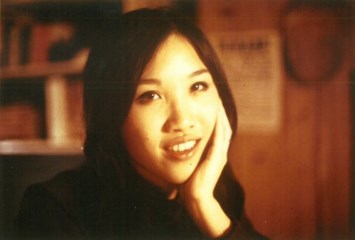
{Nov 26, 1947 - Jul 2, 2020}
Sue Kem Eng passed away on July 2, 2020 while in hospice care, succumbing to complications during recovery from abdominal surgery in March. Due to restrictions caused by the Covid-19 pandemic, Sue’s family were only able to visit in the final days before she passed. Sue is survived by her husband, William, of nearly 55 years, their son Vincent living in Jersey City, NJ, an attorney for Transatlantic Reinsurance Co. in New York City; and their daughter Lynda living in San Francisco, CA, wife, mother and homemaker; and their 5 grandchildren (Alex, Emerson, Hannah, Kyle and Ileana). Sue is also survived by her younger sister, Phyllis and 2 younger brothers, Ernest and Edward. Sue’s parents both died in early 2013, within two weeks of each other.
Born on November 26, 1947, in Tai (Hai) Wo Hospital in Canton, China, to Sun Kwong Louie (father) and Gam Fang Mark (mother), Sue was already an American citizen. Sun Kwong, himself the son of a United States citizen, came to the U. S. in 1937, at the age of 17. He also served in the U.S. Army and was Honorably Discharged at Camp Blanding, Florida, on September 28, 1944.
As was the custom in those days, Mr. Louie returned to China in January 1947, to marry his chosen bride, Miss Mark. To commemorate their 50th wedding anniversary, Sun Kwong wrote in a letter to Gam Fong that he was very nervous about meeting his intended bride, whom he had never seen before, but upon seeing her, he was overwhelmed with her beauty. Lost in the mist of time, is the exact date and location of the traditional Chinese ceremony that united in matrimony Sun Kwong and Gam Fang in the presence of their families. The newlyweds must have lived in the Toysun District, Canton, China, where Sue Kem was to be born and lived for part of her first year, before leaving for America.
Sun Kwong and Gam Fang were married a second time at the United States Consulate in Hong Kong, China on June 24, 1947, to formally document the marriage in the eyes of the US government. Written documentation of their marriage in China, and birth of their child was complicated by the aftermath of World War II and the takeover of China by the Communists.
Leaving behind his pregnant wife, about to give birth to their first born, Sun Kwong departed from China and returned to the United States on October 30, 1947. He went ahead to prepare living quarters in his laundry business for the arrival of his new family. Less than a month after Sun Kwong’s departure, Sue Kem came into the world at Tai Wo Hospital, Canton, China. She was a tiny baby, most likely premature; there is no record of her birth weight or size. Fearing criticism about the size of her new baby, Sue’s Mom resorted to telling people that she was younger than she actually was. In May 1948, mother and 5-month old Sue Kem set sail aboard the USS General Meigs, for the United States to join Sun Kwong in the land of the “Golden Mountain,” as the United States was referred to by Chinese people. Aboard ship, there were other Chinese mothers with their own babies migrating to America. In Chinese society of that era, boy babies were more valued than girls because a male child can carry on the family name. When a female child grows up and marries, she becomes part of her husband’s family. Louie Family folklore is that aboard the USS General Meigs, the other Chinese mothers of fat, chubby, and mostly lethargic baby boys, would chide Sue Kem’s mother about her first born being a girl; they even said that it would be better to just drop her over the side of the ship and go and have a boy baby. Despite her small size, Sue Kem was bright-eyed and full of energy. Her Mom fiercely protected Sue Kem, her first born child.
Soon after Sue Kem and her mother arrived in Brooklyn, New York, the neighborly owner of another Chinese laundry, a few blocks away, came to visit with his 5-year old son, Billy, to welcome the new baby to the neighborhood. Another Louie Family folklore is that this gentleman predicted that his son would someday marry Sue Kem. The gentleman’s prophecy came true, but he did not live long enough to see the two children wed. Billy’s father passed away when he was 14.
Sue Kem was the eldest of four children. She was an only child for a little more than a year before she was joined by a sister, and then two brothers, each born in February one year apart. During that first year in the back of her parents’ Chinese Hand Laundry store in Brooklyn, Sue Kem was the center of attention of her parents and grandparents, until her little world got very crowded. With each new baby sibling, her mother became more and more busy, helping run the business at the front of the shop, and taking care of the family and household in the back. At the still tender age of five, Sue was expected to entertain and care for herself, as well as take responsibility as “big sister” watching over her little sister and brothers.
For example, when Edward was probably still a toddler and being very precocious, he loved following his siblings around. One day, without anyone noticing, he followed Sue outside the store and when she crossed a busy street he did the same, oblivious to the danger. A car driving down the street almost struck Edward, but luckily the driver saw the little boy and was able to stop in the nick of time. That driver was so shaken that he had to sit on the curb for a long time to regain his composure. Being a big sister meant being on guard every moment.
On his first day in kindergarten or 1st grade, Ernest, the third child to enroll in the same school as his two older sisters, had a “melt-down.” He was so inconsolable that the teacher, who had once taught his oldest sister, summoned Sue to come and sit by Ernest until he was no longer frightened by his new surroundings.
Money was tight in the expanding but hard-working Louie household. Growing up, Sue found ways to entertain herself, even in the crowded store and living quarters. She loved to read and found a little cozy spot, next to a steamer trunk and under some boards where she could tuck herself in away from the noise and bustle around her. There she could read, draw or daydream. Sue had a paper doll collection; she designed, colored, and cut out clothes for her dolls. She had her favorites and kept her precious doll collection and handmade “designer” fashions in a cigar box, which she took out and played with to entertain herself for hours on end.
When Sue entered Kindergarten, she barely spoke any English. Chinese was primarily spoken at home. Throughout the first half of her Kindergarten year, Sue never spoke a word in class and her teacher, Mrs. McLaughlin, thought Sue was mute or could not speak any English. Sue was, more or less, left to do her own thing. The class rehearsed songs for the upcoming holiday show, but Sue did not participate. Being shy, Sue practiced after school on her own at home, learning the lyrics, gestures, and movements. At the holiday show performance, when the class started to sing, Sue suddenly started to sing along with her classmates. Mrs. McLaughlin was shocked and pleasantly surprised. She told the audience that this was the very first time Sue spoke in class and she seemed genuinely proud of little Sue. Sue finally found her voice.
Sue later attended Public School P.S. 77, William Alexander Junior High School, and John Jay High School, all in Brooklyn, N.Y. At John Jay, Sue was inducted into ARISTA, the national high school honor society and achieved the 90% certificate level. She was also on the Art Staff of The Lantern, the high school literary magazine, and The Prospect, John Jay’s Yearbook, where she also served as the Editor. The 1965 yearbook listed Sue as the “Senior Class Artist Celeb.” Her drawings illustrated various activities of the students of both publications in multiple years.
Sue was baptized and a communicant of All Saints Episcopal Church in Brooklyn, N.Y. where she was also a member of the Junior Choir. Sue was accustomed to the traditional language in the Book of Common Prayer, dating to Elizabethan times, known as Rite I. Wherever she moved and sought out an Episcopal Church, she always found that they scheduled Rite I Services for too early a time for Sue, usually at 8:00 am. Sue just could not get used to the contemporary language of the Rite II services, which were always set for later in the morning. Church going and Sue’s night owl routines could never sync up.
After high school, rather than formally pursue her artistic talents at Pratt Institute, where she was offered a 4-year scholarship, Sue enrolled at New York University to major in business. However, love and marriage soon came into Sue’s life: a young bride, then a mother with the birth of Vincent in 1966, and then Lynda in 1967. Any plans for college were put on hold, but not forgotten. Over twenty years and several intercontinental moves, Sue earned college credits towards her degree, while living in Germany, New Jersey, Saudi Arabia, and finally Brooklyn, completing her baccalaureate in political science in 1984, at Brooklyn College. Sue skipped her commencement at Brooklyn College in order to be at her son, Vincent’s, high school graduation from Notre Dame International School in Rome, Italy.
With her bachelor’s under her belt, and after the family finally returned from Saudi Arabia to settle in Virginia, Sue sparked an interest in studying law, and was admitted to Georgetown Law School. Unfortunately, during her First Year, she developed some medical problems which caused her to leave Georgetown. She never stopped trying to resume her law studies at Georgetown or wherever she could get admitted, but as the years passed, mastering the Law School Admissions Test became much more difficult.
Sue’s working career began soon after the birth of Lynda. Her Mom was helping raise her two young children, and the merged family income was barely sufficient. Starting at an entry level clerical job in Wall Street, Sue progressed through various secretarial positions in small town offices and big city corporate law firms, and at various U.S. Corps of Engineers offices in Saudi Arabia and in Virginia.
She was also the executive secretary for the publisher of Vogue magazine. Sue was the secretary for the guidance counselor’s office at the Karlsruhe American High School in Germany, where she earned the respect of an unruly class, for which she substitute-proctored an exam, and of the school principal. He admired how well she handled that assignment that the principal offered her the secretary’s job in his office!
In the early 1970’s, Sue developed a taste for international “pop music” while living in Frankfurt and Karlsruhe, Germany, where her husband, William, worked for the U.S. Army. Sue’s collection of LP vinyl album numbers in the hundreds, and that number quadrupled as CD’s became more popular when the family moved to Virginia in 1985. Thanks to the internet, iTunes, and Amazon the combined LP and CD count must be over a thousand.
Not to be forgotten is Sue’s love of books of all genres. Between two and three thousand hardbound and paperback editions can be found in bookcases on all three levels of the family home. To catalogue Sue’s interests would be a monumental effort. When the shelves ran out of space Sue collected hundreds of titles on the three Kindles she kept on her nightstand.
Sue tried her hand at a variety of handicrafts, such as hooking rugs, knitting, crocheting, and cross stitching. The hooked rug, she made while pregnant with Vincent, remains a family heirloom. Sue planned to commemorate the birth of each grandchild with a cross stitched sampler of her own design. When Sue heard of a volunteer effort to crochet cotton bandages for Vietnamese sufferers of leprosy, she got busy and made dozens, which were mailed off to the project collection point. A dozen more finished bandages, put aside in the pursuit of more pressing interests and recently found, will be bundled up and shipped off in Sue’s memory.
Art in all its forms has always been at the core of Sue’s creative spirit. Before the age of the computer, Sue put her ideas on paper, using pens and pencils, rulers and triangles, color-aid paper, and Letraset rub-on transfer letters. Sue loved typography, the style and appearance of printed material; once she even tried designing a new alphabet. Silhouettes and negative space were of particular interest. Sue spent most of her waking hours of the last years of her life in her workroom/art studio, surrounded and inspired by her collection of books on art and design, drawing and sketching, oil and acrylic painting, textile design, etc. The converted closet became an art supply store with shelves of drawing and sketching pads, colored pencils by the hundreds, colored markers of many hues, tubes and jars of watercolors and acrylic paints, and more and more brushes. The family hopes these tools of Sue’s trade and passion will find a home in the hands of some young artist who will be equally inspired to create art.
Sue loved games and puzzles. She enjoyed doing crossword puzzles, occasionally completing the one in the New York Times, and playing Scrabble. She would scrutinize the Scrabble board and figure out how to put a couple of letters here and there, across other words to form an obscure word, and then get the 50-point bonus for using all 7 letters. Sue also enjoyed playing Yahtzee (played with dice) and Mille Bornes (a French card game). In later years, Sue gravitated to Sudoku and Samurai Sudoku, printing out multiple copies of one puzzle from the Internet to work on during a car ride to the doctor or dentist.
Sue had a life-long “addiction” to Mahjong, to which she was first introduced as a young child sitting on her father’s lap on a Sunday afternoon and evening, during hours-long games in the back of the family laundry business. The Mahjong players were older Chinese men, mostly bachelors who also operated laundry stores in other parts of New York City, and may have been called “uncle” or were just from the same village in China. Sue’s mom would cook a big Sunday dinner for the assembled gathering. The clacking of the Mahjong tiles, jingling of coins, and rustling of dollar bills as the players settled up their bets, were sounds of Sue Kem’s formative years.
On holidays, whether Chinese or Western, grandparents, actual uncles, aunts, and cousins alike would congregate and somehow squeeze into the Louie Family living quarters. When this crowd of youngsters tired of playing tag or hide and seek, they would try their hand at playing their own Mahjong game, first for fun, but in later years for real stakes. Sue would never say “no” to a Mahjong game, especially with her family.
If you would like to do something to commemorate Sue’s life, her family requests that you consider making a donation to the International Child Art Foundation (icaf.org).
Sue’s life will be celebrated at a private family memorial service to be held in her childhood city of Brooklyn, New York at a future date.
Montrez votre soutien
Envoyez Vos
Condoléances
Partager
L'avis De Décès
Obtenir les mises à jour
Prestations de Service
Partager l'avis de décèsPARTAGER
- RECEVOIR DES RAPPELS
v.1.18.0