AVIS DE DÉCÈS
Lambrini Nick Horiatis
25 février 1949 – 4 décembre 2020
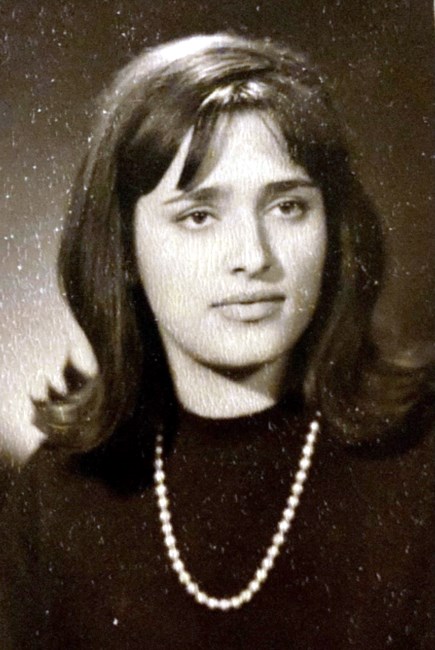
Lambrini Nick Horiatis was born to Nikolaos Poulos and Dimitra Mantaga on Feb 25th, 1949 in a remote island of Greece called Ikaria. She was raised by her two aunts, Konstantina Tsitsimikli and Arkondia Mantaga, because her mother Dimitra Mantaga moved to Athens, to work and provide for her family and her father passed away before she ever got to really meet him. Lambrini later joined her mother in Athens when she was around eighteen years old. She loved Greece and never thought about leaving her country except to visit her sister Asimina Katsas who lived in California. Her sister had gotten married to a man who was also from Ikaria, Andreas Katsas, that had migrated to Los Angeles after a long career in the merchant marine. During her visit to America, she met, and later married Nikiforo Horiatis, who she knew well since he was also from the same village of Perdiki. As luck would have it, Nikiforo, who most people knew as Victor, and Lambrini’s brother, were close friends growing up.
Lambrini Horiatis was a no-nonsense type of woman that worked multiple jobs to help take care of her family. She knew the value of a dollar and lived frugally to be able to provide a good life for her family. She was born in a time when Greece was recovering from the aftermath of WWII and had gone through a divisive civil war that brought famine and much hardship to her island. After WWII Greece found itself in the middle of the cold war and was the first battleground between the capitalist democratic left and the eastern Soviet bloc. Her home island of Ikaria had become a place for non-conforming communists that were exiled by the Greek government. The island was described by Homer in the 7th century BC to have the most turbulent waters (Icarian Pelagos) in the Mediterranean due to its strong currents and Etesian Northern Winds (Meltemia in Greek). Ancient sailors knew they had to sacrifices to the island’s patron god Artemis before attempting to navigate through its tempestuous sea. This and its extremely jagged unbroken coastline made it a perfect place for exile and was later given the name the “Red Rock” to describe the terrain and its inhabitants.
Lambrini was raised hearing the stories of hardship and strife and had to experience some of these events herself. Her family went through some terrible times during and after the war and were forced to flee Greece to survive the occupation by the Axis powers. These experiances made her determined to make a better life for her and her family in America. Like the terrain of her home island of Ikaria, she was known to be tough, but also, fair, and giving to people that were in need. She was close to her mother and both of her siblings as well as her two nieces Maria Gittings and Aleksandra Katsas and wanted to make sure they were always doing well. For her, family was the most important thing in life and there was little she would not do to make sure they were happy.
Lambrini worked as a nurse in senior living facilities. She came to America with almost nothing and learned to survive and thrive in a place that she knew little about. She spoke almost no English when she first arrived but worked harder than anyone else to make up for her lack of language. She taught her son to never be ashamed of working for a living no matter what that work may entail. One of her favorite Greek sayings was that “there is no shame in labor” if that work was honest and did not hurt other people. She enjoyed gardening and anything that had to do with the beach and the ocean. Keeping true to their islander routes she and her husband Victor would go to the beach often when they lived in California and taught their son Dimitri to have the same appreciation for nature and especially the ocean.
Later in life and after she had raised her son, she moved back to Greece for about ten years. She had worked hard in America and wanted to enjoy the fruit of her labor as well as be closer to her aging brother Basili who was the only one left in the old country. She went to the beach often and thoroughly enjoyed being back in her home country. Lambrini came back to America to visit her son and to help him with his father when he got dementia. This was a stressful time for Lambrini, and she ended up having multiple brain bleeds that would eventually leave her paralyzed and mentally disabled. It was tough for her to accept these new circumstances given that she was a true free spirit and fiercely independent. But Lambrini was a fighter. Even under these dire circumstances and unbeatable odds she fought to stay alive. She had a 35% chance of surviving her first brain surgery. Not only did she survive that but then had to repeat similar procedure another two times. Each time she lost a bit more of her physical and mental functions but kept battling through her current circumstances to make it through another day. She was able to see her son get married, and meet her grandson, Victor Horiatis.
The famous Greek orator and statesman Pericles once said, “What you leave behind is not what is engraved in stone monuments, but what is woven into the lives of others”. Lambrini had a profound effect on the people that she met because of her selfless and caring nature. She was the first to give, and the last to take, always willing to sacrifice for her family and friends and sometimes even for perfect strangers in need. She rarely took credit for her good deeds or asked for anything in return. Her actions were based on her own principles and values that she never negotiated or compromised. In a transactional world, Lambrini went against the grain and simply gave her time, resources, and talents unconditionally to the people that needed them most.
Like the times she was raised in after WWII, Lambrini was a complex woman with strong opinions that many times seemed contradictory, yet she wasn’t a hypocrite. She was a strict disciplinarian and believed cleanliness and order were the foundations of nobility. Yet she was very egalitarian and placed great importance on meritocracy and hard work. She was a true humanist that placed people above all material goods, titles, and honors. She believed enlightenment starts in the heart and that no amount of education or riches can ever make up for the lack of moral values and respect for your fellow human beings. She knew that life was short, and that material success was fool’s gold that never lasts nor does it bring happiness. She felt that doing what your passionate about for the right reasons is much more important than accumulating and consuming.
Lambrini was a natural leader and would always teach through example. She taught her son to seek wisdom and self-knowledge over comfort and luxury. She also taught him that hardships and pain are the tools that life uses to sculpt you into becoming who you were meant to be and that failures and momentary set backs were how god put you on your rightful path. She would tell him that in this life we all have a cross to bear and that courage, hard work and a belief in god are the only currencies needed to be successful. She also taught him that life is not fair. Lambrini hardly ever complained. She was a pragmatist that saw circumstances for what they were and worked through them with dignity and decisiveness.
Lambrini was born on the Island of Ikaria, which is known as the island where Icarus fell to his death, after flying too close to the sun with wings made of wax. It’s also the patron island of the Hellenic Air Force. From the ancient Romans to the Medieval Ottoman Sultans the island of Ikaria was many times occupied but never conquered. Lambrini’s spirit was no different. It was not meant to be trapped in her ailing body, so she broke away from it and is now free as she always was meant to be.
On December 4th, after bravely battling her disease for six years, she quietly passed in her sleep. She is survived by her son, Dimitris, her daughter-in-law, Hellen Horiatis, her grandchild Victor Horiatis, her sister Asimina Katsas, her two nieces Maria Gittings and Alexandra Katas, and her older brother Basili Poulos. May her memory be eternal and inspire courage and compassion during these challenging times.
The funeral ceremony will be on Thursday, December 10, 2020 at 9:30am at Archangels Greek Orthodox Church.
Montrez votre soutien
Envoyez Vos
Condoléances
Partager
L'avis De Décès
Obtenir les mises à jour
Prestations de Service
Partager l'avis de décèsPARTAGER
- RECEVOIR DES RAPPELS
v.1.18.0