
AVIS DE DÉCÈS
George William Johnson Linton
10 novembre 1930 – 14 septembre 2019
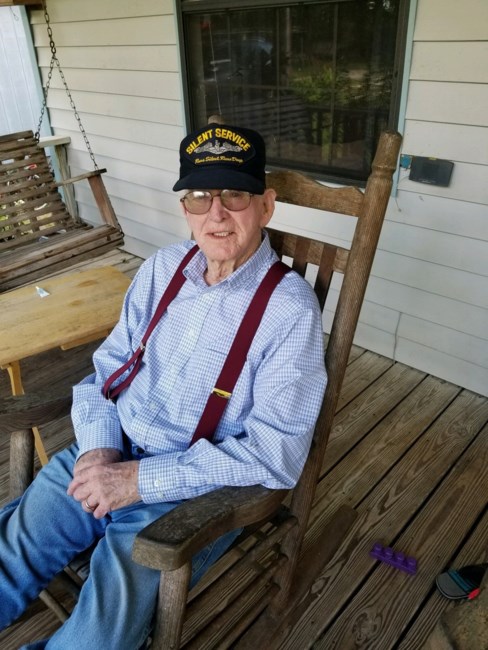
George William Johnson Linton, 88, of Woodville, passed away Saturday, September 14, 2019, at Tallahassee Memorial Healthcare. Visitation will be 3:00 to 4:00 Friday, September 20, 2019, at Culley's MeadowWood Funeral Home, 1737 Riggins Road, with a Celebration of Life immediately following beginning at 4:00 p.m.
George W. Linton
Born November 10, 1930 – Died September 14, 2019
George's Story
Any attempt to summarize a man's life in a few words is insufficient but attempting to describe the amazing life of George W. Linton is impossible. A biography of a thousand pages would fall short of the mark. Fortunately for those that knew him, George told his own story every day, treating us all too vivid interludes of his amazing time here on the earth. The following is just an effort to tell that story, told from the perspective of his little brother who idolized him, gathered through seventy-six years of spellbound concentration, hanging on his every word. Here is George's story told as much as possible from his own perspective:
George lost his father, George Johnson, at the age of three. Together with George and his big sister Aline (Sis), his mother Inez moved back into the home of her mother, Granny Lewis, and went to work to provide for her children. Granny Lewis, born Joanna E. Alligood in 1875, had lost her husband in 1928 and was forced to raise her family and manage the farm during tough times. Woodville was not far removed from the actual frontier days that were made even more desperate by the Great Depression, which started the year before George was born. She was determined to make George tough enough to withstand the hard life she had known. George was to be molded at a very young age into a man that could face anything life threw at him. He became that man, a man that never knew fear, faced every challenge with determination and unquestioned integrity. George was fiercely patriotic and never backed down from a fight. He epitomized every great trait of what was to be known as the greatest generation.
But his beginnings were humble as a baby, George was anything but strong. His uncles jokingly said George was the scrawniest child ever born in Woodville. Uncle Wilson once told George's mother Inez that "You couldn't help having such an ugly baby, but you don't have to show it in public." George grew to become a very handsome man. His big sister at first protected him from the bullies at school, but one day she said to him, "you need to get strong, so you can protect yourself when I'm not there." He revered his Sis then and throughout his entire life, and he took her words to heart. He worked out every day and became strong, extraordinarily strong. Later, when his mother Inez Lewis married Calvin Rahn Linton, a golden gloves champion, George was taught how to use his strength and boxing skills to protect himself. His strikingly beautiful sister never had to fight his battles again. It was his turn to protect her, and he did. The man who later became the famous actor Robert Wagner went to school with Sis and George. He learned the hard way not to say anything disrespectful about Sis. There were apparently no lasting scars from the two whippings the much larger man took from George and from that point on he gave George a wide berth. Wagner later proposed marriage to Sis and was turned down and ended up marrying a second-best, Natalie Wood.
George's amazing strength and ability to fight showed up frequently in the Uncle George Stories that are a legend among his children and grandchildren, who can recite some of the stories that memorialized his life, verbatim except for some of the more colorful language. From a very early age, George learned to tell stories, amazing stories that chronicled his life in such detail and clarity that you felt that you were reliving the adventures with him. Each time he returned to Woodville, the uncles would circle chairs, boxes and logs in the yard and build a fire if it was cold enough just to sit and listen to George tell his amazing stories. Sometimes seventy years or more after an incident that sparked his interest, he could miraculously detail exactly who was there, what they said verbatim, where they were, including the weather conditions and even the expressions on their faces. I asked him recently how he did it, he just said, "It just all comes flowing back as if I were there again." There is a scientific term for this ability. It is called the hyperthymesia syndrome and gives people superior autobiographical memory, the type of memory that forms people's life stories. The casual listener might doubt that any one person could have lived such a "Tom Sawyer" life, but those who knew him well knew that George never needed to stretch the truth, not even to make a fish a little bigger.
The earliest stories are about Granny and his life in Woodville as a child growing into a man, too fast. He first learned to shoot from Granny and then from a local World War I veteran who was the "best shot in Woodville." George finally bested his veteran teacher in a contest shooting acorns off a distant oak tree by clipping only the stems. George recounts that the following day after winning the title of best shot in Woodville, he climbed the tree and found that his veteran teacher's 22 bullet had split the twig that held the acorn, without clipping it. The match had actually been a draw, but after that, the old veteran referred the men of Woodville to George who would accompany them to round up and selectively kill wild hogs. It was necessary to the men's survival to have with them a good shot who could stop a charging wild boar with one shot from a single shot 22 rifle. Only a shot squarely between the eyes could stop a charging boar, and no one could afford more high-powered bullets. George faced down many wild boar, earning 25 cents a hog, and gave all the earnings to Granny. Somewhere between the ages of eight and ten, he was also taught to castrate, gut and butcher hogs and other wild and farm animals. Granny would give George two 22 bullets in the morning before school and tell him to bring back two young squirrels that she would serve for dinner.
Of course, Granny didn't know that war was coming, and George's future was not to be on the farm. In 1942, at the age of twelve, George found himself and his family heading for Los Alamos, New Mexico, where his new adoptive father, Calvin Rahn Linton, was to work on the Manhattan Project. There he would work with the greatest scientific minds of the twentieth century to design and build the Atomic Bomb. During the family's years in New Mexico, George had a front-row seat to the military operations related to the Bomb, but he also had the wildness of New Mexico for his playground, where Granny's lessons would serve him well. In the 1940s, the southernmost end of the Rocky Mountains surrounding Los Alamos was almost untouched by anyone but Indians and a few rugged Mexican cowboys working a Spanish land grant ranch in the Via Grande, where few dared to go. As soon as school was out for the summer, George at the age of 13 hiked into the Rocky Mountain wilderness of northern New Mexico and southern Colorado and lived off the land, with only a single shot 22 rifle, a fishing line, and some fishhooks. He had learned to face charging wild boars as a child…What could top that? When he returned home two months later, he had learned to catch trout, shoot grouse and one night faced off a grizzly bear that was trying to steal the fish he had caught. He came home at the end of the summer wearing a rawhide necklace with the grizzly's tooth, which he had shot out. It still had the bullet wrapped around it.
George earned spending money the hard way, breaking wild horses. He became a favorite of a few of the crusty old ranchers and some legendary cowboys like Sanchez who befriended this unusual young boy who seemed to have no fear, possessed lots of common sense (he learned from Granny) and loved to talk. Three summers ago, George accompanied his little brother Larry and two of Larry's sons, Jeb, and Kit on a trip to Los Alamos to relive some old memories. Their other brother Coby had been the instigator for the trip but at the last minute had to drop out. Kit had arranged for tour guides from the Los Alamos Historical Society, but within minutes George was guiding the guides, and they were spellbound by his stories. He brought the legends of Los Alamos, like Sanchez, to life with stories and details of their appearances, mannerisms, and things they had actually said. The guides listened, sometimes with their mouths wide open to stories that must have made their chosen professions seem stale. This was living history. The tour guides refused payment after the day-long tour and said they should be paying George for bringing these legendary figures to life for them. For months, they called Larry to help them get in touch with George, but he was not interested in doing any follow-up. He had been there and done that.
A few of his rancher friends told George that a wild paint stallion kept stealing their mares and that no one was able to catch him. They had decided to shoot him, but George asked them to hold off for a few days. George tells of how he caught and broke the stallion and brought it home to kept in Larry's fenced-in play yard. The horse was gone the next day, and he went out and caught it again. George's skill with horses earned him small parts as cast as cowboys, soldiers, and Indians in a few Hollywood western movies with Randolph Scott and other western movie stars.
George spent most of his teen years playing football, running track and stealing off to Santa Fe to enter professional boxing matches. He carried his little brother, 12 years younger, along with him on dates, fishing, and hunting trips. On one trip, some forty miles from Los Alamos, George stopped by a gas station where Larry fell in love with a toy tomahawk. Without the money to buy it, George left his spare tire as collateral, purchased the toy and returned the following week with the money to retrieve his tire.
George volunteered for the Navy and exempted all the San Diego Bootcamp physical training when he did a one-arm chin-up, a physical feat the Drill Sargent could not do and had only witnessed once before. Then George won weekend furlough by representing the Navy as their boxing champion against the Marine champions. George's Navy adventures were mostly centered around the Mediterranean, the Suez Canal and, during the Korean War, a rescue mission to save near-frozen soldiers from the Battle of the Chosin Reservoir that was the bloodiest battle of the war and the subject of many Hollywood movies. George's brother-in-law Madrye Coggins, the man who married his beloved Sis, was a lieutenant colonel in the marines and was one of those rescued. His Navy stories mostly depicted the true life, day to day mischief of sailors in the Mediterranean port cities, but some of them are heartbreakers.
After leaving the Navy, George found his life's profession, which involved a lot of highly classified work in what was called the Silent Service. One of George's last statements to his granddaughter Kathryn before he died, was; "For nine years I was the best in the world at what I did, but now I am done." He and five members of his team received awards directly from president John F. Kennedy for the critical Cold War defense work they had accomplished. George sometimes wears the Silent Service cap also given to him at that award service. The work was so secret that for years after he retired, the CIA followed him around every time he left the US on vacation. George and his wife Martha found a photo left on their doorstep of them stepping off a boat in the Bahamas. Part of his work involved running a small team of Navy Seals off a scientific barge in the Bahamas. The stories about training and partying with his Seal Team members are fascinating. George also participated in diplomatic meetings where his expertise was useful in working out agreements with the US allies. On one occasion while traveling with a high-ranking Navy official who had become a close friend and fishing pal, George was at a diplomatic cocktail party where he was mistaken for the official and ended up in conversation with Margaret Thatcher, the British Prime Minister. In true George fashion, he gave his honest opinions about the British role in the Falkland War. On yet another occasion while traveling in France to troubleshoot a submarine problem, George was carrying a suitcase handcuffed to his wrist that contained Top Secret submarine schematics. A man stepped out of a doorway, grabbed his wrist, and then slumped to the ground dead from a bullet to the head. A CIA agent that had secretly been following George dragged him away to a car parked nearby.
While George helped oversee the design, construction, deployment, and operation of the Navy's new secret weapon, MONAB (Mobile Noise Analysis Barge) he lived in Charleston, South Carolina and then Fort Lauderdale, Florida. Most of his Charleston stories center around his Brittany spaniel, Duke. At the various groomed hunting plantations surrounding Charleston, George and Duke together became legends among the old Charleston families. These are some of George's most humorous stories, but listen carefully, and you will see that every word is filled with admiration for his beloved friend that earned enough field trial awards to fill a room. George mourned Duke's death to the end of his days, and Duke's portrait still stands on the wall of his bedroom. George's first wife Mary Ann tells how one day she received a call from someone claiming to be Bing Crosby. Bing had hunted behind Duke on one of the few occasions that George agreed to lend him out to one of the plantation owners, and he wanted one of Duke's puppies. Mary Ann said, "If you are Bing, sing White Christmas," and so he sang it to her over the phone. Bing didn't get the pick of the litter, though. George saved that puppy for his little brother.
When George moved to Florida with Mary Ann, their daughter Janet married a man that was like a son to George, Michael Pallone. Michael and Janet have three amazing children. Their son Bryan fulfilled one of George's dreams of having a son, in this case, a grandson, who was a great football player. Bryan was inducted into the Mason Dixon Football Hall of Fame for his life-long achievements that included breaking almost every quarterback record of semi-pro football. This year Bryan had the greatest honor of any football player, he was inducted into the Pro Football Hall of Fame in Canton, Ohio. George followed every game with delight. George taught his beloved granddaughters Kathryn and Sara how to shoot a shotgun, a rifle, and a bow, how to fish and how to drive a stick shift, much in the tradition of how he raised his only child, Janet. Kathryn, Sara and Bryan have a trove of their own stories about their beloved Papa, and he helped shape each of their lives in more ways than we will ever know.
Martha Britt Linton, George's beloved second wife, has spent the last twenty-six years sharing his life, taking care of his aging mother until she died in 2004 and being a wonderful companion in the home that George built when he returned to Woodville after a full career. Martha's two children, Jamey and Angela, were both influenced by George's bigger than life presence.
In his last weeks of life, he was surrounded by family and true friends like Lou and Jennie Logan, all of whom revered him. He took his last breath, surrounded by his family and friends. George W. Linton was an extraordinary man in every sense of the word. He had a thin hard shell that Granny Lewis gave him to protect him from a harsh world, but this shell barely concealed a heart bigger than all outdoors. This was a man who would have given his life for a loved one without a second thought. Wherever he went, he would attract emotional orphans. He would adopt them and, in many cases, became the father they had never known. He touched thousands of lives, and each of those he touched were better people from the experience. On September 14, 2019 at about 5:00 PM, George's story ended, but his stories will be passed down from generation to generation.
Montrez votre soutien
Envoyez Vos
Condoléances
Partager
L'avis De Décès
Obtenir les mises à jour
Prestations de Service
Partager l'avis de décèsPARTAGER
- RECEVOIR DES RAPPELS
v.1.18.0