
AVIS DE DÉCÈS
Dr. Theodore Hopens
31 octobre 1936 – 27 février 2023
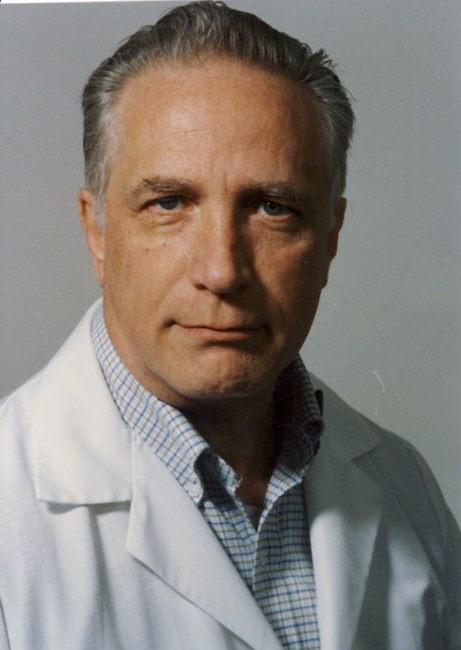
Theodore (“Ted”) Hopens, retired physician, beloved husband and father, and lifelong learner, passed away at the age of 86 on February 27, 2023, in Georgetown, Texas, after a brief illness. It should be noted at the outset that he was humble and generally a man of few words, so he would probably grouse to the author about the discussion of his accomplishments (“too much!”) and the length (“come on, really?”). He preferred to sing the praises of others and hated (absolutely detested) the idea of tooting his own horn. He was also quick-witted and would probably offer the author some notes to sharpen the humor (“is this supposed to be funny?”). What follows is a mix of tribulation and (an attempt at) some levity. Isn’t life one big tragicomedy anyhow?
Ted’s life began across the globe in Eastern Europe with great promise. He was born on October 31, 1936, in Warsaw, Poland, the only child of Szymon Hopensztadt and his wife Felicia (née Szuldiner). Szymon, a physician, went to medical school directly from high school and served as a second lieutenant in the Polish army reserve. Additionally, he took time out of his medical practice to study humanities at Warsaw University. Felicia, the daughter of a Warsaw textile manufacturer, later became a teacher, translator, and secretary.
Ted was doted on by his parents, grandparents, aunts, uncles, and cousins. His idyllic early life surrounded by the comfort of a large and loving extended family was irrevocably cut short by the 20th Century’s most significant and arguably life-altering event.
On September 1, 1939, the German invasion of Poland ushered in World War II and uprooted the trajectory of Ted’s life and, ultimately, the lives of millions of others. He and his mother, with help from his father, fled the country, ending up in a labor camp in Kazakhstan in the Soviet Union, where they lived for the war’s duration. Life in the camp was not pleasant, easy, or by any means comfortable, but there were certainly worse places to be at that time. Felicia was devoted to her son and did everything in her power to make the situation as tolerable for Ted as possible. In the end, they survived. Sadly, Ted’s father did not. He died, along with thousands of other Polish military officers, in the massacre at Katyn Forest in Smolensk in 1940 at the hands of the Soviet secret police.
Ted felt his father’s loss profoundly, and he often spoke of him with great admiration. He also grappled with the loss of much of his mother’s and father’s families, though he knew acutely he was more fortunate than others. His aunt Sabina (Ina) and uncle Stasyk, two of his mother’s siblings, survived the war. Ted’s wife wrote about his early life in Stalin’s Feisty Guest, under the name Marjorie Hope.
The post-war years shone much brighter for Ted and his mother. Felicia married Edward Bader, who had lost his wife and daughter during the war, and they settled for several years in France. Ted fondly remembered his time there, particularly the food and personalities he encountered. He liked school, where he excelled, especially at math. He always loved to read and learn new things and developed a strong work ethic, all of which held steady through the rest of his life. In 1952, at age 15, Ted, his mother, and stepfather immigrated by ship – the Argentina – to the United States of America. According to the passenger list, Ted was “stateless,” but he was about to find a place to call home in what would truly prove to be the land of opportunity.
His first hometown in the U.S. was Chicago, Illinois, where Ina and her husband, Maurice Teich, lived with their son, Albert (Bert), and daughter, Judith, who were both years younger than Ted. He adored his aunt, uncle, and cousins. One of his fondest memories of this time was babysitting his cousins and watching Saturday night wrestling with them on TV. Though he spoke little English at first, he caught on quickly and eventually thrived in school at South Shore High School, where Bert would eventually graduate as valedictorian (Ted was very proud of this fact, knowing how competitive it was there). After moving to New York City, Ted completed high school at the High School of Commerce and later enrolled in the City College of New York (CCNY), majoring in math. Around this time, he proudly became a U.S. citizen.
Ted took advantage of the Big Apple’s cosmopolitan atmosphere, particularly the unparalleled museum, restaurant, and theater scenes. He felt especially blessed to have seen Steve McQueen and a young Louis Gossett, Jr. onstage. During his time at CCNY, he worked at the New York Public Library, the Holy Grail for avid readers like himself.
Ted interrupted his college studies to enlist in the U.S. Army, and, after completing his active-duty service, he returned to CCNY and earned a B.S. in mathematics, graduating Phi Beta Kappa. He also served in the Army Reserves in New York (he got a kick out of the fact that he shared this distinction with comedian Larry David, who served a number of years after he did – Curb Your Enthusiasm was one of his all-time favorite TV shows). After CCNY, Ted continued on the academic track, obtaining a master’s degree at The Ohio State University in Columbus (he was very proud that two of the grandchildren of his beloved cousin Bert later became Buckeyes). He put his math skills to good use as an actuary for an insurance company. At some point, however, Ted decided to pursue a different career path entirely – in 1964, he enrolled at the State University of New York at Buffalo (UB) School of Medicine. His family cannot help but think that honoring his father had at least something to do with this dramatic change in direction, along with a strong desire to help others.
While taking classes at UB to prepare for medical school, a young woman in one of his classes caught his eye. He invited Marjorie (Marge) McGee to a dance, and she asked if he was married. His response – “Yes, I have five wives in New York City” (he didn’t). Somehow, her suitor’s sarcasm did not dissuade her, and she accepted the date (good move, says the author). The rest, as they say, is history. They married in Marge’s hometown of Jamestown, New York, on June 25, 1966, and remained married and blissfully in love for 56 years. He also loved her family, including brother William and sister-in-law Linda and their children Yvette and Chris, and maintained a close bond with them to the end of his life.
Marge and Ted lived in different cities around New York state, including Buffalo, Rochester, Webster, Geneva, and Rochester (again), in the years after he obtained his medical degree and as he built his practice experience. Along the way, he collected three board certifications (internal medicine, gastroenterology, and radiology) and welcomed two children, Michael and Jennifer. Ted was very close to his kids, who adored and admired him. His kindness and accepting and encouraging presence will be missed forever.
A change in scenery for the Hopens family came about in 1978, when Marge and Ted decided to relocate from Rochester to San Antonio, Texas (the change was occasioned in no small measure by the more favorable weather conditions in Texas – no lake effect snow). Ted began his career with the Veterans Administration (VA, now the Department of Veterans Affairs) as a radiologist at the Audie L. Murphy VA Medical Center. During his time in San Antonio, he also worked as an associate professor at the University of Texas Health Sciences Center. In 1983, he made his final career move to the radiology department at the Olin E. Teague VA Medical Center in Temple, Texas, where he worked full time until his retirement in 2002 (he continued on a part-time basis until retiring for good in 2016). He was an associate professor at the Texas A&M Medical School in Temple for a number of years. He greatly valued his interactions with the students and his VA colleagues and was committed to providing high quality patient care throughout his career. He enjoyed living in Temple, where he was active in the Bell County Medical Society, Emeritus Medicus group, and National Active and Retired Federal Employees (NARFE) association. He and Marge had their first family pets while living in Temple, four cats who were so dear to them (and incidentally could do no wrong).
In later years, Ted traveled extensively with his wife and children. Canada, Ireland, and Scandinavia were especially spectacular trips. He liked to challenge himself by doing crossword puzzles and acrostics and remained an avid reader. He was a huge sports fan, particularly of the Dallas Mavericks.
Of all the things Ted cherished in life, the most important was his family. Family to Ted was not a defined concept and did not necessarily connote blood relations - it was all about connection. In later years, Ted and his family reunited with his stepfather Edward’s grandchildren, Vivian and Mark. Ted considered them family in every sense of the word.
In the end, a formerly displaced, stateless person found a home in a new country surrounded by love. And a life born of promise was fulfilled.
Ted was preceded in death by his parents, aunt, Ina Teich, uncle, Maurice Teich, and cousin, Albert Teich. He is survived by his wife, Marjorie McGee Hopens, of Temple, son, Michael Hopens, of Dallas, and daughter, Jennifer Hopens, of Round Rock, cousin, Judith Teich, of Bethesda, Maryland, and innumerable other “family.”
A memorial service for Ted will be held at Crawford-Bowers Funeral Home in Temple on Saturday, March 25, 2023, at 1:00 p.m.
In lieu of flowers, the family suggests that you donate to a charity of your choice.
Montrez votre soutien
Envoyez Vos
Condoléances
Partager
L'avis De Décès
Obtenir les mises à jour
Prestations de Service
Partager l'avis de décèsPARTAGER
- RECEVOIR DES RAPPELS
v.1.18.0