AVIS DE DÉCÈS
Mae Marina Chu
18 septembre 1927 – 14 janvier 2014
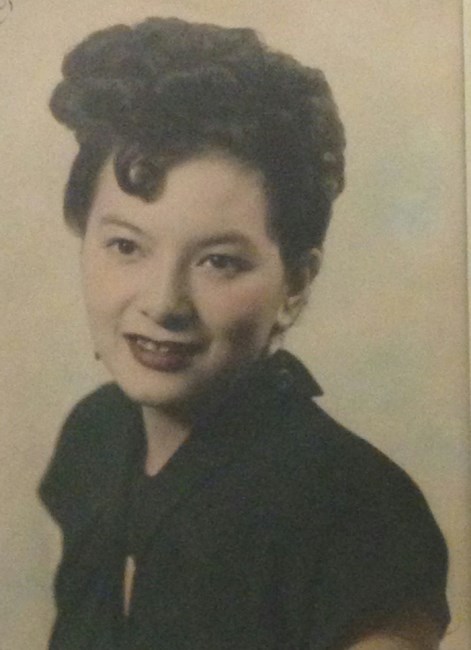
This content was originally part of a website (for a school project) which told the story of Mae Marina Chu from the perspective of her grand-daughter, Alexandra Chu. It was completed April 18, 2006.
Introduction
My grandmother is currently 78 years old and lives together with her husband in East Vancouver. They have two sons and three grandchildren.
This history is based on a series of interviews and conversations which took place during March 2006 as well as my own background knowledge.
The website is focused around memories which I have italicized. I have narrated these memories in the form of small scenes or vignettes intended to capture my grandmother’s character and significant moments that she remembers. I used the details which she provided during our conversations as a basis and have made every attempt to maintain her perspective and attitudes.
Memories of Childhood
Lillooet was a dusty little town past its Gold Rush prime. There was no important industry to speak of, only a sleepy Main Street lined with false front stores, a few cafes, a post office, church and school house. Each day business was as usual, though the depression had brought tough times, which meant the effects of hardship could be seen on everyone’s faces. But to the children, Lilllooet was a paradise. Surrounded by mountains, hills, and the mighty Fraser River they were in a land full of opportunity for adventure. When spring came, children ran free; encouraged by their parents to get outside, nobody was afraid they might be nabbed by a stranger. The hot and muggy summer brought to life scores of cherry, apricot and peach trees, which were frequently the target of juvenile robberies. The Fraser River was also popular. Here the goal was to swim from one bank of the wild river to a sandbar in the middle. Those who made it were covered in leaches, but it was worth the envy of the younger children. On days when longer adventures were possible, small groups might visit Seton Lake, or plan a hiking adventure around the vast country that surrounded the town. In the winter time, there were rival opportunities for fun. The laughter from children sledding down the hillsides or skating over the frozen water warmed the cold winter air. Best of all was the large belly stove that heated the Jim Bros store. The doors were always open for the children to come in and warm up with big cups of coco.
My grandmother Mae (left) and her younger sister Lola
Clara, Vicky, Mae, and Lola
In 1927, my grandmother, Mae Marina Chu (Jim) was born in Lillooet, BC. “There was never a place that I would ever dream of not being raised,” says my grandmother who recounted a score of good memories, which formed the basis of what is written above.
My grandmother was the fourth of six children born to San Jim (born in 1897, Kowloon, Hong Kong) and Jane Tai Wong (born in 1905, Victoria B.C). There were three other girls, Clara, Vicky and Lola and two boys, Clifford and Harvey. Three of these siblings have now passed away. My grandmother also has a half-brother, Peter Jim who is now a multimillionaire.
The Jim Bros. store in Lillooet, supported my grandmother’s family as well as the families of her father’s two brothers, whom he helped to bring over from China.
When my grandmother reached grade 9 she was sent to the coast to complete her high-school education, the same was true for her siblings. At the time, receiving a high-school diploma was a big achievement. The kids were sent away as a result of their mother’s urging, although she was never educated, she always believed her children should receive a good education so that they would be exposed to a different world.
Independence
“I can remember, I was standing up on the counter dusting Heinz 57, and I don’t know what I had done wrong but my dad started to scream at me and he told me to get out. And I said if you tell me to get out once more, I will get out…and so I did.”
“I had a carnation box, 18 dollars and a little bit of clothes and hitchhiked from Lillooet to Lytton to get down to Vancouver. And when I got down to Vancouver…and Lola [her sister] was still at 1974 Turner Street, I decided I would not even tell her I was in Vancouver until I could land a job… so I did. I went to a grocery store and I landed a job selling vegetables and groceries.”
This story is quintessential of my grandmother’s personality; it reflects her boldness and her belief in the importance of speaking your mind and standing up for yourself. When I was younger, my grandmother used to routinely check up with me to make sure I was a leader at school, not a follower or a sheep. More recently, I happened to mention that I never argue with my boyfriend and she looked at my sharply and said in long drawn out words intended to give emphasis, “you must be kidding me…don’t you have your own opinions!” Thus, I was not at all surprised to hear that my grandmother stood up for herself and asserted her independence at the young age of 18. The quotes above came from a conversation about her past, which we had in March 2006.
The background to the story is this: After completing high school in Vancouver, my grandmother was required to return home to Lillooet. Her father had a saying: “all I had was grade two and look what I have come. I’ve got a store, I have six children, I’ve supported you guys and I’ve sent you away for schooling in the city… so your debt to me is when you finish grade twelve, you owe me two years of free service in my store without pay.”
My grandmother returned home to fulfill her commitment. This was during the time of World War II and the Japanese, who had been evacuated from the coast, were living in camps at East Lillooet. My grandmother did not reflect much on the war, but remembers thinking about all the business the store would have to deal with. The Japanese relied on the three stores in Lillooet to supply them with their shopping needs, so there was plenty of work for my grandmother. However, her father had a virile temper, and though he did not mean a lot of what he said, he often yelled and got angry at his daughters. Unlike her sisters, my grandmother would not stand for it. She warned her father repeatedly not to ask her to leave, but when he insisted on it this time, she did just that. She spent the next while supporting herself in Vancouver, where she lived with her sister Lola. Sadly Lola, fell ill and died of a Kidney disease. My grandmother was devastated and so her sister Clara, who lived in Revelstoke, offered to take her in.
Marriage
Mae and Lola were excited about joining the city’s Chinese group that was planning a picnic on Bowen Island for the 24th of May. The only problem was there was no money
for a picnic lunch. Pop sent them only a small sum, exactly enough for rent, bus tickets to school, and an extra ticket to make it to Chinatown on the weekend for Chinese
school—there wasn’t an extra cent. Luckily Aunt Elsie was able to provide them with yummy friend chicken and potato salad for lunch. Mae was having a fabulous time pitching ball that afternoon, when she first caught the eye of Dick Chu, the man who would later become her husband.
My grandma specifically brought out this picture, to show me how handsome and popular with the ladies, my grandfather was. When they first met, they were both dating other people.
They maintained a friendship over the next few years during which my grandmother lived in Vancouver; however, when her sister Lola died, her other sister Clara offered to take her in since she was so upset that it would be difficult for her to be alone. Clara and her husband ran a café in Revelstoke where my grandmother learned to sling hash. My grandfather, Dick Chu continued to visit my grandmother periodically and eventually Clara pointed out to my grandmother that Dick was probably in love with her. At first my grandmother could hardly believe it. She described herself as a stranger to love. She thinks that being born in her father’s family and with her mother dying so young, her dad was so busy surviving six children and making a living that there was no one to cuddle or love the kids. So she grew up as a person who didn’t know how to be open to love.
They married in 1951 in Revelstoke and drove across Canada for their honeymoon. They visited St. Louis where they attended a ballgame, this was one of Lola’s dreams, and so that part of the trip was my grandma’s fulfillment to her.
Motherhood
“This mother believed in tough love and still does”
The boys, ages 9 and 11 were very interested in an air rifle and so their parents bought them one to share. They would never have been given their own; it was either share and share alike or nothing. There was one condition: they had to play inside, shooting at gunning sacks that had been set up in the basement. But boys will be boys and a small bird outside on the clothesline caught their curiosity. They tried to shoot the little bird, but alas they missed.
Then, about a week later, a neighbour from across the lane came over to talk to their mother. She was curious as to whether they had a BB gun in their home-- her large back window had a number of mysterious holes in it. Of course it was promised that the window would be fixed, but the neighbour was asked to do a favour and call the police. The next day the police arrived to talk with the guilty boys and scare them out of any future plans.
This is the famous story of the air rifle, which I’ve heard on more than one occasion. The boys in the story are Michael (my father) and Baree, my grandmother’s two children, who were born in the 1950s. The story immediately came to my grandmother’s mind when I asked her to speak about having children, I think because it reveals an important belief she has in virtues of tough love. However, even more significantly, my grandmother says that she believes she taught her kids one basic lesson they still live by today-- she taught them the importance of thinking for themselves and having their own opinions.
Health and Home
When it comes time to blow out the candles on your birthday cake, there is only one thing you wish for if you’re a member of the Chu family—good health. This is my grandmother’s rule; she’s taught us that without good health, you can’t do anything else. What my grandmother remembers most from the middle years of her life is her mastectomy and the building of the family’s new home, especially because the two happened at the same time.
My grandparent’s house provokes a lot of intrigue from the outside. “The front wall looks like a warehouse,” said my grandmother. “Many people would love to look inside this house because it’s so mysterious.” My grandmother herself was shocked when she found out the architect had made such a peculiar choice, but she had intended to build house unlike any other. She knew an architect, K.L Chang who drafted the plans for a different kind of house, a house where you wouldn’t automatically know where everything was when you walked in. My grandparents still live in their house today, the property was initially an investment they made while living in their first house. The family began getting wrapped up in the process of building their new home just before my grandmother found out she had breast cancer.
My grandmother found the lump when she was taking a shower and at the time she had not read anything about breast cancer but she knew she had to go to the doctor. This was a very scary time for her although she was immediately able to see a specialist who had been to New York, everything to do with breast cancer was comparatively new at the time. Within five days she was in the hospital for treatment. While she safely recovered, this episode in her life is something that stands out very distinctly when she thinks back. She is not one to take her health for granted. She quit smoking when it became a major health concern, she is conscious about exercising and eating well. As a result, she is able to enjoy an active retirement traveling, golfing, and spending time with friends and family.
Golf
“I really earned a name for a Chinese girl who could golf”
“It’s a game of self-discipline, it belittles you,
it honours you and it makes you humble.”
I imagine my grandmother taking in the fresh air on the golf course after a long shift at the Dew Drop Int. Dressed in a freshly pressed golf-skirt with her hair done up neatly in the fashion of the day, she’s carting around her sister’s right-handed clubs, making do with what she has. None of this matters because her head’s completely in the game, Mr. par is the boss, and she’s ready to work. She’s becoming good at the sport she picked up a few months earlier as a way to fill her time after work. She doesn’t even start at a 36 handicap, she’s already a 24.
There are lots of fun times that follow as she teaches her sons to golf and the family goes on short golf trips in their camping van. Each week my grandmother’s on the course with her friends and then when the opportunity to become a chartered member at McCleery presents itself, she’s in. I see her beaming with pride when she becomes club champ several times over the years and gets to read her own name in the Vancouver Sun.
My grandmother loves golf more than anyone I know, except maybe her sons. She first began playing in Revelstoke when she was not helping out in her sister’s restaurant. My grandmother became part of an elite group in Vancouver called the 12 and unders. Only 12 handicaps and lower could golf all the courses in Vancouver for nothing. They had monthly competitions for small prizes. She fondly recalls other tournaments such as the Vancouver City Two Ball Championships, played by man and woman teams. Les Howard went down to McCleery and asked my grandmother to be partners, he’d heard that she was steady and tough when it came to tournaments. The two were champs for two years straight. Another memorable tournament was played at the Shaughnessy Club. My grandmother was paired with American Pro. Althea Gibson, the first black woman to win Wimbledon and play in the Ladies Professional Golf Association.
Travel, Travel, Travel!
The Great Wall, the Taj Mahal, Angkor Watt, and the Pyramids in Egypt are just a few of the more well known destinations to which my grandparents have traveled over the years. My grandmother does not fit the stereotype of the old woman, sitting all day in the living room and knitting. If she’s not out golfing than she’s working out at the YMCA or out in the garden, though of course she likes indoor activities such as playing bridge or reading. What’s essential about her personality is that she’s open minded and up for trying new things. She’s not averse to new foods and keeping up with fashion trends. When the computers became popular, she wasn’t afraid of the new technology like my mother, she quickly set about learning email and surfing the net. This is why her enjoyment of travel seems to me a reflection of her adventurous personality and her desire to know, see more, and keep active. Nearly each year my grandparents plan a major trip. This May they’ll be going to the Galapagos Islands, but they’ve also been on an African Safari, and traveled around Europe and South East Asia, to name a few destinations.
Montrez votre soutien
Envoyez Vos
Condoléances
Partager
L'avis De Décès
Obtenir les mises à jour
Prestations de Service
Partager l'avis de décèsPARTAGER
- RECEVOIR DES RAPPELS
v.1.18.0