
AVIS DE DÉCÈS
Barry Richard Hillenbrand
30 septembre 1941 – 7 février 2026
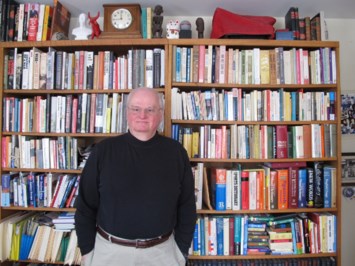
Barry R. Hillenbrand, beloved husband, devoted father, loyal friend and one of the great foreign correspondents of his generation, passed away on February 7, 2026, from pneumonia. He was 84 years old. The day before, the world had lit the Olympic flame in Milan and Cortina d'Ampezzo, beginning the winter games he would never see conclude. It felt right, somehow, that Barry departed at the cusp of something grand. He had spent a lifetime arriving at exactly those moments.
Born in Chicago in 1941, Barry came of age with a restless curiosity about the world and an instinct for where history was being made. He graduated from Loyola University with a degree in history and pursued graduate studies at New York University. But it was not in any classroom that Barry truly found his education. That came later, in Vietnam, the corridors of Buckingham Palace, the smoky backrooms of Belfast and the bustling trading floors of Tokyo.
Before the bylines, there was the Peace Corps. From 1963 to 1965, Barry served in Ethiopia, an early expression of a lifelong belief that showing up, being present and listening were the most important things a person could do. It was a lesson that would define his journalism and his character.
In 1967, Barry joined TIME Magazine, embarking on a 34-year career that would take him to virtually every corner of the globe. His first postings brought him to Boston and then San Francisco, where he covered the Harvard student strikes and the Bobby Fischer chess phenomenon. From there he moved to Saigon, reporting on the harrowing final years of the Vietnam War and the conflicts spilling across Cambodia and Thailand. As Latin American Bureau Chief in Rio de Janeiro he documented the Angolan Civil War and the Falklands War. As Persian Gulf Bureau Chief in Bahrain he bore witness to the grinding horror of the Iran-Iraq War. In Tokyo, he was present for the death of Emperor Hirohito and the tectonic shifts reshaping US-Japan trade relations. And in London, his last and perhaps most storied posting, he covered the Northern Ireland peace settlement, multiple British elections and the death of Princess Diana.
His stories did not stay on the pages of magazines and newspapers. They permeated his life, spilling out over dinner tables and long walks and quiet evenings, told with energy, humor and a warmth that made even the most harrowing dateline feel like a gift. Barry had a way of making history feel personal, and the personal feel historic. To know him was to have a front-row seat to the twentieth century.
At the center of all of it was Nga. In 1974, while stationed in Saigon, Barry met and married Nguyen Thi Phuong Nga, and from that moment forward she was the great love of his life. There is no other way to say it. In 52 years of marriage they built something rare: a partnership of genuine equals, traveling the world together, raising a son together and making a home wherever they landed. Barry, for all his worldliness, had one endearing limitation. Try as he might, foreign languages simply would not stick. And so the universe arranged something perfect: his soulmate spoke five of them. Nga was not only his wife and companion but in some deep way his window into every culture he had ever loved. He adored her completely.
In 1979 their son Kim was born, and somewhere in the middle of bureau chiefs and breaking deadlines Barry became the father he had always been meant to be. No matter where the world took him, no matter how old Kim grew, Barry had one question he never stopped asking, "Are you a happy boy?" It is the question of a man who had witnessed enough of the world's suffering to understand that happiness in the people you love is not a small thing. It is everything. Kim and his wife Jessie carry that question with them always.
At home, Barry was a man of cherished rituals. Thanksgiving was sacred. And Christmas brought out in him something close to a calling. Each year began with the search for the perfect tree, a mission he undertook with patience and absolute standards. Not just any tree, the right tree. He would not be rushed and he would not compromise. But the season's truest tradition lived in the kitchen, where Barry made the cookies his own parents had made before him: delicate crescent cookies dusted in powdered sugar and the beloved Sonia Henie cookies, named for the Norwegian skating champion, each one a small edible piece of memory passed down through generations. These were not recipes, they were heirlooms.
Barry understood the quiet pleasures of a life well lived. He took long walks, unhurried and observant, the way a good journalist moves through the world. He loved pedicures with unabashed enthusiasm. And he was, by universal consensus, the weakest link when it came to family and friends’ dogs. Every dog that ever entered his orbit knew, with animal certainty, that Barry was the one. The treats would come, they always did. He simply could not help himself.
He was, above all, a man people wanted to be around. Warm and approachable, genuinely curious about others, he had the rare quality of making everyone in the room feel that their story was worth hearing. As a longtime member of the Washington Institute of Foreign Affairs, colleagues remembered his enthusiasm for good conversation, good food and good company. He was a friend in the truest sense, present, engaged and generous with his time and his laughter.
After retiring from TIME in 2001 Barry continued to write, contributing to the Washington Post and AARP The Magazine and editing WorldView for the National Peace Corps Association. He covered one last Olympics in Salt Lake City in 2002. The words never stopped coming, because Barry never stopped paying attention to the world.
He is survived by his wife and the love of his life, Phuong Nga Hillenbrand; his son Kim Hillenbrand; and his daughter-in-law Jessie Hillenbrand. He is also survived by the countless friends, family, colleagues and readers whose lives were made richer and more alive for having known him, whether across a dinner table or across a dateline.
Barry, we hope you know you were a happy man.
Montrez votre soutien
Envoyez Vos
Condoléances
Partager
L'avis De Décès
Obtenir les mises à jour
Partager l'avis de décèsPARTAGER
- RECEVOIR DES RAPPELS
v.1.18.0