
OBITUARY
David Alan Brown
July 25, 1942 – December 25, 2025
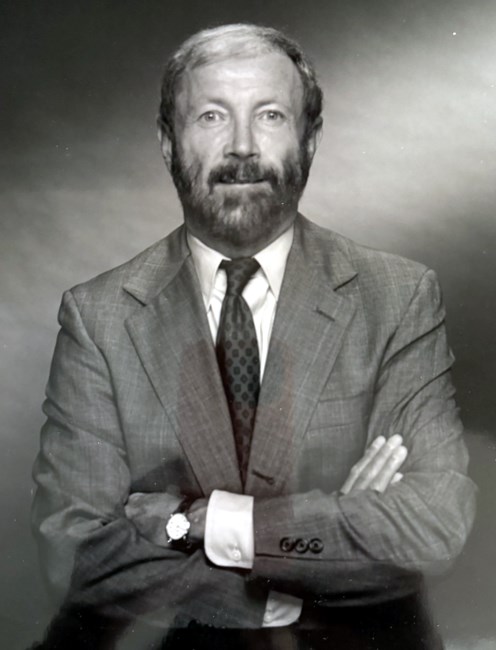
Born July 25, 1942, in Bellevue, Ohio, the only son of Harold Burton Brown and Dawley Jane Hayward. After winning his high school spelling and vocabulary downs four years in a row, David Brown was recruited, as an outstanding prospect, by Harvard College to broaden the geographical distribution of the student body. He graduated magna cum laude in English literature in 1964. He went on to Cambridge University, England, on a Fulbright Fellowship and there, changed fields and upon his return, entered Yale University as a graduate student in art history where received his PhD in 1973. During his Yale years, in 1968, he was awarded the three-year David E. Finley Fellowship bestowed on him by the National Gallery of Art. Named for the Gallery’s first director, the fellowship took him to Florence, where he lived and worked for two years followed by a year at the Gallery. Embarking on his career, he was befriended by an older generation of luminaries, including Sir Kenneth Clark, John Pope-Hennessy, Federico Zeri, and Sydney Freedberg.
After teaching briefly at Yale, he became the first Curator of Italian Renaissance Painting at the Gallery, where, after forty-five years, he retired in 2019, as Curator of both Italian and Spanish paintings. There, among his most notable acquisitions include Arcimboldo’s bizarre Four Seasons in One Head, Bernardo Bellotto’s sublime The Fortress of Konigstein, Corrado Giaquinto’s Winter and Autumn from a series of the Seasons stolen and partly recovered from a Washington private collection. The whereabouts of Spring and Summer remain unknown.
During his Gallery tenure Brown organized numerous critically acclaimed international loan exhibitions including Berenson and the Connoisseurship of Italian Painting in 1979; Raphael and America in 1983; Titian, Prince of Painters in 1991; Lorenzo Lotto in 1997; Virtue and Beauty. Renaissance Portraits of Women in 2001; and Bellini, Giorgione, Titian, and the Renaissance of Venetian Painting, featuring the famous Concert Champêtre lent by the Louvre, in 2006. A groundbreaking 1983 exhibition about the ongoing restoration of Leonardo da Vinci’s Last Supper highlighted one-to-one Polaroid details of the mural. The emphasis Brown and his fellow curators placed on exhibitions reflected the outlook of the Gallery’s third director, J. Carter Brown.
The author of more than seventy-five exhibition catalogues, scholarly articles, and book reviews, Brown wrote a monograph on the 16th-century Lombard painter Andrea Solario which earned him the Salimbeni Prize, Italy’s most distinguished award for art books. His Leonardo da Vinci. Origins of a Genius, centering on the Gallery’s Portrait of Ginevra de’ Benci won the Author’s Club Bannister Fletcher Award in 2000 for the most deserving book on art and architecture. Here he presents evidence for the young Leonardo’s first painting—a share in his teacher Verrocchio’s Tobias and the Angel in the National Gallery, London, a discovery reported as front-page news in the London Times. In 2011, Brown joined the group of Leonardo scholars who vetted the master’s controversial Salvator Mundi. The attribution of this work to Leonardo was crucial for determining its value at a Christie’s sale in 2017, where it fetched the highest price ever paid for a painting at auction.
Brown’s 2019 book, Giovanni Bellini. The Last Works, focused on the Venetian artist’s last works, had as its centerpiece the great Feast of the Gods in the Gallery’s collection. His last book, Overshadowed. Leonardo da Vinci and Bernardino Luini, of 2022 introduced a painting by Luini that Brown had discovered on Mallorca. Brown’s sole work of fiction, a pocket-sized mystery, The Secret of the Gondola, was recommended by one reviewer as a “good beach read.”
With his discerning eye and clarity of thought and exposition, Brown was a regular on the lecture circuit, where his presentations drew on his current research and exhibition organization in both scholarly and public venues. His study of the history of connoisseurship and collecting was new in the 1980’s and garnered much interest from fellow scholars and their students. Brown was known for leavening his analysis of connoisseurs’ methods with colorful anecdotes about the collectors who sought their advice. Twice he addressed an audience of Leonardo enthusiasts at the artist’s birthplace in Vinci, giving the annual Lettura.Vinciana in 1989 and 1999. At the Frick Collection, he presented the keynote addresses for two symposia on American Collecting of Italian Renaissance Art in 2010 and on Bankers as Collectors in 2013. In addition to art centers, like Florence, Venice, and Rome, and New York Brown spread the gospel of the Renaissance across America in Tulsa, Memphis, Milwaukee, Birmingham, and Reno. In Italy he spoke off the beaten track in Brescia, Bergamo, Arezzo, and Raphael’s birthplace Urbino. Closer to home, throughout his career he participated in numerous programs, both in the Gallery’s public lecture series as well as in scholarly programs organized by the Gallery’s Center for Advanced Study in the Visual Arts.
Outside of the Gallery, Brown was a long-standing member of the Cosmos Club, where he served on the Art Committee, started a film program, and supervised the restoration of the club’s historic Tacca Fountain, replicating the original in Florence.
In addition to his curatorial duties, he taught intermittently at The George Washington University, Georgetown University, and the University of Maryland, College Park, where he was also on the Advisory Board for the Center for Renaissance and Baroque Studies from 1981 to 1989. He also served as a board member of the Frick Center for the History of Collecting, New York, from 2011 to 2019. In recognition of his achievement in furthering the knowledge and appreciation of Italian culture in America, Brown was awarded the Order of Merit of the Republic of Italy in 2003. Predeceased by his relatives, he is survived by many friends.
Show your support
Add a Memory
Share Obituary
Get Reminders
Services
SHARE OBITUARYSHARE
- GET REMINDERS
v.1.18.0