AVIS DE DÉCÈS
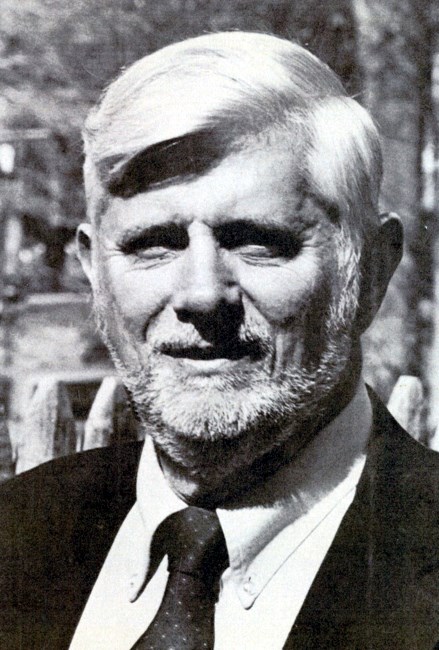
Joseph Chesley Goulden
23 mai 1934 – 17 octobre 2025
Among his many awards and honors, Joe received a 1971 National Magazine Award, the equivalent of the Pulitzer Prize for magazine writers, several reporting awards from the Pennsylvania Press Association, and the 1991 Philip M. Stern Award presented by Washington Independent Writers.
He is survived by his beloved wife of 46 years, Leslie Smith, and his two much-loved sons from a previous marriage, Joseph (Trey) C. Goulden III (Suzanne) and James Craig Goulden.
A big, sociable, brave man with a sharp intellect and a boundless curiosity about people and politics, Joe was born in Marshall, Texas, population 20,000, where his father, Joe Goulden, owned a used bookstore on the town’s courthouse square and Lecta Goulden, his loving mother, raised him and his three sisters, Joanne Wilson, Peggy McLane and Marinel Goulden, who predeceased him.
Joe was a naturally inquisitive child whose roots as a newshound date to his daily sessions as a four-year-old reading the morning paper on his father’s lap. As he grew to maturity, he cultivated a love of literature, history, and journalism that was complemented by an enthusiasm for football, baseball, stock car racing, hiking and camping with boyhood friends.
From 1952 to 1956, Joe attended the University of Texas at Austin, where he was the first person in his family to go to college. He was a regular contributor to the student newspaper, The Daily Texan, of which he was the managing editor his senior year. In 1986, he was cited as the Outstanding Alum of the UT School of Communications and in 2011 the Phi Kappa Tau fraternity, which he joined in 1952, named him to its Alumni Hall of Fame. Joe’s reporting took him to the office of then-senator Lyndon Johnson, with whom he developed an often friendly, often difficult, relationship for the duration of LBJ’s life.
Joe served in the U.S. Army Counterintelligence Corps from 1956 to 1958 and was a graduate of the Army Intelligence School and the U.S. Army Special Warfare School. The understanding of the intelligence world he gleaned in these years would become an important underpinning of his future reportage.
After completing his military service, he became a general assignment reporter for The Dallas Morning News, where his beat included everything from city council meetings to criminal court cases to political campaigns and elections. In 1961, Joe joined The Philadelphia Inquirer, where he was eventually named chief of the Washington bureau and functioned as the newspaper’s White House correspondent during the Johnson presidency. In those tumultuous years, Joe covered the passage of the Civil Rights Act of 1964 and the Voting Rights Act of 1965, the onset of the Vietnam War, and the domestic turmoil that accompanied the rise of the antiwar movement. As these events unfolded, Joe haunted the briefing rooms of the White House, the Pentagon, and the Justice Department, and conducted hundreds of private interviews to present the news of the day to the American people.
He left the Inquirer in 1968 to pursue a freelance book writing and journalism career. He would ultimately publish 19 non-fiction books, including several bestsellers.
In 1969, his book Truth Is the First Casualty was published. It presented a detailed account of the events that took place in the Gulf of Tonkin in August 1964 -- events that marked a major turning point in President Johnson’s escalation of the Vietnam war. Joe’s reporting revealed that the administration’s claim that an American destroyer was attacked by North Vietnamese PT boats on the night of August 4 was untrue. In the aftermath of the purported attack, President Johnson ordered retaliatory air raids against North Vietnam and obtained The Gulf of Tonkin Resolution from Congress, which he relied upon as his “basic congressional authority for conduct of the war.” In setting the record straight, Joe’s book permanently altered the historical narrative of the Vietnam war.
In 1971 The Superlawyers arrived as a national bestseller that provided an inside look at how elite Washington law firms conduct business. “The lawyer’s historic role was that of advising clients how to comply with the law,” Goulden wrote in explaining the book. But the new role of “the superlawyer” was “advising clients how to make laws, and to make the most of them.” The book brought the hidden power of private corporations and prestigious law firms to light, and it remained on the bestseller list for several months.
Over the next five decades, Joe’s books tackled wide-ranging topics including the U.S. intelligence establishment, cold war espionage, the U.S. labor movement, the role of journalism in American democracy, H.L. Mencken, George Meany, the management of The New York Times, and national security in the cold war era. In compiling this body of work, Joe produced two additional national bestsellers: The Best Years: 1945-1950 (1976), which dealt with America in the years after World War Two, and Korea: The Untold Story of the War (1982), which was based on sensitive document collections that Joe obtained through The Freedom of Information Act.
In addition to writing books, Joe also authored hundreds of magazine and newspaper articles and book reviews, which appeared in a wide variety of publications, including Harper’s, The Nation, The Washingtonian, The New York Times, The Washington Post, The Baltimore Sun, The Washington Times and The International Journal of Intelligence and Counterintelligence. He was a contributing editor of The Intelligencer, the quarterly journal of The Association of Former Intelligence Officers, of which he was also a member. He was also a member of the Washington Institute of Foreign Affairs, the Association of the United States Army, and the Cosmos Club. He served for several years on the board of the International Studies Program at Virginia Military Institute.
Joe received the prestigious National Magazine Award for his 16-page feature, “The Cops Hit the Jackpot,” published in the November 23, 1970, issue of The Nation. Joe presciently warned that the Nixon Justice Department had “taken the first steps toward transforming the United States into a society whose police agencies have a repressive capacity unparalleled in history.” (This was two years prior to the Watergate break-in.) The following year, as an Alicia Patterson Fund fellow, Joe traveled to Guatemala to report on the human rights violations under the military regime of Col. Carlos Arana Osorio. His reporting was undertaken at considerable risk to his personal safety. Joe persevered because he believed that the full truth should be known about a notorious U.S. ally whose national police force was being financed with large block grants from the Nixon administration.
Friends remember Joe as a great raconteur who enlivened many a D.C. party with tales of his exploits as a journalist, from playing baseball with Fidel Castro in Cuba (Joe struck out) to getting tear-gassed as he stood amid street riots while reporting on the 1968 Democratic National Convention in Chicago to recalling his many encounters with LBJ. They included a visit to the ex-president’s Texas ranch, where he was received with a warm embrace and Johnson took him on a tour in his Lincoln convertible.
Joe rarely talked about his most important accomplishments. It was not until at least 50 years later that he revealed his prominent and harrowing role in helping to free U.S.-affiliated prisoners in Cuba soon after our losses at the Bay of Pigs.
Throughout his career, Joe was a fierce advocate for writers’ rights. He was a founding member of the H.L. Mencken society and in 1975, he was one of eight original cofounders of Washington Independent Writers, an activist organization designed to protect writers and guarantee First Amendment protections. In 1991, Joe was honored by his peers with the Philip M. Stern Award, presented annually to a writer whose advocacy best exemplified service to the profession. It was a fitting tribute: In everything he wrote, Joe’s guiding principle was to tell the truth -- and he spoke the truth with the conviction that American democracy was dependent on an honest and vibrant free press.
Joe will be deeply missed by his family and friends. The family requests that in lieu of flowers, donations be made to a charity of your choice. The service will be private.
Montrez votre soutien
Envoyez Vos
Condoléances
Partager
L'avis De Décès
Obtenir les mises à jour
Prestations de Service
Partager l'avis de décèsPARTAGER
- RECEVOIR DES RAPPELS
v.1.18.0