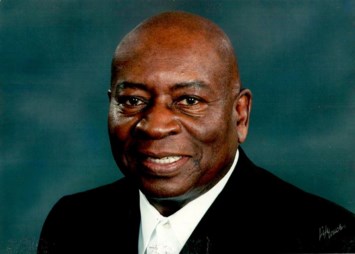

Dr. Thornell Kenly Page, PhD was a true historian at heart with a particular attachment to Black history and literature. In honor of his love of history, historical and descriptive information is woven into this obituary to enhance the story of Thornell Kenly Page. Thornell described himself as a “contemporary man, extremely involved in the affairs of the District of Columbia and keenly responsive to its challenge of improving availability and quality of education for D.C. residents, especially, residents without privilege.”
Thornell Kenly Page, Ph.D. of Washington, D.C. passed away after a sudden illness in his home on March 22, 2026. He was preceded in death by his beloved wife Essie Mae Bernice Garner Page who died in December 2020. He is survived by his children Brenda Idell Page-Murphy, Esq. and Thornell Kenly Page, II, two grandchildren Matthew E.A. Murphy and Jourdan B. Page, Goddaughter Jeanna C. Penn, sister-in-law Mildred Page, a host of cherished nephews and nieces and extended family members. His nieces and nephews are the children of his four siblings who pre-deceased him as well as his nieces and nephews on the Garner side, lovingly referred to as the “Garner babies.”
Thornell, born in Dillon, South Carolina, was the second of five children of the late Henry Page, Sr. and the late Willie Beatrice Johnson Page (“Willie B.”). He graduated from Johnson C. Smith College (now Johnson C. Smith University) in Charlotte, North Carolina with a Bachelor of Arts in Social Studies. He was a fraternity member of Omega Psi Phi, Inc. He served as a paratrooper in the U.S. Army. He attended one year of law school at North Carolina Central University (NCCU) School of Law in Durham, North Carolina. He later earned his master’s degree in education from Federal City College, Washington, D.C., (now the University of the District of Columbia) and his doctorate in education administration from Virginia Polytechnic Institute and State University in Blacksburg, Virginia (now Virginia Tech) – which was no small feat for a black man in the 1970s. His 1978 dissertation was titled “A Study of the District of Columbia Public Schools Desegregation Policies 1954-1967.” After earning his doctorate, he pursued additional course-work at Howard University and the University of Maryland, College Park, Maryland.
While at NCCU, Thornell met a beautiful undergraduate student Essie Mae Bernice Garner from Rocky Mount, North Carolina whom he married in 1958. The Pages moved to Washington, D.C. and started their careers as teachers in the D.C. public school system. Thornell taught social studies at Hine Junior High School in Southeast, D.C.
After leaving teaching, Thornell worked as a Community Organizer at what was then known as Friendship House at 619 D. Street, S.E., Washington D.C. Friendship House.was a social service agency, operated as a community center offering multiple programs for low-income D.C. residents. Thornell advanced to become the Executive Director of Friendship House. (Brenda’s first summer job at age 13 was at Friendship House.) He also served as Associate Dean in the School of Education at Federal City College.
Thornell left Friendship House to become the first Director of the Cooperative Extension Service of the University of the District of Columbia (“UDC”). The Cooperative Extension Service was created from the merger of extension programs in Federal City College and the Washington Technical Institute. The Cooperative Extension Service was tasked with providing research-based education opportunities for those not enrolled in the university - - designed to improve quality of life - - to every D.C. resident in their respective communities. To that end, off-campus administrative and program facilities were established in all eight wards of D.C. The first Farmer’s Market/Education program and Master Garden program were established as Extension initiatives.
Among Thornell’s accomplishments at UDC were:
• Conducted research that established the legislative foundation/justification for the opening of an Office of Aging in D.C.
• Conducted research and obtained funding to establish the D.C. Infant Mortality and Morbidity Program. The program was used as a model to implement the National Federal Healthy Start Program.
• The Cooperative Extension Service at UDC served as a model for implementation of traditional rural land-grant programs in urban communities.
Following his tenure at UDC, Thornell accepted a White House appointment in the Clinton Administration to serve as Deputy Director of the Office of Community Services (“OCS”) at the U.S. Department of Health and Human Services. In that capacity he managed the National Rural and Urban Community Economic Development Program overseeing grants that provided discretionary funds and technical assistance to national and local community development corporations and Historical Black Colleges and Universities (HBCU’s). He was also responsible for the Community Services Block Grant Program and the Low-Income Energy Program. The mission of OCS was to work in partnership with states, community and other agencies to provide a wide range of human and economic development services.
Other Professional Contributions:
Thornell served as president of the United Planning Organization, a D.C. human services organization and anti-poverty agency tasked to implement programs for low-income residents. He also served on the board of United National Bank and as Vice President of the Afro American Bicentennial Corporation.
Thornell served as the president and CEO of the Washington Teachers Union Scholarship Fund managing the scholarship program which was responsible for awarding over $1,000,000 to over 100 stellar students in D.C. Public Schools who have committed to pursue degrees in education and return to D.C. to teach and serve in D.C. Public Schools. Scholarship recipients have received degrees from institutions of learning such as Yale, University of Wisconsin, Bowdoin College, Trinity University and North Carolina Central University.
Further supporting his advocacy of education scholarships, he served as a member of the American University School of Education Scholarship Committee.
He was a founding partner with developer Giuseppe Cecci of Techworld Plaza which occupies two blocks directly across from the old Washington Convention Center. At the time of its construction, Techworld was the largest privately financed development in the city.
He was also founder, president and CEO of Page Research Associates, Inc., a consulting firm organized to offer a comprehensive menu of research, education and economic development tools for community economic development. In addition to economic research and economic development strategy, Page Research specialized in minority and small business policy analysis, compliance reviews, and tourism. The corporation was initially created to assist in the purchase and development of Techworld Plaza. Page Research developed and managed the Tech World Minority Participation Program initiated to increase the opportunities for minority business ownership and minority contract selections.
Thornell served as president of the Howard Theatre Restoration Corporation which was responsible for financing and renovating the historic national landmark Howard Theatre and surrounding businesses in Northwest D.C.
Thornell served as project manager of the Neighborhood Tourism Development Project, aimed at rebranding both U Street, N.W. and old historic Anacostia as destinations to bolster tourism and grow local small businesses.
Thornell was an active “behind the scenes” supporter of D.C. politics. He served as campaign treasurer for former Mayor Marion Barry during Barry’s first mayoral run and later as community development advisor to both former Mayor Marion Barry and former Mayor Anthony Williams. He has also supported multiple members of the D.C. Council and various campaign efforts/ political initiatives.
Mt. Zion United Methodist Church:
Thornell attended and was a loyal 20+ year member of Mt. Zion United Methodist Church located at 1334 29th Street, N.W. He first became involved with Mt. Zion through its historic cemetery, which was a destination stop on the Underground Railroad and has slaves interred there. Over the years, he worked with others to secure several grants to save/preserve the cemetery located on prime land in Georgetown from commercial development. Among his several roles at Mr. Zion, he served as financial advisor to the Mt. Zion Endowment, chair of the Mt. Zion Building Committee, and treasurer of the United Methodist Men Organization. He was also vice-chair of the Mt. Zion/Female Union Band Historic Memorial Park, Inc. Foundation – which he founded in 2006 to ensure perpetual care for Georgetown’s two Black cemeteries. The foundation is also known as the Black Georgetown Foundation, a non-profit organization which has raised funds for the restoration and maintenance of the burial grounds as well as the conduct of archaeological and historical research.
Personal Interests and Family:
Thornell loved spending time with family members especially at family gatherings during the holidays. It meant a lot to him when his nephew Ron would call him to check in or drop in when in the city if only for a day. He saved every birthday card, Father’s Day card and thank you card that his niece Veda sent from New Jersey. He also loved and kept every note and photo that Jeanna sent from California. He loved it when his nephew Buddie would drop by to check in during his lunch hour.
Thornell loved reading and learning. He was an avid reader. He especially loved reading autobiographies and re-reading classic Black literature such as “The Mis-Education of the Negro” by Carter G. Woodson - - which was on his nightstand when he passed. After he retired, his daily routine included reading every section of both the Washington Post and the New York Times from front to back. He was capable of, and enjoyed, engaging in discourse on any topic.
Anybody and everybody who truly knew Thornell knows that he was a lover of fine things. Unlike most men, he loved to shop - - especially for Essie. He loved to sit outside the dressing room and watch Essie come out in new outfits. She would say, “Thornell, I’m tired of trying on clothes!” He would just smile and find her something else to try on.
He was also a car lover – particularly Mercedes Benz. He enjoyed attending the car show at the D.C. Convention Center.
He loved all kinds of music. He loved contemporary jazz. He loved Aretha, Gladys Night and the Pips; the Temptations; the O’Jays; Earth Wind & Fire, Chaka Khan, and on and on. . .
Finally, one quick story. In 2014, Thornell wrote a letter to Mayor Muriel Bowser recommending that she establish a Mayor’s Medal for exceptional service for outstanding D.C. residents – as the highest award from the Mayor. He went on to recommend that the first recipient of the Mayor’s Award should be William H. Simons who served as the president of the Washington Teachers Union. Thornell described Simons as “a great man with remarkable achievements in the District of Columbia.” He further stated that “the vision, courage, and determination demonstrated by William H. Simons will serve as an example for present and future leaders in our great city and the nation.” Thornell also wrote a letter to Courtland Milloy of the Washington Post asking that William H. Simons upcoming 90th birthday be acknowledged. Thornell wrote: “I believe it is the responsibility of community leaders to call to the attention of residents the contribution of Black leaders in our city. Often times, the impact of important contribution by leaders in the Black community becomes largely invisible, obscured by the passage of time and neglect by the media.”
It is unknown whether Mayor Bowser responded to Thornell’s letter or ever established the Mayor’s Medal to acknowledge and reward the exceptional service of outstanding D.C. residents or whether Mr. Milloy ever wrote about Mr. Simons in the Washington Post but the irony of this story is that the very words that Thornell used to applaud the exemplary accomplishment of William H. Simons could be used as an attribute to himself. Thornell was a great man with remarkable achievements in the District of Columbia.
Dr. Thornell Kenly Page’s career and life show his commitment and earnest dedication to community work and educational and economic opportunities in the District of Columbia – especially to the underprivileged and his core belief in higher education for people of color. His legacy upon the District of Columbia will be preserved.
Partager l'avis de décèsPARTAGER
v.1.18.0