
AVIS DE DÉCÈS
Mark Sanford Levey
28 juillet 1941 – 30 octobre 2019
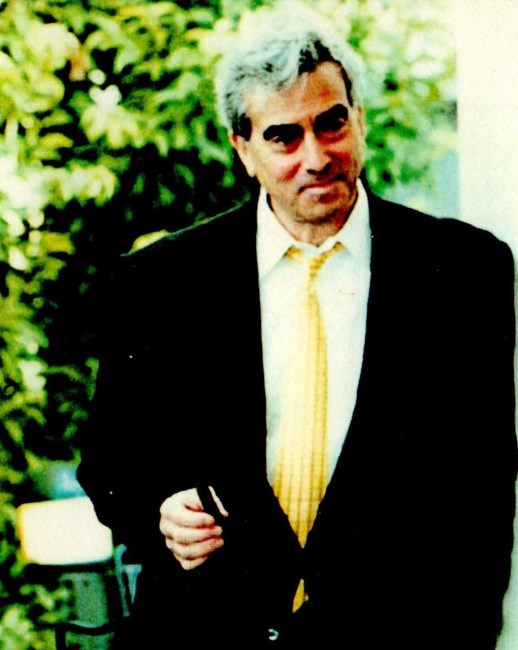
Born and raised in Wilkes Barre, Pennsylvania as the son of Russian immigrants, Mark started to work at an early age to help his family. At 15, his father helped him get a driver’s license so he could drive trucks in a garment factory. The first in his family to go to university, Mark paid his way through Wilkes College by working summers at Kutsher’s Hotel in the Catskills, as a busboy and waiter.
He never forgot the experience, saying later that those jobs showed him the value of hard work as well as giving him a window into a world of refinement. Each day in the restaurants, he watched the way people dined and dressed and conversed in a world he had not seen before. He used those skills to rise and expand his horizons outside of the small coal mining town of Wilkes Barre without ever losing his appreciation for the hard-working ethic of his beginning.
Mark saw America as a land of opportunity. While finishing his degree, he took flying lessons and got his pilot’s license. After college, he moved to New York with $50 in his pocket and stayed on the couch of relatives in Manhattan while he looked for a job. Unsure which career to pursue, he saw a magazine cover that said, “Young Man, Be an Investment Banker” and decided to give that a shot.
He began his career at Ira Haupt & Co., later moving to L.F. Rothschild’s office in New York where his agile intelligence and natural way with people helped him rise quickly through the ranks. In 1967, Rothschild asked him to move to Chicago to help expand the firm’s office there. At first he declined, not wanting to leave New York City where he had always wanted to live.
Eventually, after three requests, he relented to a short term move to Chicago. He never looked back. The Windy City may have been a “cow town” back then, but it had one thing that New York didn’t—a beautiful and brilliant young woman named Chase Collins. He met her one evening at a Ravi Shankar concert and knew the next stage of his life was about to begin. He didn’t wait three hours before calling her and asking her to go out dancing.
Their first date was at the Chicago Zoo ball, and their first dance, with Mark singing to Chase as he held her in his arms, was captured the next day in the pages of the Chicago Daily News. They had a whirlwind courtship and he asked her to marry him after only three months. It took three times before she agreed and their life together began. Mark knew what he wanted.
In those days they drove a green Austin Healy and lived on Chestnut Street. They bought a little farm in Wonewoc, Wisconsin and spent their weekends digging a garden for vegetables, planting trees and building a porch while Chase wrote a book. They grilled hamburgers and read and watched the sun setting on the hills together. They found a beautiful home in Chicago and had three children, Collin, Jake and Gwane.
This family was the center of Mark’s life, and the reason for his drive. When he joined Lotsoff Capital Management in 1990, he said he was always inclined to hire a person with young children because he knew no one would work harder than a parent trying to support a family. He taught his two daughters and son to work hard and to find pleasure in the little things.
His greatest gift was as a husband and father. He effortlessly commanded respect and imitation. He guided but never directed. He taught but never told. He trusted his children to make their own decisions and supported their choices sincerely and without hesitation. He lived humbly, never trying to impress. Because he never sought to be the center of attention, he became the center of the universe.
He made his kids school lunches and they were always a little funny, like turkey burger sandwiches. He made Welcome Home signs. He never missed his son’s basketball game. He held his grandchildren and taught them how to shoot a basketball. He praised their artwork and told them to always be grateful for each other.
He was an avid reader and student of politics, publishing stories about politics and economics for The Wall Street Journal and Barron’s. He also wrote extensively on monetary policy and the way the stability of money affects people’s daily lives and drives the political system. His special focus was on the German hyperinflation, which devastated the country’s economy and made possible the rise of Adolf Hitler and the Third Reich.
He marveled at the good luck of his life and took his greatest pleasure not in his own accomplishments but in those of the people he loved. He told his children that Chase was the smart one in the family and glowed as a small Shakespeare theatre company she helped start grew and blossomed into the Chicago Shakespeare Theatre with their support. He thrilled at the rising careers of his three children and especially in their lives as parents, raising children of their own.
He supported his own mother and sister after his father passed away. He was proud of his Jewish heritage and his connection to the intellectual excellence of that community. To his children, he had the qualities of Atlas, carrying the world on his shoulders but never seeming to mind the burden. He set an example to the honor of men with his integrity. He worked selflessly. He taught us big lessons in little ways.
Son of Leo and Ruth Levey. Brother to Cheryl and Joel Levey. Husband to Chase Collins Levey. Father to Collin, Jake and Gwane. Father-in-Law to Andrew, Lowell and AnnaLisa. Grandfather to Elliott, Hazel, Jack, Leo, Owen, Noa, Calvin and Mac. He was loved beyond words and always will be.
Montrez votre soutien
Envoyez Vos
Condoléances
Partager
L'avis De Décès
Obtenir les mises à jour
DONS
Greater Chicago Food Depository
Prestations de Service
Partager l'avis de décèsPARTAGER
- RECEVOIR DES RAPPELS
v.1.18.0