
OBITUARY
Sheldon Wilfred Samuels
December 7, 1929 – November 25, 2025
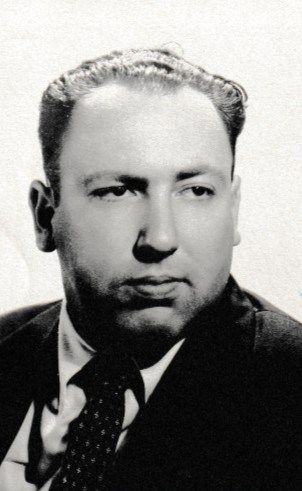
Sheldon W. Samuels was Adjunct Professor of Environmental and Occupational Health in the School of Public Health of Drexel University and the College of Science and Technology of Temple University, and Executive Vice President of The Selikoff Fund for Environmental and Occupational Cancer Research. Director Emeritus for Health, Safety and Environment for industrial unions of the AFL-CIO, he was Special Representative for Nuclear Weapons Workers Health of the Metal Trades Department.
Professor Samuels’ studies and organizational field work reflect his interest in programs essential to the successful control of environmental and occupational disease. To identify and assist the populations at risk, he investigated persistent moral and conceptual pathologies and developed programs of disease prevention through standards development, medical surveillance, workers compensation and rehabilitation. His field work begun in 1968 among communities of nuclear weapons workers and uranium miners on the Colorado Plateau and in the Ore Mountains of Central Europe successfully assisted populations in Colorado, Texas, Connecticut, Illinois and other states for medical management and compensation of occupational disease.
Samuels was born on December 7, 1929 in St. Johnsville, New York and grew up in Canajoharie, New York. In 1947, unable to attend high school while disabled by serious injuries, he pursued independent studies in a basement laboratory he constructed, demonstrating the effects of heavy metals on cultures of B. subtilis and E. coli isolated from river banks near his home. Graduating in 1948, he received the Bausch and Lomb Honorary Science Award and admittance with scholarships to a number of colleges. His interest in conceptual issues at the interface of environment and health led him to the College of The University of Chicago, which he entered with advanced standing in science and graduated as a preceptorial student with a thesis in Theoretical Biology (AB 1951).
To develop skills for assisting public participation in making environmental policy, from 1951 to 1959 he worked full-time as a writer, editor, educational radio producer and in public program development, while a graduate student in human developmental biology, anthropology and philosophy.
Professor Samuels assisted The University of Chicago Magazine and special editions of the American Anthropologist and the Chicago Review in advertising and copywriting. He reported for and edited Chicago’s Bridgeport News and Federal Procurement Daily. Employed by the University of Chicago Press, he promoted Laura Fermi’s Atoms in the Family and Atoms for the World.
Samuels worked as producer, Books in the Making, National Education Radio Network; producer and writer, Sounds of Chicago, Kirkland Advertising; For Oceana Publications, he edited Elm Street Politics, by Steve Mitchell (former Chair, Democratic National Committee), John Dreiske’s Your Government and Mine and Workingman’s Wife by Lee Rainwater (with W. Lloyd Warner).
Simultaneously, assisted by tuition scholarships from the Department of Anthropology, he completed cross-disciplinary studies in Developmental Biology (with Paul A. Weiss), Physical Anthropology (with Sherwood Washburn), History of Medicine (with Ilza Veith) and Moral Philosophy (with Alan Gewirth) as a graduate student of The University of Chicago. Research on the impact of tools and technology on human development was conducted for the Leighton A. Wilkie Foundation. Research on the history of osteopathy as a profession was supported by the American Osteopathic Medical Association, and results presented at their annual meeting.
In 1959, as Executive Director of the Albert Schweitzer Education Foundation, Samuels convened an international conference promoting broader public participation in developing policies for the control of nuclear weapons.
In 1960, the New York State Health Department subsequently recruited him to serve as Director of Public Information for the Air Pollution Control Board. In that position, he organized the state’s Action for Clean Air Program, enabling in-depth public participation in air quality control. He initiated the nation’s first state-wide smog alert and organized Clean Air Committees of industry, labor and community agencies covering every county. To support the program, he initiated human ecological studies of public perceptions in highly polluted areas.
Appointed to the faculty of the State University of New York at Cortland, part time, he taught environmental health communications on campus and conducted seminars for state and local legislators on environmental policy at Whiteface Mountain.
In 1967, he was recruited by the federal Public Health Service to duplicate New York’s ‘Action’ program in a nationwide effort, as Chief, Field Services, Office of Information and Education, Air Pollution Program. Detailed to the core staff of the Environmental Protection Agency, he coordinated the nation’s first interstate smog alert and taught communications on the faculty of the agency’s first training program for state and federal program personnel.
The first Earth Day was promoted at an Airlie House conference Samuels helped to conceive and conduct. He was the invited primary speaker in Earth Day rallies at Utah, Utah Wesleyan and Boise State universities, and gave the keynote address at the opening of the Rocky Mountain Center for Environmental Information in Salt Lake City.
Fieldwork included educational assistance to communities that included miners and production workers in the nuclear weapons industry in Arizona, Colorado, New Mexico, Texas and Utah. In recognition of this work, he was made an Honorary Member of New Mexico’s Office of the Attorney General. EPA awarded him a Special Commendation for his nationwide work in enabling broader public participation in the development of air pollution control policy.
In 1971, following assignments to provide technical assistance to congressional committees and unions on issues of standards development and worker participation in the Occupational Safety and Health Act of 1970, he was recruited by the industrial unions of the AFL-CIO to develop and direct their occupational health education and standards research program.
With the assistance of Irving J. Selikoff and William Nicholson of the Mt. Sinai School of Medicine, he successfully submitted the first petition for a standard under the OSHAct – for asbestos – and subsequent successful petitions and campaigns for standards to control benzene, cotton dust, lead, vinyl chloride, carcinogens, sanitation, and medical surveillance. A standard was developed and submitted for the control of radon daughters under the mine safety law.
Focusing on worker and union participation, he developed and conducted industry-specific education, research and medical surveillance programs for the international labor movement in collaboration with university partners. The first “Superfund” workers training program was conducted, and legislative initiatives were developed resulting in the Toxic Substance Control Act and medical surveillance of high risk populations, including nuclear weapons workers.
Mentored by Alan Gewirth, Irving Selikoff and Bernard Gert, he developed the AFL-CIO policies on genetic testing, medical surveillance and wellness. To implement these policies, he developed pilot structures - the Workers Institute for Safety and Health and the Workplace Health Fund – to demonstrate union-supported and conducted programs of research and education.
Professor Samuels was appointed by the President to the National Cancer Advisory Board in 1984, chairing the Subcommittee on Environmental Carcinogenesis and co-author of it’s report on Risk Assessment. He held conference appointments by UNDP and ILO, and provided technical assistance to labor, management and government in Nicaragua, Guatemala, Norway, Sweden, Finland, Germany, Netherlands, France, Belgium, Czechoslovakia and Israel on assignments by the Departments of Commerce, Labor, State and Energy. He was honored by the Norwegian and Swedish Labor Organizations for this international work [1985 and 1987].
Samuels was the recipient of the Giants of Occupational Medicine [University of Utah], Rene DuBos and ACGIH Steiger Awards. He published or presented more than 200 invited papers, peer-reviewed articles, monograph chapters and books, and was a founding Contributing Editor of the American Journal of Industrial Medicine (1980-1992). He was Lecturer, Community Health, University of Cincinnati (1967-1971); Visiting Lecturer, Community Medicine, Mt. Sinai School of Medicine (1971-1995); and Instructor, Occupational Health, Johns Hopkins University (1996). He lectured at every national laboratory, at universities in Canada, Europe, Israel and at the Australasian College of Occupational Medicine. From 1971 through 1992, he was elected a Fellow of the New York Academy of Sciences and served on committees of the National Academy of Science, including on Principles of Decision Making for Regulating Chemicals in the Environment.
Samuels served [2006-2010] the Connecticut Public Health Department as pro bono advisor on the Pratt-Whitney study of brain cancer among aircraft engine workers, for which he received a Special Recognition Award from the International Association of Machinists.
Samuels incorporated, was founding Fellow and Treasurer and Fellow Emeritus of Collegium Ramazzini (Carpi, Italy), a leadership role recognized by receipt of the Collegium’s 2012 Award. He also helped organize the Society for Occupational and Environmental Health and other professional organizations. He was the first labor union official to address a plenary session of the Chemical Manufacturers Association [1977]. He served as an advisor of the ethics committee and board of the American College of Occupational and Environmental Medicine on their code of ethics for occupational physicians [1973-1989], for which work he received the President’s Award of the American College of Occupational and Environmental Medicine. He served the bioethics committee of the Chesapeake Biological Laboratory and, Ethics Commissioner, Calvert County, MD [1993 to 2001].
Selected Publications
· Air Pollution and Health with Brightman, IJ and Rihm, A. JAPCA 12 (1962) 225-281.
· People and Air Pollution: A Study of Attitude in Buffalo, NY with de Groot, Loring, Rihm and Winkelstein) JAPCA 16 (1966) 245-247.
· The Fallacies of Risk/Benefit Analysis. Annals NYAS 329 (1979) 267-273,
· The Environment of the Workplace and Human Values. New York: Liss (1986) [Am J. Ind. Med., volume 9, number 1, 1986.]
· Genes, Cancer and Ethics in the Work Environment, edited with Arthur C. Upton. Solomons/Beverley Farms: Ramazzini Institute/OEM Press (1998).
· Worker Participation: New Realities of Occupational Health, Health Education Monographs, 32 (1972).
· States Rights or Workers’ Rights. Trial. (July/Aug 1973).
· Behavioral Science and Occupational Health in Behavioral Toxicology (I. de Groot, Editor) HEW (NIOSH) 74-126 (1974) 26-28.
· A Labor View of Company Medical Roles in Health Care Issues for Industry. New York: Conference Board (1974) 31-35.
· Emerging Concepts of Regulation. EnvHlthPersp. 11 (1975) 223-224.
· The Determination of Cancer Risk in a Democracy. Annals NYAS, 271 (May 1976) 22-23.
· Environmental Risk in the Workplace in Environmental Management. G.F. Rohrlich, Ed. Cambridge: Ballinger (1976) 189-200.
· Problems of Industry-Sponsored Health Programs in Industry’s Changing Role In Health Care Delivery. R.H. Egdahl, Ed. New York: Springer-Verlag (1977) 152-158.
· Environmental Justice. The Center (for Study of Democratic Institutions) Magazine (Sept/Oct 1978) 78-79.
· The Fallacies of Acceptable Risk in Risk/Benefit Decisions and Public Health. HEW (FDA) 80-1069 (February 1978).
· The Fallacies of Risk/Benefit Analysis. Annals NYAS 329 (1979) 267-273.
· Communicating With Workers (and everyone else). LASL-DOE 6th Life Sciences Symposium. AmIndHygJ 40 (Dec. 1979)1159-1163.
· Role of Scientific Data in Health Decisions. EnvHlthPersp. 32 (1979)301-307.
· Nuclear and Non-Nuclear Energy Systems: Risk Assessment and Governmental Decision-Making. Proceedings, MITRE SYMPOSIUM, Washington (February 1979).
· The Uncertainty Factor Proceedings: Management of Assessed Risk For Carcinogens. WJ Nicholson, ed. Annals NYAS 363 (1981) 269-282.
· Genetic Testing of Workers. IUD/AFL-CIO Policy Resolution & Technical Report. Industrial Union Department, AFL-CIO, Washington (June 1983).
· Federal Report: A Worksite Health Evaluation. with Mary McKenzie. Corporate Commentary, Washington 1,4 (June 1985).
· Quantitative Risk Assessment: Report of the NCAB Committee on Environmental Carcinogenesis. with Adamson, R.H. JNCI 74 (1985) 945-951.
. Medical Surveillance: Biological, Social, and Ethical Parameters. JOccMed. 28,8 (August 1986).
· Ethics and Professional Behavior, Statement on the acceptance of the Williams-Steiger Award of the ACGIH, June 3, 1987, Montreal, Quebec. AppIndHyg. 2 (July 1987) 16-18.
· The Arrogance of Intellectual Power in Phenotypic Variation in Populations. A.D. Woodhead et al, eds. New York: Brookhaven National Laboratory/Plenum (1988) 113-120.
· Ethical and Metaethical Criteria for Emerging Technologies. Annals NYAS 534 (1988)920-927.
· The Ethics of Choice in the Struggle Against Industrial Disease. AmJIndMed. 23 (1993) 43-52.
· Living on the Crust of the Earth in The City As A Human Environment, D.G. LeVine and Arthur C. Upton, editors. Westport : Greenwood (1995).
· An Open Systems Approach to Risk Assessment. AJIM 25:447-453 (1994) and Letter of Correction AJIM 26: 427 (1994).
· The Masada Syndrome in Bioetica, Romano, C. and Grassani, G. eds. Turin: UTET (1995) 184-189.
· The Process and Practice of Communication, Education and Training. in Issues in International Occupational and Environmental Medicine. Fleming, LE, Hertzstein, J, and Bunn, WB. Beverly Farms: OEM Press (February 1997).
· A Moral History of the Evolution of a Caste of Workers. EnvHlthPersp (Oct. 1996) 991-998. (Summary of four papers at DOE and NIEHS conferences on chronic beryllium disease).
· Ethics in the Workplace: A Framework for Moral Judgment. Geneva: ILO Encyclopedia,4th Rev. Stellman, J, ed.(Dec. 1998).
· Philosophic Perspectives: Community, Communications and Occupational Disease Causation. IntJHlth Services 28,1 (1998) 153-164.
· The Workplace and Ethics in Human Genome Research. in Genes, Cancer and Ethics in the Work Environment, edited with Arthur C. Upton. Solomons/Beverley Farms: Ramazzini Institute/OEM Press (February 1998).
· Ethical and Metaethical Criteria for an Emerging Technology: Risk Assessment. JOM 47,4 (1997) 231-246. [invited paper from 1995 Pacific Rim Conference on Occupational and Environmental Medicine, Sydney Australia.]
· Communicating Risk to Workers: Historical and Ethical Perspectives. in Risk Communication In A Changing World. T. Tinker, M. Pavlova, B. Arkin and A. Gotsch, eds. Solomons/Beverly Farms, MA: Ramazzini Institute/OEM Press (April 1998).
· Genetic Testing in the Workplace: A Caste System for Workers? WorkingUSA (May/June 1999) 83-93.
· An Alternative Understanding of Aggression in the Work Environment. EurJOncol (July 2000).
· Occupational Medicine and Its Moral Discontents. JOEM 45,2 (Dec 2003) 1226-1233.
· On an Ethic of Occupational and Environmental Medicine. JOEM 47,10 (2005)961-962.
· A Moral History of a Caste of Doctors. IJOEH 14, 1 (Jan-Mar 2008).
· Moral Questions of Occupational and Environmental Medicine in Environmental and Occupational Medicine, 1st through 4th editions, WN Rom and SB Markowitz, eds. Philadelphia: Lippincott (2007) 1801-6.
Show your support
Add a Memory
Share Obituary
Get Reminders
Services
SHARE OBITUARYSHARE
- GET REMINDERS
v.1.18.0