
OBITUARY
Ralph I. Knowles Jr.
May 22, 1944 – May 17, 2016
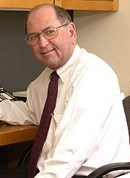
Ralph I. Knowles, one of the South’s preeminent attorneys who spent more than 45 years defending civil rights, civil liberties, and the rights of the poor and downtrodden, died on May 17 at his home in Atlanta. He was 71.
Knowles graduated from the University of Alabama School of Law in 1969 during a tumultuous period in Alabama. He initially worked as a staff attorney with the Selma Inter-religious Project, where he vehemently opposed segregationist practices across the Alabama Black Belt. Knowles represented at one time more than 700 African American students who were suspended from school simply for demanding fair treatment during school desegregation. Following one demonstration, an assassin's bullet fired by a local irate white resident barely missed him.
Knowles joined his former classmate, Jack Drake, and successfully challenged a wide range of unfair, abusive practices in Alabama. Together, they developed novel legal strategies and helped create precedents, transforming not only Alabama but also much of the nation in a series of landmark federal court cases involving mental health care, prison rights, civil rights and the rights of the poor. As a result, patients in mental health institutions were granted the right to treatment; the Alabama prison system was declared unconstitutional due to repeated, flagrant violations of human rights; the state commission that spied on and harassed civil rights workers was shut down, public schools were barred from excluding students too poor to pay school fees, and the state “peace bond” statute, used indiscriminately to jail the poor, especially low-income blacks whom local officials considered troublemakers, was shut down. These cases helped to spur similar litigation across the South and nation.
Larry Yackle, professor of law at Boston University who published a book-length study of the Alabama prison case, wrote that Knowles “brought to the litigation ... keen intelligence, sound judgment, and an heroic capacity for hard work.”
In 1978, Knowles moved to Washington, DC, to join his wife, Marjorie Fine Knowles, after she was appointed the first Inspector General of the US Department of Labor during the Carter Administration. While in DC, he served as associate director of the National Prison Project, where he litigated landmark cases ending barbaric conditions in prison systems in the West. During a prison riot in New Mexico, Knowles risked his life to enter the inmate-controlled prison as an unarmed negotiator and helped bring the deadly disturbance to an end. In Colorado, a federal judge stated, “During the entire time I have been connected with the profession of the law I have never observed a lawyer who was more talented or accomplished in the art of cross-examination.”
When Knowles’ wife returned to her teaching job at the University of Alabama School of Law, Knowles reestablished his Alabama practice. He represented pro bono several death row inmates on appeal, and, in a pivotal case for workers, Knowles convinced the Alabama Supreme Court to strike down as unconstitutional a 1987 law limiting damages in tort cases. Also, as a lead attorney in a case representing black voters, he helped to successfully overturn the results of Alabama’s 1986 primary election for governor.
Knowles’ political activism began much earlier when he was president of the student body at the University of Alabama. He led the campus fight to prevent segregationist Governor George C. Wallace from taking control of the school for political purposes after the Governor's infamous stand in the schoolhouse door in 1962. Knowles' political involvement continued throughout his life as campaign advisor or manager, lawyer for candidates and campaigns, and generous financial contributor to progressive Democratic candidates in local, state, and national elections.
After Knowles’ wife, Marjorie, was appointed Dean of Georgia State University School of School of Law, he moved to Atlanta where he joined the law firm of Doffermyre, Shields, Canfield, Knowles, and Devine. Knowles became one of the nation’s leading lawyers in class actions protecting vulnerable people from commercial negligence. Knowles was largely responsible for securing settlements that provided as much as $6 billion in compensation to women injured from breast implants across the nation. He also represented thousands of low income residents in Anniston, Alabama, who were awarded over $40 million for the health problems they endured due to PCB contamination.
During his career, Knowles served on numerous nonprofit boards, including the board of the American Civil Liberties Union (ACLU) as well as the boards of its state affiliates in Georgia and Alabama,the chapter he helped found. He was a longtime board member of the NOW Legal Defense Fund, now known as Legal Momentum. He was elected to numerous leadership positions in local and state bar associations because, as his friend and former partner, Jack Drake, observes, "Ralph was extraordinarily brave with unquestioned integrity in both his professional and personal life.”
Even these accomplishments and qualities did not capture all of Knowles' essential character, according to his friends. "Although I only saw him in 10-year intervals," remembers Steve Martin, a labor organizer who worked with Knowles at the Selma Inter-religious Project, "he was such a profound influence on my life and choices. Ten minutes with Ralph was a season of understanding the right thing to do."
"Ralph was the rarest of rare individuals," observes Steve Suitts, Knowles' longtime friend who met him at the University of Alabama. "Ralph was an incredibly effective trial lawyer and perhaps the kindest person I have ever known. No one can claim to have met a person who was a better lawyer fighting for justice and a finer human being than Ralph Knowles."
Knowles, who died of complications from brain cancer, is survived by his wife of forty-four years, Marjorie Fine Knowles; his sisters, Cheryl Jean Knowles and Sue Knowles Stacy; his nephews, Craig Cooper Knowles, John Christopher Stacy, and Joseph Nathan Jackson; and his nieces, Adrienne Michelle Stacy and Lara Stacy Denney; and his grand nieces, Harper Layne Denny and Hadley Kate Denny. He is preceded in death by his brother, Craig Winifred Knowles; his father, Ralph Irving Knowles, Sr; and his mother, Irene Smith Knowles.
A private family service will be held, and a public memorial will be arranged in coming weeks. In lieu of flowers, the family requests gifts be made to Greater Birmingham Ministries, 2304 12th Ave N, Birmingham, AL, 35234 or to the American Civil Liberties Union Foundation of Alabama, P.O. Box 6179, Montgomery AL, 36106.
Show your support
Add a Memory
Share Obituary
Get Reminders
Services
SHARE OBITUARYSHARE
- GET REMINDERS
v.1.18.0