
OBITUARY
Gerhard Werner
September 28, 1921 – March 26, 2012
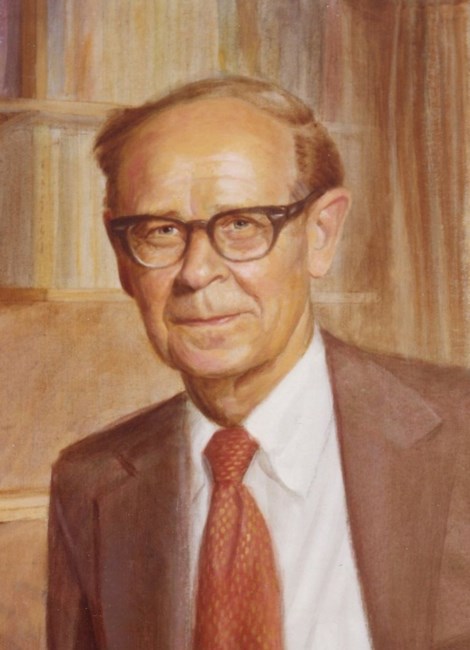
Born in 1921, Gerhard Werner was a graduate of the Medical School of the University of Vienna, Austria, where he also studied mathematics and theoretical physics. His first academic appointment was in the Department of Pharmacology at the University of Vienna Medical Center.
Dr. Werner was a scientist and a humanist. His first major discovery was the drug succinylcholine which is used as a medication for controlled muscle paralysis in anesthesiology. Its clinical usefulness has remained unsurpassed for the past sixty years. In the 1950s, he oversaw the creation of medical departments in Calcutta, India, and Sao Paulo, Brazil, under the auspices of the World Health Organization and the Rockefeller Foundation, respectively. Dr. Werner immigrated to the USA in 1957 to work with New York City's Cornell Medical College in a tenured position. During that period he discovered pharmacologically active receptors at mammalian motor nerve terminals. In 1960, he joined Professor Vernon B. Mountcastle at Johns Hopkins University where he studied the representation of tactile and joint sensation in the somatic area I of the cerebral cortex, introducing novel approaches for characterizing single neuron activity in relation to psychophysical functions. This work introduced him to computer science, which became a main part of his research for the next 50 years.
In 1965, Dr. Werner became Chair of the Department of Pharmacology and Biological Sciences at the University of Pittsburgh, and in 1974, he was appointed as Dean of the School of Medicine at the University of Pittsburgh, and Vice President for Professional Affairs at the University Health Center. Following his retirement in 1989, he served as an Associate Chief of Staff at a Veterans Administration Medical Center in Pittsburgh and then as Research Scientist with Motorola in Austin, Texas.
As a member of the National Institute of Health (NIH), he was involved in the early development of the prototype for the personal computer during the LINC project. At the University of Pittsburgh, he helped develop an early AI-driven medical expert system, the PROPHET system. He had a long-standing interest in the theoretical grounding of brain-related dynamical systems. In 1985, he received the U.S. Senior Scientist award from the Alexander von Humboldt Foundation.
In 2002, Dr. Werner became an adjunct professor of the Department of Biomedical Engineering of The University of Texas at Austin and remained active in research covering areas of pharmacology, psychiatry, cognitive neuroscience, especially neurodynamics, artificial intelligence, and complexity theory. During his career, and continuing after his retirement in 1989, he published over a hundred scientific papers in professional journals. A voracious reader in philosophy, literature, and classics, he advised his students to read everything.
His numerous professional affiliations included the American Academy for the Advancement of Science, the Royal Society of Medicine, the Harvey Society, the New York Academy of Science, and the International Brain Research Organization.
Dr. Werner lived in Austin, Texas. He is survived by his wife Marion, whom he married in 1958, son Philip, and daughter Karen.
Show your support
Add a Memory
Share Obituary
Get Reminders
Services
SHARE OBITUARYSHARE
- GET REMINDERS
v.1.18.0