
OBITUARY
Jack Edgar Myers
July 10, 1913 – December 28, 2006
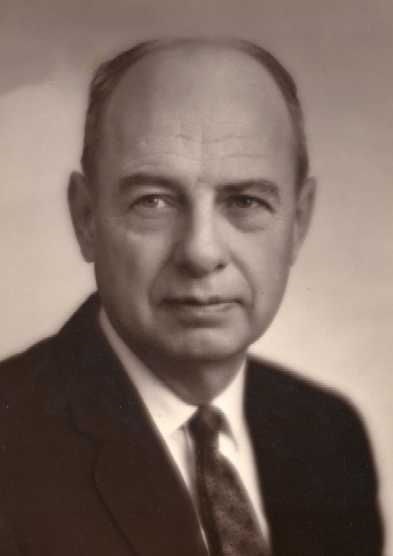
Jack Edgar Myers, whose career featured the unusual combination of serving science education and research, and serving children as science editor of Highlights magazine, died of cancer on December 28 in his Austin, Texas apartment at Westminster Manor. He was 93. Myers, named to the prestigious National Academy of Sciences in 1975, earned numerous other honors for contributing to the understanding of photosynthesis, phototrophic growth, and the physiology of algae, including the Charles F. Kettering Award from the American Society of Plant Physiologists. In the presentation of the Kettering Award, Myers wide influence on the field was emphasized, along with recognition that his career shows in an exemplary manner how wide ranging scientific achievement can be combined with humanism, modesty, and wisdom. In 1998, the American Society of Gravitational and Space Biology awarded Myers their highest honor, the Founders Award, for his seminal work that provided the foundation for practical applications of algae as a source of food in the closed environments needed for space exploration. Following his appointment to the University of Texas faculty in 1941, he spent 58 years there, taking emeritus status in 1980 but continuing to occupy his lab and actively conduct research until 1999. He authored more than one hundred papers for scientific journals and publications. Myers called himself lucky for being able to work as a scientist there was always another challenge because there was always another question. That approach and a devotion to the scientific process guided Myers work at Highlights for Children, Inc., an educational publishing company founded sixty years ago by his parents, Garry Cleveland and Caroline Clark Myers. Writing for children, Jack Myers later recalled, was a challenge I hadnt counted on, but my Pop was of a mind that, You can do this. Youre a scientist, arent you? His duties as science editor began in 1958. To author articles, he sought out scientists who have a great insight into their subjects. The limitation is that it is hard to find people who will write in the language that kids will find sufficiently easy to be interesting. In a typical reaction to a submitted piece, he once wrote: I think the author was trying to teach about a tidal marsh not tell a story and make it an exciting place If were going to have a muddy adventure, something has to happen. And we really cant have an adventure if we must catalog all the kinds of things that can happen in a marsh. Highlights magazine editor Christine French Clark noted that Uncle Jack, as everyone at the magazine office called him, had everyones great respect as a scientist and an editor and a writer who speaks to kids in a very honest, forthright way. As part of his Highlights job, Myers responded to as many as 400 letters a year from young readers who asked him virtually everything from the difference between frogs and toads to why human skin wrinkles in water. His answers often were disarming. When a child asked why every dog I know goes around and around in circles before lying down, Myers answered, I have heard the idea that the circling is a behavior inherited from wild ancestors. That sounds reasonable enough though I cannot be sure it is the best explanation. If you find a better explanation, please let me know. For Myers, science was the search for understanding of our world. All the fun and excitement is in the search. Thats where the action is. He decried the teaching of science as a collection of facts .When it becomes a bunch of facts, it is a sterile and rather unexciting subject. But the real fact is that science is an open-ended endeavor and never deals in certainty. Kids do not get much exposure to how we know. I think it makes science a lot more fun, and it does a lot more useful service for Highlights to treat the question: How do you find something out? Jack Myers was born on July 10, 1913, in Boyds Mills, Pennsylvania, one of three children. He recalled having been a mediocre student until ninth grade, when he was fired up by his teachers of English, mathematics, and general science, the last having had, in Myers words, a remarkable ability to stimulate real interest in science among his students. Myers attended Juniata College in Huntingdon, Pennsylvania, for his undergraduate work, which included a major in chemistry. He earned a masters degree in 1935 from Montana State University, and then chose the University of Minnesota for his doctoral work, concentrating on plant photosynthesis and achieving degree status in 1939. He had chosen Minnesota in part because Evelyn De Turck, a friend from undergraduate days, had taken a job in Minneapolis, with plans to do graduate studies at the university. By 1937, said Myers, we decided to get married. We pooled our incomes. Mine was $66 a month and hers was $33. Depression days! You could do it then on that amount of money. They had four daughters and he was devoted to his wife and children. Mrs. Myers died in 1997. In 1960, when his younger brother, Garry Cleveland Myers, Jr. and his wife Mary died in a plane crash, Jack, Evelyn and their daughters expanded their family to include five additional children. Garry Myers, Jr. was the senior business executive of Highlights for Children, Inc. from 1949 until his death. As a result of this tragedy, Jack Myers also stepped into a leadership role on the Highlights corporate Board of Directors. He served as a mentor to his nephews, Garry Cleveland Myers, III, longtime executive who was CEO of Highlights for Children from 1981 through his death in 2005, and Kent L. Brown, Jr., who started in the editorial offices in 1971 and is now Editor-in-Chief, and to his grand-nephew, Kent S. Johnson, who is the current CEO of the company. Myers influence extended to four generations of the entire Myers family: he combined a great sense of humor, personal ethics, wisdom, humility, and soft-spoken thoughtfulness to lead through inter-generational transitions, always nurturing a strong commitment to family unity and to stewardship of the Highlights Corporation. In 1939, Myers was awarded a National Research Council postdoctoral fellowship and joined the staff of the Smithsonian Institution in Washington, D.C., to concentrate on his studies in photosynthesis. The University of Texas recruited him in 1941 as an assistant professor of zoology. Promotions followed: to associate professor in 1946 and professor in 1948. In 1956, his title expanded to professor of botany and zoology. During his years at the University of Texas, he earned honors for teaching and, in 1959, won a Guggenheim Fellowship. In 1993, the College of Natural Sciences at the University of Texas named Myers to its Hall of Honor. A colleague wrote: Jack Myers has been, and continues to be, a true hands-on research scientist a molecular biologist 50 years before this discipline became a recognizable field of research. He is the consummate faculty member in the best sense of the word, and one who has a pure interest in the learning enjoyed by others as well as by himself. In 2006, Norman Hackerman, chemistry professor emeritus and former President of The University of Texas at Austin, described Myers as a pure scientist, very interested in understanding nature better and he was a good guy besides. Along with his academic papers and the countless articles he wrote for Highlights, Myers had a number of books published which focused on young readers and the scientific process, these include: Can Birds Get Lost?, What Makes Popcorn Pop?, and What Happened to the Mammoths? In the 1990s Myers devoted considerable time to training, inspiring and mentoring young science and nature writers with an interest in writing for children. Much of that work was done at the annual conferences of the Highlights Foundation Writers Workshop held in Chautauqua, NY. Myers is survived by his four daughters and their husbands: Shirley and Fred Wendlandt of Mullin, Texas; Jacquelyn and Jim Leonard of Lakeway, Texas; Linda and Allan Anderson of Ashland, Oregon, and Kathleen and Steve Holland of Spicewood, Texas, as well as ten grandchildren and seven great-grandchildren. Myers is also survived by four of his brothers five children and their spouses: Tom Myers of Austin; Fred and Jennifer Myers of Austin; Patricia and John Mikelson of Columbus, Ohio, and Marie Jolene Rich of Portland, Maine, as well as their six children and six grandchildren. The family will hold visitation on Thursday, January 4 from 6:00 to 8:00 pm at the Weed Corley-Fish Funeral Home, 3125 N. Lamar, Austin, Texas. The Memorial Service will be held on Friday, January 5, at 2:00 pm at University United Methodist Church, 2409 Guadalupe Street, Austin, Texas. An online guest book is available at www.wcfish.com. In lieu of flowers, contributions in the memory of Jack Myers may be sent to the Jack Myers Scholarship Fund, Highlights Foundation, 814 Court Street, Honesdale, Pennsylvania 18431 or to Hospice Austin, 4107 Spicewood Springs, Rd., Suite 100, Austin, Texas 78759.
Show your support
Add a Memory
Share Obituary
Get Reminders
Services
SHARE OBITUARYSHARE
- GET REMINDERS
v.1.18.0