
OBITUARY
Major Raymond Paul Ambrozak
November 8, 1935 – September 6, 2026
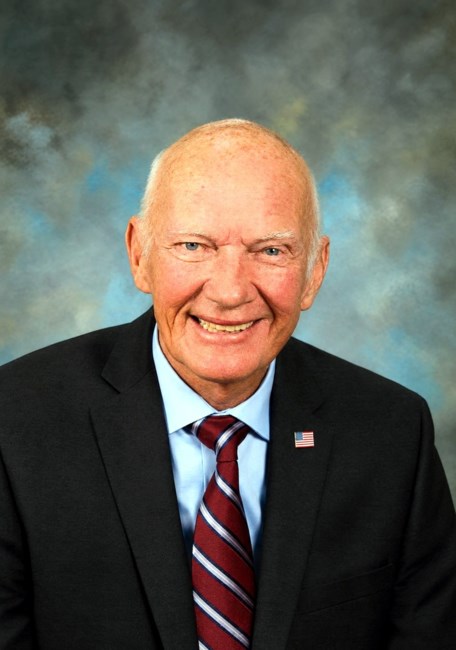
In 1961, Army Second Lieutenant Raymond P. Ambrozak was deployed to Laos on a secret mission and under a false identity. His cover assignment was being civilian advisor to the Lao military. In reality, he was there as a psychological operations officer to help the U.S. Special Forces shore up a pro-Western government against Lao Communists.
Within months of his arrival, Ray had overseen the completion of a radio station that transmitted the first live national broadcast in Laos’ history. The coverage was for the funeral of the late king, and Army historians would subsequently credit the broadcast with fostering a rare sense of national identity among Laotians. Later that tour, Ray’s work focused on improving the treatment of prisoners at a Lao POW camp. The practices he helped develop were soon adopted across the country and later credited with influencing methods used by U.S. forces in Vietnam and Afghanistan. Not bad for a 25-year-old on his first trip overseas.
Ray passed away on September 6, 2026, at the age of 90 in Round Rock, Texas. In his 70s and 80s, he devoted substantial time to preserving his military history through research, writing, and even podcasts. During one interview, the host suggested that he should write a book, given his wealth of stories. With his characteristic blend of charm and wry humor, Ray replied that he might write one, but “you’d think it’s a load of bull.”
His life was remarkable, and quintessentially American. Born on November 8, 1935, Ray grew up in a Polish family in the anthracite fields of Nanticoke, Pennsylvania. In 1941, his father moved his family to Baltimore and traded the grueling work of coal mining for pipefitting Liberty ships.
As Ray grew up in Baltimore, he would take on odd jobs for money. He shined shoes and worked a paper route. After graduating from the all-boys Baltimore Polytechnic Institute, Ray spent his summers working for Scott Paper Company at the port, offloading large bales of paper pulp with cargo hooks in both hands. He would later describe his awe after watching the port’s grizzled dockworkers take their breakfast: a pint of beer with a raw egg cracked into it.
His life changed one evening during an organized dance at Deutsches Haus, the storied German social hall: he met his future wife, Anna Belle Harrison. They quickly fell in love and made plans to marry. In March 1958, Ray was engaged to Ann and had completed two years at Johns Hopkins University. But he suddenly received an involuntary draft notice to join the Army. Or, as he would later say with a deadpan voice: “Our government insisted on it.” Ray and Ann married that December and spent much of the next twenty years abroad. They had their two children, Teresa and David, 16 months apart in Okinawa, Japan in 1963 and 1964.
His time with family would be punctured by long deployments away that often placed him in the center of history. His experiences would include training Chiang Kai-shek’s psychological operations units in Taiwan and managing the Voice of Freedom radio broadcasts into North Vietnam during the Gulf of Tonkin incident. During one of his four combat deployments, he narrowly survived a Viet Cong bombing of his office in Saigon.
One of the defining moments of his life came in March 1971 at Phu Nhon, a South Vietnamese district headquarters in the country’s interior. The compound held Vietnamese militiamen and their families, a platoon of American artillerymen, and his own small team. One evening, over a thousand North Vietnamese regulars launched a surprise attack on the base. They breached the perimeter, seized Vietnamese hostages, and overran large parts of the compound. Ray took charge, remaining in a burning operations center as he directed the defense and called in helicopter gunships. He then led the counterattack that cleared almost all the base, bunker by bunker. Due to the hostages, the siege lasted several more days. He was later awarded the Silver Star for that night.
Ray spent his final tour abroad while living with his family in Bad Homburg, Germany. Years later, the whole family would recall their fond memories of socializing with German friends and spending weekends in the Alps. Even in Germany, however, Ray couldn’t escape danger. In 1976, far-left Marxists attacked the V Corps Headquarters—and blew up his office within hours of him being there.
He retired from the military as a major in 1978, but would continue working as a civil servant in the Army. He fully retired in 1995 at Fort Hood, Texas. Retirement brought Ray what he valued most: time with Ann and time with family. Ray and Ann were masters at hosting parties, especially around Christmas.
Every Christmas Eve, year after year, Ann helped to organize the transformation of their neighborhood into a winter wonderland. Hundreds of houses would line their streets and driveways with white luminaries and drench their towering oak trees in white lights, creating an attraction that drew miles of cars from across Central Texas. They would then welcome family, friends, and neighbors into their home, drawing upon the hospitality they had perfected together during decades of Army life. Ray loved sharing Christmas with his family and was often the center of joyous attention—with his rich, baritone voice telling stories, singing songs, and cracking jokes late into the night.
He also treasured time with his children and grandchildren. He thought nothing of driving hours across Texas with his daughter to attend a grandchild's soccer game. He loved returning to the East Coast, where visits with his brother, sister, son, grandchildren, and lifelong friends reconnected him with the people and places that shaped him.
Some of his favorite moments were spent on the golf course with his son. Golf was Ray’s great passion, and well into his eighties he was often the first player on the course each morning, followed by a workout at the gym. Family, friendship, and golf were the unwavering pillars of his life once he retired.
Yet retirement never diminished his connection to the military. In the decades that followed his time in uniform, he mentored soldiers, supported veterans’ organizations, and became an active member of the Psychological Operations Veterans Association.
He was also increasingly recognized for his accomplishments. In 2016, he was inducted as a Distinguished Member of the Army’s PSYOP Regiment — the highest honor for one of its own. And in 2018, he was inducted into the Special Operations Command’s Commando Hall of Fame. Other inductees in his class included Major General James Earl Rudder, who led the 2nd Ranger Battalion up the cliffs of Pointe du Hoc on D-Day, and General Stanley McChrystal, the former commander of all U.S. forces in Afghanistan.
Ray was a physically imposing man, blessed with a rare combination of strength, kindness, and wit. He could command a room with his presence while putting strangers immediately at ease. His family, friends, fellow soldiers, and countless others knew him as a constant source of encouragement, loyalty, and unconditional love. In retirement, Ray never grew tired of hearing the words “thank you for your service.” Sometimes smiling, sometimes with raised eyebrows and a knowing look, he would always reply: “No need to thank me. It was my honor.”
He was preceded in death by his parents, Alexander Ambrozak and Stefania D. (Kashinski) Ambrozak, known to family and friends as Stella, and by his brother, Donald Alexander Ambrozak.
He is survived by his beloved wife, Anna Belle (Harrison) Ambrozak; his daughter, Teresa (Ambrozak) Clement and her husband, Brian, of Austin, Texas; his son, David Ambrozak and his wife, Julie, of Clarksburg, Maryland; and his sister, Jeannette (Ambrozak) Spottek of Oswego, New York.
He is also survived by his grandchildren, Dylan Clement and his wife, Hannah, of Washington, D.C.; Dalton Clement and his wife, Madyson, of Rogers, Arkansas; Sarah Ambrozak and her daughter, Skylar Osborne, of Troy, New York; and Simon Ambrozak of Baltimore, Maryland.
A memorial service will be held at Cook-Walden Chapel of the Hills, 9700 Anderson Mill Road, Austin, Texas 78750, on Saturday, November 14, at 11:00 a.m.
In lieu of flowers, the family kindly asks that you consider making a donation to a charity of your choice in his memory.
Burial will take place at Arlington National Cemetery at a later date.
Show your support
Add a Memory
Share Obituary
Get Reminders
Past Services
Memorial Service
SHARE OBITUARYSHARE
- GET REMINDERS
v.1.18.1