
OBITUARY
Susan Cone Scott
December 31, 1938 – June 9, 2026
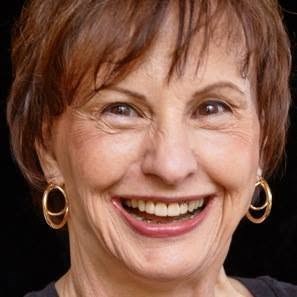
She was the oldest daughter of Dr. Herbert and Mrs. Margaret Cone, and is predeceased by her beloved sister Ginny (Virginia), with whom she shared a room throughout their childhood.
Susan was educated at St. Catherine’s School in Richmond, and remained friends with some of her schoolmates all her life. A brilliant and beautiful young woman, she did not have an easy childhood. Her mother suffered from severe alcoholism, and at a young age her father tasked her with the care of her three younger siblings. Dr. Cone was unwilling to let Susan attend an out-of-state college, as he wanted her nearby to assist during her mother’s episodes, so she attended Sweetbriar College. It was there that her fiery spirit, which would serve her so well all her life, began to manifest itself.
One of Susan’s first fights for justice was when she wrote letters to the Lynchburg, VA paper, supporting the right of Black people to sit at white lunch counters. The Treasurer of Sweetbriar College tracked down Susan’s boyfriend at the University of Virginia and asked him, “Can’t you do something about this girl?” The boyfriend tried, and quickly became an ex-boyfriend.
Before her junior year, Susan convinced the President of Sweetbriar that she had finished all but six requirements for her Philosophy degree, and got permission to study for a year at Barnard College in New York. She fell deeply in love with New York City and returned to live there after she graduated cum laude.
In New York, she worked as an assistant to the editor at the Journal of Immunology at New York Hospital/ Cornell Medical Center. She also volunteered her time for migraine research, and on her lunch breaks, would spend time with orphaned babies in the nursery. She met one infant who was diagnosed with brain damage. After buying toys with her own money, and spending hours with the child, Susan convinced the nurses to retest the baby, who turned out to be deaf. This was not the last time she would speak up for those whose voices needed amplifying.
In 1963, she won a fellowship from the English-Speaking Union and spent a summer studying at Exeter College at Oxford University. It was her first trip to Europe and she was enchanted to travel in France and Italy on her own.
After several years in New York, she returned to Virginia to get a Master’s Degree in English at the University of Virginia in 1965. While Susan was pursuing her education, Virginia public schools shamed themselves by closing their doors rather than complying with integration laws. When the schools finally reopened in the 60s, Susan was one of the first to proudly teach an integrated class.
Susan loved teaching French and English, and she loved her students. She bought them all notebooks out of her own meager paycheck and gave them extra credit for writing a page a day, saying that all she wanted was for them to write. Years later, while she was walking with her daughter, a grown man approached her and asked, “Miss Cone, do you remember me? I’m a professional writer now, and it’s because of you.” It takes a lot to impress one’s teenage daughter, but that did.
Virginia did not comply quietly with the integration laws. Susan recalled the principal telling the teachers to evacuate their classrooms, then remain behind. Once the classrooms were clear, the principal then said, “Now search your classroom for anything that looks like a bomb.” With her trademark aplomb, Susan said, “How on earth am I supposed to know what a bomb looks like?”
On another occasion, the Black students stood together outside to protest their unjust treatment, and Susan stood with them. The same principal came out and said, “Miss Cone, won’t you tell these people to calm down?” She looked him in the eye and said, “No sir, I will not.”
In 1969 she married, and in 1973 she had her daughter Alexandra, followed by her son Frederic in 1974. As proud as she was of her teaching and of her service work, nothing made her prouder and happier than her children (despite the fact that she knew us in our adolescence).
In 1982, Susan quit drinking, ending lines of generational alcoholism. She had 43 1/2 years of sobriety when she died. In the course of her years in AA, she sponsored and advised more people than her family will ever know. Our pride in her courage and service cannot be overstated.
Throughout the 80s and 90s, she worked to make healthcare and housing available to AIDS patients. She loved dogs, cats, horses, gardens, books, The Metropolitan Opera, studying and attending ballet, traveling to visit her children in New Orleans & Austin, reading, and laughing. She was a deeply shy person, but she was also one of those people who could connect with anyone she met. She was a beautiful weirdo in a time when people were expected to conform. She was a pilot, an equestrian, a realtor, a massage therapist, a merciless backgammon player, a student of Buddhism, a speaker of French, a teacher at the Virginia School of Massage, and a survivor of domestic violence. She encouraged her children to spend time gazing at the undersides of trees in addition to studying.
Throughout her life she experienced a degree of physical suffering that most people can barely imagine. While it understandably got her down sometimes, nothing ever silenced her amazing laugh or her interest in other people. While in assisted living, she welcomed her caregivers into her home and treated them like friends.
If you wish to honor Susan’s memory, we will not stop anyone from sending flowers, which Mom adored. We also welcome donations to the Alzheimer’s Association, to fight the terrible disease that we all abhor. And we encourage everyone who loved her, liked her, or just came across this obituary to kiss an animal, look at a plant, smile at a stranger, or watch the sky: she would have.
Show your support
Send Flowers
Add a Memory
Share Obituary
Get Reminders
Past Services
Celebration of Life
- SEND FLOWERSSEND
FLOWERS SHARE OBITUARYSHARE
- GET REMINDERS
v.1.18.0