
OBITUARY
Gloria Marguerite Landry
June 6, 1929 – April 26, 2021
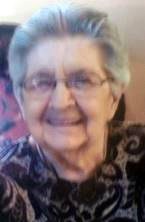
Born in Louisiana on a day that is marked by many battles - and on the eve of the Great Depression -Gloria seemed to be destined to be no stranger to struggles. As the poem says “Thursday’s child has far to go” Gloria had nowhere to go but up - and she did. She started creating early - sewing a complete outfit for an 8” tall teddy bear by the time she was eight. She was fortunate to be a child of two “makers”. Her father was a “tinkerer” who built an auto service and parts store that was to last beyond his passing. When her mother inherited the farmhouse she was born in, her father and some friends disassembled the house and preserved almost all of the materials to build their “forever home”. Her mother designed the floor plan, and Gloria designed the kitchen cabinets to meet her mother’s specification - no architect needed. Her father, while not a carpenter, taught himself to lay bricks so they would have a two-car garage. In high school, while other girls were making clothes from pre-made patterns, Gloria was “kit-bashing” both existing clothes and patterns to make her own unique styles. She would de-construct clothing to learn how it was made, and combine different patterns to create clothes that no one else was wearing. Her father built a sewing and center for her mother with cabinets and a fold-down table. Gloria upgraded it with storage bins - and later electrical wiring - as well as turning the table support into a 3D floral picture on display when the table was folded away. That cabinet is still in use today. While she excelled in sewing, art and manual skills, Gloria was not so good at reading, so she struggled in school. Despite these difficulties she was always interested in learning and teaching others. She was interested in many things - something that got her labelled as “scatterbrained” by some in those times, but is now known as being a “polymath” - someone who excels at learning many things. She was willing to try anything just to see how it was done. She had excellent drafting skills, and at one point designed a complete combination perambulator/carseat/baby carrier - long before Graco existed - but was unable to patent it due to the high costs. Not unpopular, she related how at one point she had three boyfriends: one for roller-skating, one for dancing, and one for reading. Her reading boyfriend “CP” was also a polymath who used books like other people used air and was the first man who seemed more interested in what the thought than how she looked. They shared an interest in photography (he worked in a local photo lab) and learning and he helped her to overcome her reading difficulties. Years later, she would find out that her reading problems were caused by dyslexia. The doctor who tested her was amazed at the inventive ways she had overcome what was generally a very debilitating condition. It probably had something to do with CP’s help - and her 145 IQ. As a single girl in the post-WWII years, she wanted to move to the “Big City” and moved to Baton Rouge- the state capital. At first, she lived in the YWCA and was initially employed as a window-dresser for one of the larger fashion stores. After some time, she joined some other women and got an apartment. She eventually moved over to become a seamstress and was dismayed at how she and the other women were paid so much less than the male tailor who was their boss - even though most of them could sew far better than he could. When she got married, she didn’t even have to change her name - because CP was also a Landry - though from a branch that had moved to Georgia some generations back. Her two sons would later joke about being “pure breed Landry’s”, to the point that she had to explain to their younger sister that she would not have to marry one of them to retain the purity of the family line. Her sense of learning and artistry never left her. She became a prolific taker of pictures, and decorated her house during Christmas to a level that rivaled a Disney production. Their house was not large, but most of the walls were decorated with - BOOKS. She would eventually read several encyclopedias to her children as well as many classics. Dinner-time generally saw everyone eating, reading, and talking. Board games were also plentiful. One summer, she created an engineering project for her sons and her younger sister’s children to turn a marshy flood plain in their back yard into a 40 foot long model river and lake, with a mountain overlooking it. The “sunroom” in back became the home for her sewing table - an eight by 14 foot “transformer table that housed two sewing machines and produced clothing for all. (It still exists to this day, though much reduced in size). Other children had train sets and blocks - hers had those— and a complete “cityscape” painted on a 4x8 foot piece of plywood. As her children grew, CP was afflicted with several respiratory illnesses and died before her oldest son completed elementary school. Gloria did not let that stop her or her children. She managed the household and found support from her sister’s family and Parents Without Partners - where she became both a local and regional officer. Faced with having to sell their home, she provided a means for her sons to attend a boarding school for a year while she sold the house and moved with her daughter to live near her sister. Throughout these times, while she often battled depression, she never kept “getting up” whenever life knocked her down. This is when she learned about plumbing and carpentry and her sons learned auto repair from her father. Moving from a large house and yard into a trailer home was a struggle, but Gloria continued to use her creativity to make life as good as it could be. She taught her children to sew, draw, decorate, and clean. As seventh and eighth graders at boarding school, her sons taught many of their classmates how to wash clothes. When she re-purposed cardboard boxes for storage, they were as carefully designed and built as fine cabinetry. She kept serving in various capacities for several years with Parents Without Partners (PWP). At one point, she remarried and as a result she and her daughter were able to participate in horseback riding (“at her age?” Of course! We have her trophies!) Remember the “boyfriend for roller-skating”? Well, she taught her oldest son. When they would attend PWP roller-skating events and dance together, the other mothers were amazed that she was out on the floor at all - much less doing roller dancing. After she became an “empty nester” - and once again single - she went out to learn, getting a draftsman certificate, taking classes in woodworking, cabinetry - and computers. She also worked for several Hospice agencies as well as serving her mother in her last days. When she reached retirement age, her sister suggested that her sons move her closer to them. She moved into an apartment complex and spent the next two years with her oldest son creating and building custom built-in shelving and closet additions to organize her life. Always the “helper” she joined several other residents to create the “30 Plus Club” which helped organize events and activities for the entire community for over 10 years. In the past 12 years, Gloria became afflicted with Alzheimers and began to lose parts herself. However, she never lost her drive to learn and help others. She would hear people talking about needing to repair clothing, and pack a bunch of her tailoring tools to help them - then forget why she did it. She loved to sing worship songs and dance for exercise even if she did not remember what day it was. Others began reading her bible and other books to her when she could no longer do it for herself. Now, our long period of mourning and her final battles are over. Whenever she heard the story of Jesus building mansions for us in Heaven, she and her son would joke about her having to re-design hers when she got there - no doubt she (and her mother) are doing that right now.
Show your support
Send Flowers
Add a Memory
Share Obituary
Get Reminders
Services
- SEND FLOWERSSEND
FLOWERS SHARE OBITUARYSHARE
- GET REMINDERS
v.1.18.1