
OBITUARY
COL Philemon "Phil" Andrews St. Amant II
October 6, 1941 – September 10, 2026
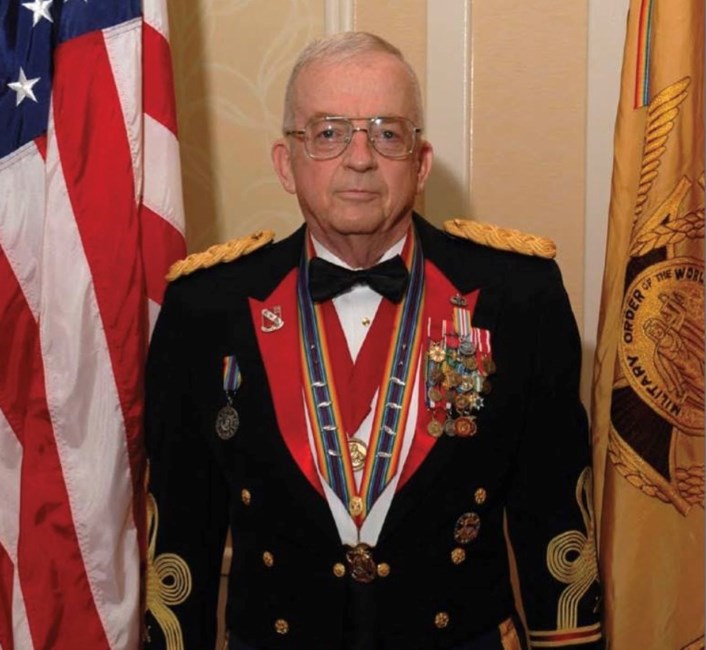
As the son of a career military officer, Phil enjoyed the traditions of an Army upbringing. During World War II, he and his mother resided in Baton Rouge with his grandparents, Mr. and Mrs. Alfred D. St. Amant, while his father was assigned to the European Theater of Operations. After the war, the family followed his father’s 20-year military career, both at home and overseas. Phil attended schools in North Carolina, Maryland and California, before moving to Germany, where he lived for three years during the occupation in Bad Kissingen, Stuttgart, Würzburg and Oberammergau. When he returned to the United States in 1952, he continued his schooling in Missouri and North Carolina, where he graduated from Fayetteville Senior High as the valedictorian of the Class of 1959. He was appointed to West Point by Senator Allen J. Ellender and received a Bachelor of Science degree in 1963. He was commissioned a second lieutenant of artillery, and after attending the Field Artillery Officers Basic Course at Ft. Sill, OK, and the Army’s Basic Airborne Course at Ft. Benning, GA., he was assigned to the 82nd Airborne Division at Ft. Bragg, NC, where he served with the 319th Parachute Field Artillery Regiment.
He volunteered for assignment to Vietnam, and after being promoted to first lieutenant, was transferred in 1965 to the US Military Assistance Command in Pleiku, where he was assigned first as a Regional/Popular Forces Advisor, and then as a battalion advisor to the 37th ARVN field artillery battalion. Upon his return to the United States, he attended the Field Artillery Officers Career Course at Ft. Sill, OK, and Ft. Bliss, TX, and was subsequently assigned as a battery commander and assistant operations officer in the Officer Candidate Program, after which he was sent again to Vietnam, where he served as a fire direction officer for the 2nd Battalion, 502nd Parachute Infantry Regiment and then as commander of a field artillery battery of the 2nd Battalion, 320th Field Artillery in the 101st Airborne Division (Airmobile). At the end of this tour, he rejoined his family and was reassigned to Paris, France, where he studied for two years at the Alliance Française, the Institut de phonétique et de recherche sur le langage de l’Université de Paris, and the Sorbonne, before receiving a Master of Arts degree from Middlebury College in Vermont. He then taught French as a major at West Point for three years, before attending the US Army Command and General Staff College at Ft. Leavenworth, Kan. He was reassigned to Ft. Bragg, serving as an XVIII Airborne Corps fire support officer, a battalion operations officer and the operations officer of the only airborne field artillery brigade in the Army, before being promoted to lieutenant colonel and commanding a battalion in the XVIII Airborne Corps Artillery.
He was selected to attend the Navy War College (Senior Course) at Newport, RI, and after graduation was seconded to the United Nations Truce Supervision Organization (Palestine), where he commanded Observer Group Lebanon, an organization of military observers from 15 nations during the civil war in that country. That unit was among those recognized as laureates of the Nobel Prize for Peace in 1988. Upon his return to the United States, he was assigned to the Office of the Joint Chiefs of Staff at the Pentagon, where, as a colonel, he was Egypt Desk Officer and Chief of the Middle East Branch, Plans and Policy Division (J-5). He served briefly as chief of the foreign intelligence branch in the office of the Army’s Deputy Chief of Staff for Intelligence, before being reassigned for two years to Greece, where he commanded a US Army Artillery Group, before being reassigned as Chief of Staff of the United States Alaskan Command, headquartered at Elmendorf AFB, Alaska. Upon his retirement after more than 30 years of commissioned, active service, Phil returned to Baton Rouge, studied accounting at Louisiana State University, passed the qualifying exam on his first try, and received his CPA certificate. Finding no great enthusiasm among public accounting firms for a 55-year-old, newly minted CPA, he accepted a position as Supervisor of Social Studies with the Department of Education for the State of Louisiana and was subsequently assigned as a member of the newly organized Educational Leadership Group. After four years, he retired again and devoted his time to veterans’ activities. He was a Perpetual Member of the Military Order of the World Wars, for which he served in 2009–2010 as national Commander-in-Chief. He was also a Life Member of The Retired Officers Association (later the Military Officers Association of America); The American Legion Post #38, Baton Rouge; Hancock Lodge #311 of Ft. Leavenworth, AF&AM of Kansas; St. James Lodge # 47 of Baton Rouge, F&AM of Louisiana; National Sojourners; Heroes of ’76; 32°Ancient and Accepted Scottish Rite of Freemasonry (SJ); a Knight Templar of the York Rite of Freemasonry, and a member of Abdallah Shrine Temple of Overland Park, Kansas. He was a Life/Benefactor Member of the National Rifle Association.
Phil was predeceased by his parents; his sisters, Suzanne Corinne Carson and Jeanne Yvette Harvey; his brother, Alexis Alexandre St. Amant II, and his son, Philemon A. St. Amant III.
He is survived by his wife of 63 years, Harriet O. St. Amant; daughters, Renée S. Hudson (Karl) and Lys S. Penney Fuchs; grandchildren, Kristina B. Hudson Murray (Trist), Emily H. Hyde (Eric), Niko B. Penney, and Rayne S. Penney; eight great-grandchildren; and numerous nephews, nieces and cousins.
Visitation will be at Rabenhorst Funeral Home (825 Government Street) from 5:00 to 7:00 PM on Monday, September 21, and again on September 22 from 10:00 AM until religious services at 11:00 AM, followed immediately by interment at Roselawn Memorial Park (4045 North Street).
Show your support
Send Flowers
Add a Memory
Share Obituary
Get Reminders
Past Services
Visitation
Visitation
Funeral Service
Burial
- SEND FLOWERSSEND
FLOWERS SHARE OBITUARYSHARE
- GET REMINDERS
v.1.18.0