OBITUARY
David S. Mailman , Ph.D.
June 29, 1938 – October 14, 2026
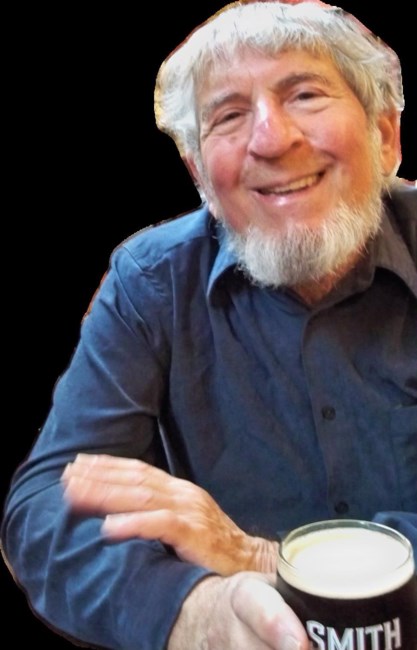
David S. Mailman, Ph.D., a physiologist, educator, researcher, and longtime University of Houston professor, died October 14, 2026, at his home in Houston, Texas, at the age of 88, after a prolonged illness.
David’s life was shaped by curiosity, independence, and a willingness to follow an idea before anyone had told him where it was supposed to lead. He attended Austin High School for two years, completed elementary school unusually young, and entered the University of Chicago at 14. He later recalled that he first learned about Chicago’s early-admission program by overhearing two students talking near their lockers. That hallway discovery became one of the defining turns of his life.
At Chicago, David found a way of thinking that stayed with him. He remembered the university’s Great Books approach as formative: students did not simply read about Darwin, they read Darwin. He took from Chicago a habit of going back to original sources, reading closely, questioning assumptions, and taking ideas seriously. Late in life, he still spoke of the University of Chicago as the institution that most shaped his character. He remained connected to it for decades, hosted gatherings for Houston-area students headed to Chicago, and named the University of Chicago’s Odyssey Scholarship Program as a cause he would want remembered.
David earned his Ph.D. in 1964 from the University of Illinois medical school, where Dr. Ray Ingraham was his advisor. His dissertation work in physiology examined the influence of blood flow and pressure on salt and water transport. After postdoctoral work in Baltimore, he joined the University of Houston, beginning a 41-year career of research, mentoring, and academic service.
At the University of Houston, David became part of the developing Biophysical Sciences and Biology and Biochemistry community and later served as Professor of Biology and Biochemistry. His research centered on physiology and the mechanisms by which living systems move, absorb, transport, and regulate fluids and chemicals. His work ranged across gastrointestinal physiology, intestinal absorption and secretion, blood flow and hemodynamics, renal physiology, membrane biology, villous motility, and nitric-oxide-related mechanisms.
His publications included studies of intestinal absorption and hemodynamics, renal medulla membrane biology, villous motility, shock, endotoxemia, and related transport mechanisms. In the obituary interview, he remembered being especially proud of late-career work involving compounds that blocked the fall in blood pressure caused by bacterial toxin in rats. He thought the finding was significant, even if the scientific world did not respond as he had hoped.
David once said that he had originally imagined becoming a physician, but graduate school gave him the intellectual freedom he wanted, and he stayed with research. Asked whether he most enjoyed teaching, research, mentoring, or ideas, he answered first: ideas. Mentoring and research mattered to him too. He thought often of lab helpers and graduate students and wondered about contacting them again.
Outside the lab, David’s mind kept moving. He read, questioned, argued, remembered, and told stories. Family members recall his dry humor, his skepticism, his beard, his affection for old comic books, and the way he could turn a small remembered detail into a window on a whole era. He remembered Phi Sigma Delta, his now-extinct fraternity. He remembered living at home during his first years at Chicago because dormitory costs were too high. He remembered classic comics, Batman, Superman, and Captain Marvel. He remembered the West End movie theater. He remembered not always knowing why Chicago had admitted him, joking that perhaps they respected the nerve it took to apply.
In later years, he also cared about writing, moviemaking, and family storytelling. When asked what stages of his life he wanted remembered, he pointed to Chicago, graduate school, research, and then script writing and moviemaking. His stories about school, science, family, and the strangeness of human beings became part of the family’s shared language.
He is survived by his wife, Kathleen (Kathy) Osman; his sons Daniel Mailman, Douglas Mailman and his wife Paola Faggella, Dennis Mailman and his wife Kristi, and Duane Mailman and his husband Frank Rusconi; his stepchildren Elaine Ricci and her husband Dave, and Paul Osman; his grandchildren Caeli Mailman, Kade Mailman, Ashley Hagood, Morgan Hagood, Leah Mailman, Spenser Mailman, Alexander Mailman, Sage Mailman, and Primavera Faggella; his great-grandchildren Ava Wurst and Ivy Wurst; and his brother Neal Mailman.
He was preceded in death by his parents, Louis Mailman and Harriette (née Churnkoff) Mailman, and his sister, Diana Mailman.
In lieu of flowers, the family suggests donations to the University of Chicago Odyssey Scholarship Program.
Show your support
Send Flowers
Add a Memory
Share Obituary
Get Reminders
Services
- SEND FLOWERSSEND
FLOWERS SHARE OBITUARYSHARE
- GET REMINDERS
v.1.18.0