
OBITUARY
Frank Klaus Tittel
November 14, 1933 – February 17, 2026
11/14/1933 – 2/17/2026
Laser Pioneer and Distinguished Rice University Professor
Frank Klaus Tittel, a visionary laser physicist whose life journey took him from the devastation of World War II Germany to the forefront of optical engineering in the United States, has left an indelible mark on science. He retired as the J.S. Abercrombie Professor Emeritus of Electrical and Computer Engineering at Rice University, where he spent more than 50 years advancing laser technology for environmental and medical applications.
Born Klaus Frank Tittel on November 14, 1933, in Oranienburg, Germany, his early life was defined by the tragic racial policies of the Nazi regime and other traumatic wartime experiences. The son of an industrial chemist & World War I pilot and a Jewish mother, Tittel endured immense personal loss in 1941, starting with the tragic death of his father in an avalanche in Austria, followed 2 months later by the death of his brother, who died of an ear infection after being denied medical treatment due to his mother’s Jewish heritage. Due to mounting Nazi persecution, his mother took her life later that year, and his grandmother was deported to Auschwitz in 1944. Orphaned and navigating a collapsing Germany, Tittel survived an Allied bombing and strafing attack of a train that claimed the lives of approximately 200 children, after which he wandered over 300 kilometers alone to safety. He eventually emigrated to England in 1948 through the efforts of his aunt, Johanna Jaffé, who had managed to flee Germany in 1939.
Tittel flourished in his new home, earning his B.A., M.A., and Ph.D. in physics from Oxford University by 1959. He emigrated to the United States in 1960 to work as a research scientist for General Electric in Schenectady, New York. Arriving at the dawn of the laser age, Tittel was tasked on his very first day with recreating the world’s first ruby laser, a device he successfully built and which GE later donated to the Franklin Institute Science Museum.
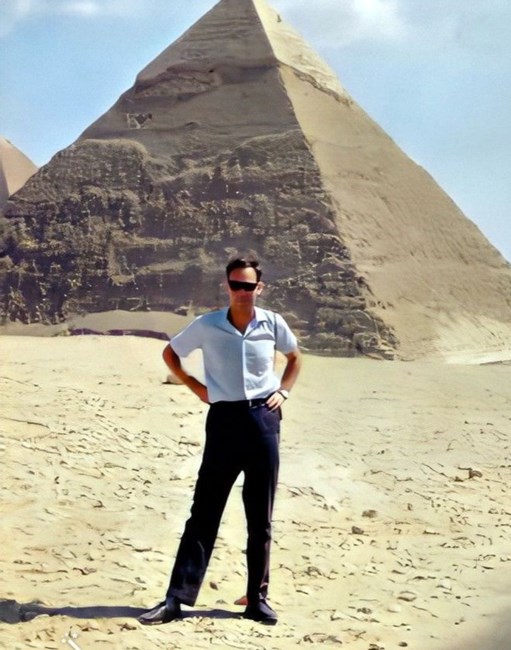
Following a brief teaching tenure at the American University in Cairo, Egypt, Tittel joined the faculty of Rice University in 1967. He quickly established himself as a leader in his field, developing one of the world’s first tunable lasers, which allowed scientists to adjust wavelengths to specific frequencies—a breakthrough for laser spectroscopy.
His expertise in laser design proved crucial to one of the 20th century's most significant chemical discoveries. Tittel collaborated with Rice colleagues Robert Curl and Richard Smalley by designing the specialized lasers used in the experiments that discovered the "Bucky Ball" (buckminsterfullerene) in 1985. While the Nobel Prize in Chemistry was awarded to Curl, Smalley, and Harold Kroto in 1996, Tittel was recognized as a key player in the discovery and attended the Nobel investiture as a guest of the laureates.
In the latter stages of his career, Tittel focused on applying laser technology to solve real-world problems. In 2002, he co-invented Quartz-Enhanced Photoacoustic Absorption Spectroscopy (QEPAS), a revolutionary technique that pairs tiny quantum cascade lasers (QCLs) with common quartz tuning forks—similar to those found in wristwatches—to detect trace gases. His "sensitive nose" technology allowed for the creation of portable sensors capable of detecting hazardous gases like methane and nitrous oxide at the parts-per-billion level. His sensors have been deployed by NASA for air quality monitoring and used to analyze volcanic gas emissions in Nicaragua to aid in eruption prediction.
At Rice, Tittel built a thriving photonics research program within electrical and computer engineering and, through his influence, helped spur hires across the university in laser science, development, and applications. He served as department chair from 1992 to 1995 and was also a founder of the Rice Quantum Institute (now the Smalley-Curl Institute), strengthening Rice’s international reputation in photonics. By regularly hosting international visitors—both short-term and on sabbatical—he further elevated Rice’s visibility in laser science and its applications. A generous mentor to many faculty and students, Frank’s contagious enthusiasm for his own work and for the work of his colleagues will be deeply missed. Known for his tireless work ethic, Frank once remarked that he would retire only "when my last federal dollar runs out."
Dr. Tittel was a Fellow of the Institute of Electrical and Electronics Engineers (IEEE), the Optical Society of America (OSA), the American Physical Society (APS), and the International Society for Optics and Photonics (SPIE). He received an honorary Doctor of Science degree in 1993 from JATE University in Szeged, Hungary. In 2018, he was awarded the IEEE Medal for Environmental and Safety Technologies for his pioneering contributions to optical chemical sensors. In addition to authoring hundreds of peer-reviewed scientific articles throughout his career, Tittel served in various editorial and conference leadership roles in his field.
Frank is survived by his wife, Maria, whom he married in 1965; their sons, Mark and Alex; grandsons, Konrad, Sebastian, and Gabriel; and daughters-in-law, Eva and Debra.
A memorial service for Frank Tittel will be held at 2pm on Sunday, April 12th, in the Rice Memorial Chapel at the student center located in the middle of the Rice University campus.
A reception will follow immediately afterward, at the nearby Farnsworth Pavilion in the Rice Student Center.
For further information on the location and parking, please refer to this website: https://studentcenter.rice.edu/facilities-events/student-center-venues/chapel-events, then scroll down to the Parking section.
Please RSVP to [email protected]
Show your support
Send Flowers
Add a Memory
Share Obituary
Get Reminders
Past Services
Memorial
Reception Following
- SEND FLOWERSSEND
FLOWERS SHARE OBITUARYSHARE
- GET REMINDERS
v.1.18.0