
OBITUARY
Mrs. Rosa M. Mateo
May 1, 1926 – May 20, 2010
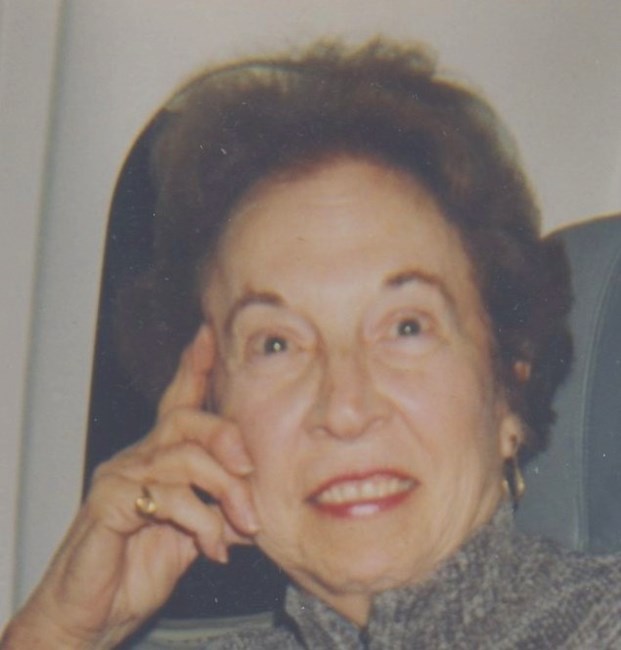
Rosa Marina Mateo died at her home on May 20, 2010 after a long and valiant battle with Parkinson’s Disease. She began her remarkable journey through life on May 1, 1926, youngest daughter of Ramon and Rosario González, and sister of Charín. The sea and beach were never far away from her—physically and spiritually—and, like the sea, her life reflected its vast expanse, beauty, and eternally shifting moods. Rosa lived all aspects of her life—as a student, a teacher, a poet, a wife, a mother, a traveler and a friend—with passion.
Her schooling began at Colegio la Inmaculada in Havana, and she later graduated from the University of Havana, earning a Doctor of Philosophy and Letters degree. She married Dr. Luis E. Mateo on October 12, 1951. Together, they had two children, Margarita Rosa and Mario Luis. The family left Cuba on November 11, 1960 during the early phases of the Cuban revolution, in many ways to start their lives anew. In the United States, Rosa. Luis and their children lived for short times in Pittsburgh, Pennsylvania and Montgomery, Alabama before settling into her eventual final home of Houston, Texas. Rosa and Luis were married just over 45 years until his death in November, 1996, having lived in Houston the majority of their married life together, something they would have never dreamed likely back in 1951!
Following the strong intellectual curiosity that was ingrained in her character, Rosa continued her education in her new home, completing a Masters in Spanish Literature at the University of Houston in 1968. Starting in 1965, she had begun to sense internal urges and restlessness that resulted in the production of numerous poems over the subsequent years. In 2002, a collection of her poems were published in a book under her maiden name, Rosa M. González Buergo. These poems touch on many themes, such as her experiences from her many travels around the world, to her love of the sea, to her deep reflections on philosophy and literature. At age 50, Rosa began a career in teaching at the Houston Community College, rising to the rank of Professor of Spanish Education in that institution and teaching thousands of students along the way.
Her travels took her to all the corners of the Earth, including Canada, Mexico, South America, Europe, Russia, China and Japan and Australia. Though she tolerated the fast-paced travel that airplanes allowed, Rosa by far preferred the slower pace afforded by ships for international travel, and by automobiles and trains for continental trips. But through all of her travels, part of her soul would always reside in Northern Spain, her ancestral land and the first international port of call on her lifelong travel itinerary. And always near the sea.
She leaves behind both her children, Maggie (now Maggie Gruebbel) and her husband Rick, and Mario and his wife Nancy and their children—Rosa’s grandchildren—Emilio and Carmen.
Commenting on her love of poetry, Rosa once said “Having started to write relatively late in my life, I consider the exercise of writing poetry to be the most intimate form of expression. When one writes one’s ideas in poetic form, at the same time one harvests, for posterity, the most salient observations and perceptions of life.” But perhaps the best way for her to tell how poetry served her as a window to the Universe is to let her verse speak for itself:
Es La Hora
Es la hora de los pájaros de playa.
¡Qué rutina tan exacta!
¡Qué diario recorrido!
¡Se sabe donde se come!
¡Se sabe donde se aguarda!
¡Se sabe por qué se vuela!
¡Se sabe adónde nos lleva el agua!
¡Qué proceder tan eterno,
universal y sentido!
Recuerdo muchas gaviotas
en playas bellas, lejanas,
diciéndome con sus vuelos
las verdades que mantienen
el Universo . . . en sus alas . . .
Show your support
Add a Memory
Share Obituary
Get Reminders
Services
SHARE OBITUARYSHARE
- GET REMINDERS
v.1.18.0