
OBITUARY
Sandra Lee Chinn
January 6, 1946 – August 26, 2011
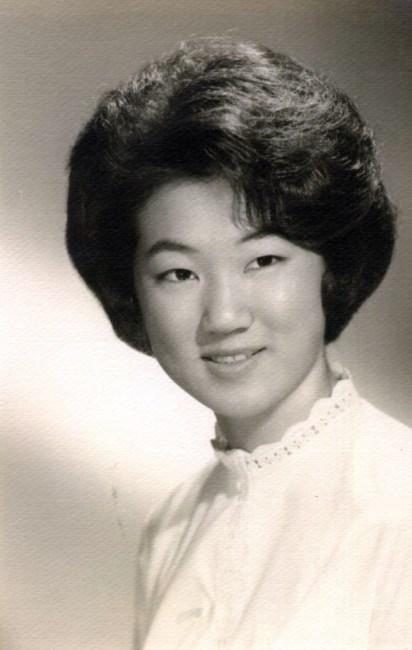
Sandra could talk for hours with anyone about anything , and did; she could bring infectious enthusiasm to any project, and did; she could care for and nurture her family, and did; and she could bring joy to many people, and did; until a terrible disease took away her ability to do all these things and ultimately took her away from us. She was loved by many and will be missed by all who knew her. In lieu of flowers please send remembrances to a charity of your choice. A memorial service to celebrate her life will be held at Sunset Hills Funeral Home & Memorial Park, 1215 145th PL SE, Bellevue, WA, on Thursday, September 8, at 11:00 am. Arrangements entrusted to Sunset Hills Funeral Home of Bellevue, WA.
The following is taken from Sandra's Celebration of Life Service, as told by her husband Dennis Chinn:
Life with Sandi 101a
Prof. Dennis L. Chinn
Lecture ground rules
The name of this course is "Life with Sandi 101a". If you are looking for calculus 1 you are in the wrong place. There will be a final exam so it would behoove you to pay attention. Tears are allowed as that is how we process grief. Laughter is required because there was much joy in our life together and we all need laughter right now.
The "Oldies but Goodies" music you heard as you entered the chapel and thought was so inappropriate has special meaning for us. It is the music Sandi and I, and many of you, grew up with. More recently, I played that cd for her many times a week as her disease progressed . She knew the words and smiled as she sang along to every song. It brought her a little joy when there was not much left to be joyful about.
Let me begin by briefly discussing Sandi's disease because I want our friends to understand the nature of the disease she had, how it affected the quality of her life, and how her passing was in many ways a blessing. If I sound a bit clinical forgive me, but that is how I can talk about it.
Sandi's disease
To many of you Sandi's passing came as a complete shock. But for those of us who saw her every day or every week it was not. It was the expected end result of a disease that was our worst nightmare.
The official diagnosis was Lewy Body Disease, so named because a guy named Friederich H. Lewy discovered in the early 1900s that people who have Parkinson's and dementia had small white protein particles, the so-called "bodies", inside their brain cells. They named these "bodies" after him and hence the disease became "Lewy Body Disease".
Lewy Body disease is in effect a combination of Parkinson's disease and early onset Alzheimer's disease. It carries with it both severe dementia and the progressive movement symptoms of Parkinson's like tremor, balance problems, loss of facial expression, joint stiffness, and swallowing problems. There is no treatment or cure. There are drugs that supposedly can retard Alzheimer's disease and other drugs to lessen the effects of Parkinson's, but for Sandi none of them provided any benefit.
Once you have this disease, the final outcome is pretty much determined although the timing is not. The effect is that the instant you get that diagnosis, all your plans, aspirations, and hopes for the future are gone and you simply focus on coping with each day's events one day at a time. You laugh when you can, you cry when you have to, and you simply carry on
The progression of the disease can be very subtle. Several years ago Sandi started having various symptoms. At the time of Nathan and Barbara's wedding, 11 years ago, she already had a noticeable tremor. The doctors thought it was not a Parkinson's tremor, but rather a benign essential tremor. They were mistaken.
Over the course of a few years her personality noticeably changed. She no longer was the happy vibrant Sandi we all knew. she became much more cautious, sometimes paranoid, and more fearful of things she could not control. She used to be chatty Cathy and she became quiet, reserved, and unsure of herself. She was energetic, optimistic, and happy but became tired, uninterested, and sad. She was an organizer and a cheerleader but she became an uncaring spectator. She lost the ability to reason logically and her short-term memory went away. In short, her illness took from her the ability to function as a human being.
Very early on I knew that her consciousness was beginning to diverge from reality. Once we were in the car and she started moving her hands as if she was unscrewing something. I asked her what she was doing and she said she was opening a jar. That was the first time I have felt such over-powering loneliness with Sandi sitting right beside me. Opening an imaginary jar became a regular activity for her.
She lost her ability to follow and carry on a conversation. When we were out with friends for dinner, she would just sit quietly in her own world, but periodically would join in out of the blue and say something completely unrelated to anything that had been said. She had her own conversation going on inside her head and could not distinguish the imaginary from the real.
The most recent hallucination I can recall was earlier this year. We were sitting together watching TV and I noticed she was making a petting motion. I asked her what she was doing and she told me she was petting a kitty cat. I said what kitty cat and she said,"the one sitting on my lap playing a trumpet." When she looked down and saw that there was no kitty cat, we had a discussion about where he could have run off to. You learn as you react to these things that there is no real value in trying to convince someone with dementia that what they believe to be true is not.
During the same period Sandi started falling down a lot. There is a reflex called proprioception which essentially tells us where our body position is in space. That's why when you start to fall your brain knows it and makes the necessary correction, you take a step or shift your weight in orderto stay upright. Lewy Body Disease can cause a loss of that reflex and it did in Sandi. She would simply fall for no apparent reason and would hit whatever object happened to be in the way. I learned that head wounds that turn out to be minor can produce a substantial amount of blood.
The falling was a huge issue and we entered the world of medical diagnoses to try to get some answers. After months of tests which ruled out physical causes, we ultimately were given the diagnosis that changed our lives forever.
In recent months, Sandi's physical condition began to deteriorate very rapidly. She was sleeping 20 hours a day, walking was becoming difficult, and she was aspirating more and more. Her body was slowly shutting down. Her physical condition, and mine, had deteriorated to the point at which I could no longer care for her by myself, so Kathy Fishman found me a godsend in the form of Roqueta Buyco who helped me care for Sandi during the last several months of her life. Roqueta was kind and caring and without her help I would probably not be sitting here now.
It is very difficult to watch someone you love so much decline to the point that they cannot function as a human being and to know that the only hope you have is that her suffering one day will end. Sandi passed quietly in her own home with her family around her. Her passing was in many respects a blessing, it ended her suffering and finally brought her peace.
After a brief musical interlude while I recover, I will talk about how Sandi and I met and fell in love.
(Play My Prayer)
How we met and fell in love
Sandi and I met in the summer of our 8th grade year at a Koba farms in Carnation. Paul Nishimura was the labor organizer and it was his job to round up elementary and junior high kids to work in the fields. Just kidding. Going to the farm to pick strawberries was a common summer activity for Japanese-American kids, kind of like a version of summer camp. Sandi went to make some money and worked at it. I went to play football, eat strawberries and goof off and worked at it. Sandi had very small delicate hands but she could sure pick strawberries. She actually made money that summer and at 50 cents a flat that was really tough to do.
I'm not sure if there is such a thing as love at first sight when you are 14 years old, but I was certainly taken with Sandi from the start. The picture of her on the front of the program you have was taken a few years later during her junior or senior year in high school, but I think it's obvious why I was so taken with her. I thought she was the most beautiful girl, inside and out, I had ever seen. I must confess that even now when I look at that photo and others taken more recently I still feel the same way.
I'm not so sure about her though and I think it took some convincing before she could see past my rough edges to the potential that she could mold into a reasonable companion.
From the 10th grade on Sandi and I were classmates at Cleveland High School where we became a couple. We were inseparable. High school was a very good time in our life together. We essentially grew up together and fell in love at the same time.
My Prayer, the song by the Platters that you just heard a few moments ago had very special significance to us. We were at a summer party after the 11th grade given by a girl name Vickie Imamoto. We danced and held onto each other while that song played. It was at that point that we both knew that we were going to spend the rest of our lives together. Paul is still upset because he can't remember that party and thinks he didn't get invited. Probably what happened is that he missed it because he was still on the farm picking strawberries.
In our senior year Sandi wrote in my annual, "You made this year the best year of my life". I, in turn, wrote a series of stupid stories about the house of Chinn and the house of Shiomi-san in her annual, but I'm sure she knew that in my own way I was saying the same thing to her. In those days I was a very funny looking kid. I wore black plastic eyeglasses with thick coke bottle lenses and had bad hair and an odd sense of humor. Of course I know some of my dear friends here will say that the only thing that has changed in me over the years is the thick glasses. It never ceases to amaze me that Sandi, who could have had anyone, chose me to spend her life with and I will be eternally grateful that she did.
I was on the tennis team in high school and it was a pretty good gig. Our coach was Frank Fujii, an art teacher who didn't play tennis, but was the greatest guy you could ever meet. We would sign up for art classes with him for the last two periods of the day during spring quarter and go play tennis. Sandi and her best friend Mimi did the same and on match days they would sneak out of class and come to the matches. As I recall, at some point we made Sandi the team mascot.
College Years
After graduating from Cleveland High School we both went to the University of Washington.
Sandi majored in education I majored in economics and math. These were very good years for us and they went by quickly. We hung out with Sandi's best friend Mimi a lot. Mimi had a car and drove us to and from school and everywhere else, and on occasion she needed our help getting to classes because in those days wheelchair access was not a high priority. We also spent a lot of time playing Pinochle with friends in the Husky Den.
During this period Sandi taught me how to ski. Sandi was a very good skier and had been a junior racer in Rokka Ski club from a very young age. The first time we went up to the pass I rented equipment and she and her dad took me to the bunny hill where they gave me a 10 minute explanation of how to do a snowplow turn and how to stop. Then they took me to the top of the biggest hill at Snoqualmie Pass, said "see you at the bottom" and gleefully took off down the hill. Boy did I suffer getting down the hill, mostly on my backside. Sandi thought that was hilarious. Me not so much.
Here is my first necessary correction to my friend Paul's opening remarks. In the incident mentioned by Paul when Sandi and I were trying to get him up on water skis and he just couldn't do it, Paul said Sandi was yelling words of encouragement, and not laughing. Paul, I hate to tell you this but she was actually laughing. Just as she laughed at me struggling to get down the ski slope on my backside, she was laughing at you being dragged around under water. There was playful mischief in my Sandi.
Anyway, I did learn to ski after Sandi took mercy on me., and we skied a lot together during college. In those days you could get out of class at 3, drive to the Pass by 4, and from 4 p.m. to 10 p.m. you could ski for $3. Then we would go down to Chinatown to the old Atlas Café and have beef gravy over rice. Those were very good days for us.
I do not recall ever asking Sandi to marry me. That would have been superfluous. We had both decided in High school at Vickie Imamoto's party dancing to My Prayer by the Platters, that we would spend the rest of our lives together. We just started making wedding plans.
We got married on July 28, 1968. Paul Nishimura was my best man, and Mimi Iwami was Sandi's maid of honor. Her parents sent us to the Mauna Kea resort on the Island of Hawaii for our honeymoon. That was when we learned that when the sun is hot even Asians can sunburn.
Berkeley Years
I had decided to go to graduate school and had applied to a bunch of grad schools. I was fortunate enough to get a full scholarship to attend UC Berkeley so Sandi and I left home to begin a new adventure as husband and wife.
Here is yet another necessary correction to Paul's earlier comments. I did not say I was not going to work for a living. I said something like " I'm going to go to graduate school and get an advanced degree so I can spend my career in academia studying what I enjoy. If you are doing something you enjoy it will not seem like work." How he gets from that to me saying I was not going to work for a living is a testament to his nickname, Bullshido.
Because Sandi was in the college of education she had to fulfill a student teaching requirement in fall quarter of 1968 so I went to UC Berkeley on my own in the fall of 1968 and lived in a cheesy apartment in East Oakland with my long time friend Fay Chong, Jr. because neither of us knew any better. East Oakland in those days was gang-banger territory. It's a good thing Fay was there to protect me because if something happened to me Sandi would have been very angry. As I think back, that 10 weeks was the longest time Sandi and I spent apart during our whole life together.
Then in winter quarter Sandi came down to Berkeley and we moved into an apartment near the campus in Berkeley and Fay moved into a safer neighborhood. As a newly minted teacher Sandi had visions of teaching baking skills to gang banger high school kids. We had a neighbor in the apartment complex who was a high school teacher in the Richmond School district, I think, and she told us she was taking early retirement out of fear for her personal safety. Besides that, in order to get a teaching job in California Sandi would have had to take another year of college courses. So we decided that Sandi would not be a teacher and she ended up applying for and getting a job at the student placement center on the UC Campus. She started as the phone receptionist and quickly as promoted to a position as one of the counselors.
Her earnings provided a level of comfort for us that my graduate student stipend could not, so she was essentially the major breadwinner during that time. She loved her job, made many friends, and I think felt individually fulfilled.
But to me her primary contribution during that period was helping me survive the rigors of graduate education at Berkeley. I arrived as a newly minted UW graduate who thought he was smart and jumped into an environment where everybody else was a lot smarter. After struggling for a while I discovered that my survival depended on perseverance. Sandi provided both the freedom I needed to focus solely on doing the work, listened to me complain when necessary, and pushed me to persevere when things were difficult. Without her by my side I could not have succeeded in the short run and ultimately failed as grandly as I did as an academic.
In any case, with her help and support, I made it through the qualifying exams and wrote a PhD thesis. It was a statistical study of income distribution in Taiwan, Korea and Japan and required, in those days, a lot of keypunching of cards. I remember many evenings spent together in the Berkeley campus keypunching room. Talk about romance. I did all the analysis, wrote it up and essentially had a completed PhD dissertation in my desk drawer before we went to Asia ostensibly to do research for my thesis. I applied for and received a Fulbright Fellowship to pay for the junketing we were about to do.
Junketing in Asia
We spend a one year stint in Asia while I pretended to be working on a doctoral dissertation. We spent 9 months in Taiwan, a month in Korea, and 3 months in Japan. The period in Taiwan really showed how tough and adaptable Sandi was. I was enrolled in a Chinese language training institute in Taipei and they arranged for our lodging for the first few nights until we could locate suitable housing. Since most of the students were on a poverty budget the school typically put incoming students up in a nearby youth hostel. We got in late at night and just got into bed to get some rest. As soon as we turned the lights out we heard a scratching sound coming from the walls. We turned on the lights and saw huge cockroaches running for cover. We had never seen such things before so it was quite unnerving. Sandi was crying and wanted to go home but there was nowhere to go so we put the bed in the middle of the floor, left the lights on so the roaches would stay in hiding, and waited the night out.
The next morning we checked into the Hilton. It was either that or get on a plane home.
We ended up renting a third floor apartment in a local neighborhood. I was in language classes for 4 or 5 hours a day so Sandi was left to her own devices and she did amazingly well. She signed up for some Chinese cooking classes and met some wives of American servicemen stationed in Taiwan and through those contacts we developed a set of friends who could speak English. She would learn the day's dishes and then come home and cook them for our dinner.
This was in 1972 in Taiwan and during that time there was very little English spoken. Sandi had taken an introductory mandarin class at Berkeley and used her rudimentary language skills, her smile, and her wits to get what she needed. There were no supermarkets yet so all groceries were purchased at the local neighborhood outdoor market. You had to interact with a stall owner who didn't understand you to get what you wanted.
Early in our stay she needed a chicken breast for a recipe she had learned in her cooking class. She didn't know the word for chicken breast. Typically chickens were sold whole, either alive and the purchaser either walked it home with a string around its neck or had it butchered on the spot by the vendor. Of course neither of these was an option for Sandi. She knew how to say "bu yao" which means I don't want. So she proceeded to point to each part of the (already dead of course) chicken and say bu yao. Eventually she got them to understand what she wanted and from then on when she wanted a chicken breast all she had to do was go to the same vendor. By the time we left she had all the vendors vying for her business and would patronize those who would throw in some green onions or something else to sweeten the deal.
She used to go to the beauty parlor in downtown Taiwan to get her hair done by herself. To get there you had to take a taxi across town. What she did here was memorize the directions in Chinese and of course "slow down" because these drivers were highly skilled but drove like maniacs so you had to keep yelling at them to slow down. The drivers would carry on a running conversation and she would just smile and nod and they didn't know that she couldn't understand a word of what they were saying.
During the time we were in Asia that first year we took many side trips and Bangkok was a favorite place to go. On one of our early trips we decided to take the public bus down to Pattaya which was a resort town in Southern Thailand on the east coast of the Gulf of Siam. We made the approximately 2 hour bus ride there and ended up standing barefoot at the edge of the Gulf of Siam. Here we were, a couple of 22 year olds from Seattle, holding hands and walking in the Gulf of Siam. At that point I knew that I truly had found my partner in life, ready to go with me on whatever adventures we could find.
I remember the two of us sitting on the banks of the Chao Praya River eating breakfast at the Oriental Hotel. A couple of punk kids behaving like colonialists watching boat traffic on the river together. It was magical, and more importantly it was on somebody else's nickel.
Sandi was as adventuresome and ready to go to unknown places as I was. We were young and in love and the world as our playground.
Once again my good friend Paul does not understand. He kept asking, "when are you coming home." During this period, my home was where Sandi was and her home was beside me. We were home. We were together and that was what mattered. Geography was unimportant.
We spent a month in South Korea staying at the Fulbright house. We had a good time sightseeing and goofing around. My brother Terry and his then wife, Emily, were living in Seoul while Terry did a psychiatry residency while serving as an officer in the army.
Emily and Sandi went shopping for Korean Christmas ornaments. I don't remember how much it was in Korean currency, but as I recall the price per ornament was around 5 cents. Some poor Korean peasant lady probably spent a couple of hours making small little handicraft Christmas ornaments for which she would receive a nickel. When Sandi and Emily came back from buying a bunch of these ornaments they were so proud that they had bargained the poor woman down a penny or so. I thought that was hilarious.
The weather was hot in Korea so Sandi was wearing a short sundress she had bought in Thailand. I thought she was very cute. She went out for a walk once and the Korean police apparently thought she was a local prostitute so they hassled her until she started yelling at them in English and they let her go. When she came back to the Fulbright House and told me what had happened I thought it was the funniest thing, but she was not amused.
When we got to Japan we rented a small cottage that was owned by a woman who ran a cooking school. We had a great time running all over Japan together. I really don’t think it would have made much difference where we were, we were enjoying our time together.
In Japan we would go hang out at Pachinko parlors at night with half of the young Japanese population. We would take the train one stop down to a stop that I cannot remember the name of and spend hours playing pachinko.
Stanford Years
The next phase of our life together was in northern California. At Berkeley I had an advisor who was a great man and a scholar in every sense of the word. It was he who conned me into thinking that academia was a worthwhile career to pursue. He had done a lot of work for the United Nations Economic Commission for Asian and the Far East in Bangkok and while we were there visiting introduced us to the Director. He had arranged for my dissertation to be published in their journal and apparently recommended me highly so they offered me a job based in Bangkok.
Sandi and I both liked visiting Bangkok, but living there was a different matter. It was a noisy dirty city with terrible traffic, very hot weather, but it did have its redeeming qualities. But Sandi said she did not want to live there, even though it would have been new adventure. By then I think she was a tired of adventure and wanted to settle down, have a family, and lead a normal life, whatever that means.
An alternative was to move to Washington, D.C. where I had been offered a position at the World Bank in their young professionals position as an economist which was a fast track position in terms of responsibility, position, and salary. We would have taken that position, and probably should have, but a more appealing opportunity came up which was to join the Stanford University faculty as an assistant professor.
So we rented an apartment in nearby Sunnyvale and Sandi started her life as a Stanford faculty wife. Sandi was so well liked at the UC Berkeley student placement center where she had worked before that when we returned from our junket they wanted her to come back to work. We considered renting an apartment between Berkeley and Stanford so she could take her old job on the UC Berkeley campus and we would both commute to work. The daily commute would have been quite a hassle and we were thinking it was time to start our family so we decided that she would forego that opportunity and become a housewife. Believe it or not, that decision was a financial sacrifice because she would have earned more money that I did as a faculty member at a major university.
After a couple of years of apartment living, with the help of Sandi's parents, we bought a house in Los Altos that was near the campus.
About that time we decided it was time to start our family and Nathan was conceived. There is a photograph of a very pregnant Sandi on the video you will see later. She was literally 5 feet tall and 5 feet around. Nathan weighed 7 lbs. 15 oz. and Sandi only weighed about 100 lbs. I still haven't figured out how that worked. Maybe that accounts for the extraordinary labor it took to get Nathan to come out into the world. As I recall Sandi was in labor for 22 hours that time. For the next 4 years Nathan was the center of our world and Sandi was as devoted a mother as you'll ever find. I remember her signing Nathan up for Ruth Woods preschool shortly after he was born because that was the only way you could get in when you got to the age of 3.
Visit to Harvard
But I wasn't done dragging Sandi all over the place yet. A year after Nathan was born I was able to piece together a series of grants which allowed us to spend a year at Harvard, again ostensibly "doing research". We rented our house and drove across the country to Boston. We had a blue Buick century station wagon. Nathan was about a year old and Brian was not even in the works yet. So we put the play crib up in the back of the station wagon and stuck Nathan in it for the seven day drive. Nowadays you would get arrested for not having the kid strapped into a car seat. So the person who was not driving would have to sit in the back seat and entertain Nathan. We fought to be able to drive.
At night we stopped at Holiday Inns along the way because they had play areas for kids. Nathan had a little riding toy called an Explorer that he was really fond of and he would ride that around while Sandi and I negotiated driving privileges for the next day.
That winter, I think 1968, was the worst in Boston in the previous 100 years. We lived in a campus apartment complex called Soldiers Field Park on the other side of the Charles River and it was so cold that we couldn't go out for days. We used to wait until the temp reached 32 degrees and then run outside with Nathan to play. The Charles river froze. When the weather finally warmed up we did enjoy visiting the local historical sites, but overall were not thrilled with our Boston experience and were glad to get back to Stanford.
A year later, number two son Brian came along, so Nathan's stock as Sandi's greatest joy dropped by 50%. Sandi's greatest joy was now her two sons.
Paradise Lost
But there was an unsettling cloud on the horizon. I mentioned before that my doctoral advisor was a pure scholar. To him what mattered was only the scholarship. He was not interested in building his own kingdom and he thought those under his tutelage were to be nurtured, not exploited. But just because he was like that did not mean that others were the same.
The big deal in an academic faculty position is tenure. It is supposed to be a way of protecting academic freedom but in the wrong hands becomes a tool for those in control to benefit from that power. Very early on the director of my institute at Stanford came to me and said' "Dennis, we should do some joint work together," which actually meant "why don't you run your stuff by me and I'll look it over and put my name on it next to yours and we will publish it as joint work."
I was outraged, of course, but there was a decision to be made. I could either uproot Sandi and my family immediately and go to a different university, I could simply cave and give my director part credit for my work which would essentially guarantee me tenure, or I could challenge him and his group by publishing more work than they did and saying deny me tenure if you dare.
Sandi was more outraged as I was and she never forgot a grudge. I told her once that if we ever got a divorce I was going into hiding because I knew she would never forget or forgive me and would hunt me down. We never even came close because I was afraid of her coming to hunt me down.
So I stuck to my principles, challenged the old boy system, and ultimately went down in flames. They did dare deny me tenure even though I had published a lot of stuff in very good journals. I was denied tenure because I would not let the director claim credit for my work and publications. This is the point at which you're supposed to lick your wounds and walk away. But I was not that smart, and Sandi was not that forgiving.
I talked to a bunch of lawyers to try to get help in suing Stanford. I found one in San Francisco who was sympathetic to my situation. His name was Dale Minami and he was pretty prominent and that time and involved in the Japanese-American reparations litigation. I asked him what it would take for him to take my case and become the attorney of record and he said, "$20,000 up front to start." My salary at Stanford was, believe it or not, about $14,000 a year and I had just lost that job so there was no way I could hire a lawyer to help me. So I did the next best thing, I went to law school myself.
Back to Bellevue
So we sold our house in Los Altos, bought a house in Bellevue, and relocated. Once again Sandi pitched right in and we made the move together. It was not a bad move because we had roots in Seattle and were essentially, as Paul kept asking us, finally coming home. We of course had our tails between our legs, but were going to do what we could the remedy that. I think Sandi was madder than I was about the whole situation.
So Sandi once again manned the fort and allowed me to go fight windmills. Nathan was 4 and Brian was 6 months so she of course had her hands full. I attended UW Law school and got a job working part-time for an Economics consulting firm in Seattle. I think I have the distinction of being the only person I know who went to law school solely so he could sue a former employer. All I can say is that it was Sandi's fault. She made me do it.
To make a very long story short, we sued Stanford University in Federal Court in San Jose, CA, and after 4 years of playing legal games that I knew nothing about, settled the case in a manner I considered a victory. We got some money out of them and made them buy us an annuity so every year we get a reminder check that we sued Stanford in their own back yard and won. More importantly, if you write Stanford and asked where Professor Chinn went you will get a letter that I wrote simply saying that I left to pursue other interests, and not that I was ever denied tenure.
Was it worth it? Of course not. Litigation over something like this rarely is. Would I do it again? Of course I would, but only if Sandi were by my side the whole way. Standing up for your principles is often a costly process. You can only be principled if you can afford to bear the cost. The only reason I could was because Sandi allowed me to by taking over much more than her share of the house and kid duties, and making sure that I knew she thought it was worth the fight. She was the reason I could stand up and fight for my principles and she was the reason that I did. I will forever be grateful for all that she did for me.
Now we were back in Bellevue ready to build a new life again. In contradiction to what my good friend Paul Nishimura has pointed out, I had pretty much run out of ways to avoid getting a job. Since I was now a lawyer I practiced law for a couple of years and, with all due respect to any lawyers who are in the room, decided that this was a really lousy way to make a living.
Sandi's parents had spent their whole lives working very hard running their furniture and appliance store on Jackson Street and were ready to retire, so we ended getting involved in the family business. We didn't have it in us to run a retail operation so we ended up developing the property into a shopping center which was modestly successful and became the hub of the Vietnamese community in Seattle.
This is the beginning of our developing new friendships with many of the people in this room. During the next 25 years we did many things. We joined Central Park Tennis Club in Kirkland and started playing a lot of tennis. Sandi took some lessons and became a pretty good tennis player.
We did a lot of skiing as a family. That was how we survived the grays of winter in Seattle. Both kids were powder pigs at the age of 4 or so. We started an annual trip to Whistler or Sun River and had a lot of good times on the ski slopes with our kids.
We bought a house with access to Lake Washington and did a major remodel. Sandi was the one who found that house, saw the potential, and told me I needed to come and have a look. On the remodeling project, I was the backhoe driver and Sandi was the decorator. As many of you know, Sandi had impeccable taste. She set about decorating the house and in the process taught me several design principles that I will always treasure. The most important one was if you put a few real things in with a bunch of fake things, nobody can really tell which ones are fakes and so they assume they are all real. It works for Asian antiques, it works for art, and it works for orchids. Sandi had a collection of artificial orchids and every once in a while she would buy a real one or two to complete the illusion that she had a green thumb. One of Sandi's artificial orchids will adorn the niche which will be her final resting place. I had to redo the arrangement in order to make it fit so I hope I have done an acceptable job and that she will forgive me if I haven't.
We bought a boat and ran around the San Juan islands and Canada for several summers. Then we joined the Edmonds yacht club and met many wonderful friends and had a great time boating with them. The group was so open and welcoming that I feel I owe them an explanation for our abrupt disappearance from their cruises a couple of years ago.
Sandi was having a great deal of difficulty staying upright. Being in a boat was not the ideal place for her. When the boat would rock or hit a wave she would start to topple over and would not realize she was falling and so would make no effort to catch herself and would hit whatever was next to her with whatever part of her body was falling first. She also bruised very easily so after a boating trip she would have black and blue marks all over her body.
One particular time scared me enough to consider calling it quits. We were getting onto the boat at the slip in Edmonds marina and somehow she slipped and fell next to the boat before I could catch her and would have fallen between the dock and the boat had I not had it tied up tight enough so she couldn't fit between there. As the boaters here know, being between a dock and a boat is probably worse than being between a rock and a hard place.
But the final straw came when one day we were coming back from a trip and were putting the boat back in the slip. Edmonds marina is pretty picky about how your boat fits into your slip so in our case we have to bow in and tie up on the port side. So if you are by yourself coming in you actually have to get the boat all the way into the slip first and then go to the stern and get out onto the dock to hold the boat. As the boaters here know, that is not necessarily an easy thing to do with current, wind, and driver incompetence.
But this day I was perfect. I had a line on a cleat on the port side of the boat. I told Sandi to sit tight, put the boat in neutral, went to the stern and stepped onto the dock, and then grabbed the line to pull the boat up against the dock. All was good. All of a sudden the boat started to move backward out of the slip. The boat is 36 feet so I cannot hold it by a rope when it is in gear. I looked into the boat and Sandi was sitting in the driver's seat and had put the engines into reverse. There is another row of boats behind the slip so I had visions of disaster. So I started yelling at her to put it in neutral and I startled her and she did move the gear shifts into neutral and I was finally able then to control the boat and pull it back into the slip. That was the last time we went boating alone together.
When Sandi wanted to quit skiing several year ago we decided to spend time during the winters in Arizona. The Sonoran desert is very beautiful but we found that we missed being around water and since Brian and Jennie were living in San Diego at the time we shifted to San Diego instead. Sandi's last trip to San Diego was last winter.
But I have talked enough and I will stop talking shortly. But before I close we are fortunate today to have two guest speakers, Nathan and Brian, our two sons who, after a brief musical interlude with yet more inappropriate music, will talk briefly about two major parts of Sandi's life: Christmas and her beautiful grandchildren.
(Play 12 days of Christmas)
Brian Chinn on Christmas:
Memories of Christmas with Mom
Christmas was always a very important and special time to my mom. The amount of planning and dedication that she put into making the time as special as it was is truly staggering. Her desire to make Christmas perfect will be dearly missed. However the reality is that at times this search for Christmas perfection was at odds with what had become, to some of us anyway, Chinn family traditions.
For nearly as far back as I can remember, we always purchased our Christmas trees at a place in Seattle called Chubby and Tubby's. Even back then as it is today, Christmas trees were expensive; yet not at Chubby and Tubby's. In the early days prices were something along the lines of 4 dollars. However, this decidedly excellent value often meant that they were lacking in some way be it aesthetics or quality. Yet every year, together, we all braved the cold nights rifling through stacks of trees until mom found the perfect one.
Eventually though, mom realized that this cheap price also meant that they lost their needles quickly and thus was the end of the Chubby and Tubby tradition. Though we ended up with nicer trees, they just didn’t quite have the same personality if you will.
Decorating those trees be they the low cost or the high cost version was also a hot item of discussion. The design sense of some of the family was not always up to par with my moms. A long-standing debate surrounded the selection of the proper ornament for topping the tree. Mom had a very pretty and elegant light up angel or a piece of crystal that she favored, while some of us preferred a light up multicolored flashing metallic star, that it might have been reasonable for some to call gaudy.
We faced a similar dilemma with the rest of the ornaments. Mom had a selection of very pretty and ornate ornaments she had gathered during her travels with my dad and others that she made herself. Traditionally, these “fancy” ornaments adorned the tree alongside some less eye pleasing pieces that Nate and I had made as kids, sparkle covered Tupperware lids and the like.
Eventually, mom’s sense of style won over. Though it was a hard fought battle, that at times featured us buying a second basement tree, from Chubby and Tubby’s of course, that we could decorate as we saw fit.
Aside from the tree and being with family, the focus of our holiday season has always been the food. In particular, we have always roasted a turkey. My mom was in charge of this important task up until recently when she was no longer able, when my dad took over this role. Of this turkey feast, the critical element was the stuffing. This top-secret recipe, passed down from my grandmother, to my mother, has never been matched at any other holiday meal I’ve attended. Sadly though, this Chinn tradition is now in serious jeopardy as well as Kellogs has decided to stop producing the necessary stuffing mix. As it turns out, the top-secret recipe, is so top secret, even we don’t know it.
Our family is not necessarily one of many long-standing traditions, and over the years many of the traditions that we have held dear have changed. Our spot for buying the cheapest trees, our favorite gaudy light up tree topper, or the generation spanning secret turkey stuffing recipe, these things have all gone. Despite, all of our Christmas traditions that have come and gone the one thing that has remained constant through all these years is John Denver and the Muppets. We have played this CD and these songs every year, seemingly nearly exclusively. For me it is truly the iconic sound of a Chinn Christmas. The song we heard before this, the 12 days of Christmas, carries with it images of Christmas morning with mom that I will never forget.
Now that mom is no longer with us, helping to make Christmas what it was, there is no doubt that there are even more changes to come. Though I know we will find much joy in the new traditions, it will never be the same as it was without mom there doing everything possible to make that time special and unique.
Nathan Chinn on Sandi's devotion to her grandkids:
One of the great joys of the last 7 years of Mom’s life was her Grandkids. She cherished them, loved them, cared for them, and got them all riled up on sugar and sent them home. Which if you ask any grandparent is part of the job description.
Mom was extremely excited for the arrival of grandkids. When my wife Barbara was due with our first child Hannah we had just left the Dr. where they had decided to induce labor. We called Mom and Dad and told them that we were heading home to pick up our bags and then heading to the hospital. So we got our bags and went to the hospital we parked in the garage to the elevator up and when the doors opened we found Mom already sitting the waiting room. She had beat us to the hospital. I told her that these things can take awhile especially with inductions and that she could go do something and I could call he when things got closer but she assured me she would just wait it out.
While she waited Mom knitted. If any of you have seen things Mom knitted she was a fabulous knitter. She knitted some wonderful sweaters for the girls that we will all treasure for years to come. She was also amazingly fast. So while Barbara was in labor Mom knitted a little hat for Hannah. Now my wife is very efficient and I think she was only in labor for 4 hours with Hannah. So after they get the baby cleaned up Mom comes in and gets to hold her. Hannah is just this little bundle and my Mom goes to put the hat on and it won’t fit. Hannah’s head is too big. So after holding Hannah for awhile Mom put Hannah down and starts knitting again. And I kid you not 1 hour later Hannah has a new hat that fits.
The last memory of my mom’s devotion to her grandkids comes from a hard chapter in our family's life. Hannah who was 18 months old had been very ill and had to spend 4 weeks in the hospital 2 weeks in the Seattle Children's Hospital PICU. At the very depths of her illness when it wasn’t a sure thing she was going to pull as her blood pressure kept dropping. The docs kept pushing the drugs, but it was slow going. Mom went over and started massaging Hannah’s little feet which were ice cold and her BP started to stabilize. She did this for the next few hours and Hannah did slowly but surely make a full recovery and is now a happy and healthy 1st grader.
Even as this terrible illness took my Mom’s ability to smile away she always had a twinkle in her eye when Addison would come up and dance for her, or Hannah would sit down and do a puzzle with her, or Rachel would climb up on her lap. I’ll always remember how much my mom loved her Grandchildren. As it has been said, “Grandmas hold our tiny hands for just a little while, but our hearts forever.”
Closing
Many people have told me that I am a saint for taking care of Sandi for these past few years. But in my heart I know that is wrong, and I have told this longwinded story in order to show you that it is wrong. Between us, Sandi was the saint for the love and support she selflessly gave me during the first 40 years of our life together. For the past few years I have been only trying to give her the care that she needed and deserved. I could never repay that which she gave me during our life together.
Sandi's life was shorter than we all would have wished and that is a source of great sorrow, but the life she had was full and rich and joyful and full of love. She had many close friends, she traveled, raised her family, and even experienced the joy of having three beautiful granddaughters. Please do not mourn her passing, but celebrate the good life she had.
Here is the promised final exam. If you want to pass this course you must always remember Sandi as the person she really was:/; eager, adventuresome, and full of life. You must not remember Sandi in terms of her disease and the changes it caused in her.
Sandi was the love of my life, my soul mate, my companion, and my strongest supporter. She sacrificed her individual goals to join me in pursuing mine. Everything we accomplished or failed at, we did together as a couple. I believe that her passing was her way of releasing me to lead my life again without her. Course 101b is entitled Life Without Sandi. I must confess I am at a complete loss as to how to even begin such a journey. I am going to need your help and with that help I hope I can eventually find my way.
The lesson in this for all of us is to always remember how fragile life is, no matter who we are, and to treat each day as the gift that it is.
(Play Wind Beneath My Wings)
Gkids come sit on chair beside me
Sharing
Video Presentation
Show your support
Add a Memory
Share Obituary
Get Reminders
Services
SHARE OBITUARYSHARE
- GET REMINDERS
v.1.18.0