
OBITUARY
Robert J Brown Jr.
August 15, 1921 – November 11, 2012
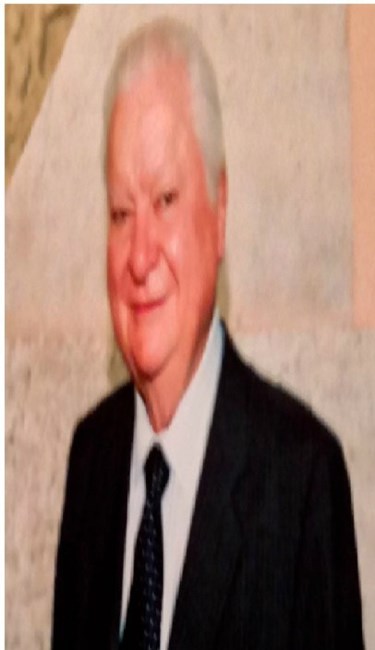
Robert J. Brown, Jr., the electronics company executive who served as an ensign in the US Navy during World War II and the commanding General Manager of the Defense Programs Division of The General Electric Company, Founder and Chairman of Apparaten Industry Defense Electronics, NV, The Hague, Netherlands, and inventor, promoter, and implementer of the Polaris Fleet Ballistic Missile System, died Sunday at the Hospice by the Sea in Boca Raton, Florida, according to a Hospice spokesperson. He was 91.
The service is Saturday November 17, 2012 at 2:00 PM at: Babione Funeral Home | 1100 North Federal Highway Boca Raton, FL | 33432 | (561) 395-8787
Mr. Brown was a rare American breed: a political, military, corporate executive. During WWII, Mr. Brown was involved in the first radar installations including the Pearl Harbor installation that detected the Japanese Bombers that destroyed Peal Harbor. It was this expertize in radar that the Navy wanted after Pearl Harbor that compelled Mr. Brown to enlist in the Navy and fight during the War.
Introduction to War
Mr. Brown’s first taste of war was brutal. In the first months of his involvement in the war, a Japanize kamikaze pilot attacked his ship. Official Navy records show that Mr. Brown was hit by a piece of the planes propeller that scared his forehead to this day.
As a young ensign, he went to the south pacific to serve as radar instructor on the USS RANDOLPH, a naval aircraft carrier. While aboard the Randolph he met Arleigh A. Burke and the two quickly became friends. His technical expertize was not limited to just radar, as he was also a valuable Officer in the Atomic Warfare effort of WWII and the cold war. Additionally, Mr. Brown served as an intelligence officer for Naval Intelligence during and after the war. In later years he also served as a field agent for the US intelligence community.
During the Eisenhower Administration he conceived and implemented the earliest Over the Horizon Radar Ballistic Missile Detection System that detected the first firing of a Soviet Ballistic Missile and notified the United States that we did in deed have a Missile Gap. This system would detect and forecast the apex and point of impact or target of the missile right after launch.
It was right after the invention and successful deployment of the above that President Eisenhower appointed Mr. Brown’s Friend from WWII, Admiral Arleigh A. Burke as Chief of Naval Operations (“CNO”) in May of 1955 and upon becoming CNO on August 17, 1955, Admiral Burke contacted Mr. Brown and asked what new ideas he had for his beloved Navy(since Brown had previously provided the Air Force with such important radar technology; as mentioned above), whereupon Mr. Brown invited Admiral Burke to go fishing in upstate New York. It was on that fishing trip that Mr. Brown demonstrated the principle of The Fleet Ballistic Missile to Admiral Burke. It was well known that Admiral Burke loved to swim and Mr. Brown invited him to go for a swim, which Arleigh accepted. While swimming Mr. Brown pulled out a cutoff broom handle and held it under water. When he released it, it popped completely out of the water and Mr. Brown said “Arleigh, that’s when we light it.” That day the Fleet Ballistic Missile was born. It was very soon after that fishing trip that Admiral Burke invited Mr. Brown to Washington to make his presentation to the Joint Chiefs of Staff. A copy of which is below.
Below is the letter from Admiral Burke to Mr. Brown crediting him for the “original proposal of this fine weapon system.”
One of Burke's first and foremost priorities as CNO was the development of a solid propellant fleet ballistic missile. He established the Special Projects Office, appointed RADM William Raborn as head, and gave him wide latitude to accomplish the objective. Polaris was the result.
Below is the letter from President Kennedy and a letter from Admiral Galantin transmitting same.
In the earliest days of the Kennedy administration Mr. Brown was repeatedly called to advise the Joint Chiefs of Staff, Secretary of Defense, and President John F. Kennedy during the Cuban Missile Crisis, because of his past experience in the Polaris Program and his knowledge of missiles and missile defense systems. Those months were marked by a largely covert paramilitary campaign against Castro Cuban leftists, a heightening of nuclear tensions with the Soviet Union, and dismay among American allies about the lurching course of American foreign policy. During this time Mr. Brown became very close to Vice President Lyndon B. Johnson. Vice President Johnson came to Mr. Brown’s home immediately after returning from Dallas, Texas aboard Air Force One; after President Kennedy’s assassination to write his acceptance speech for the Presidency of the United States of America with Mr. Brown, Horace Busby and Congressman Joe M. Kilgore. President Johnson read the speech the next morning in his formal acceptance ceremony.
Mr. Brown is survived by his two sons, Robert J. Brown III and Kenneth E. Brown, Robert of Warsaw, Kentucky, and Kenneth of Boca Raton, Florida; and one grandchild, Krystl Brown Loiterman of Chicago, Illinois according to Mr. Arjen Van De Voort the Senior Managing Director and co-founder of The Savoy Group of Boca Raton, Florida.
In a statement issued Friday, Mr. Arjen Van De Voort said: “Today we mourn the loss of Robert J. Brown, Jr., a great American who served our country with distinction. Mr. Brown exemplified our finest in the American Innovator Tradition of those who dedicate their lives to creative innovation, private, and public service.”
Robert J. Brown, Jr. was born in Welsh, Louisiana on August 15, 1921, the son of a Baptist Minister and a homemaker. At 21, he graduated from University of Louisiana at Lafayette, of the class of 1942. He received a Bachelor of Science in Electrical Engineering and a Bachelor of Science in Mechanical Engineering. He was recruited by the General Electric Company upon his graduation into their management-training program and then attended Harvard University at GE’s graduate management education program where he received a Masters in Business Administration. In 1943, Mr. Brown married Miss Virginia Sewall who was his sole lifelong companion and confidant. Below is a brief summery of Mr. Brown’s carrier accomplishments.
Robert J. Brown Jr.
Senior Chairman
The Savoy Group
Robert J. Brown, Jr. is a co-founder and Senior Chairman of The Savoy Group. Mr. Brown is based in Boca Raton, Florida.
Prior to forming Savoy in 2012, Mr. Brown was Chairman/CEO at Teletimer International Inc. ("Teletimer") where he was responsible for the exclusive national license of the Teletimer Energy Savings Service ("TESS") to Bell Atlantic/Verizon ("Verizon"). Before joining Teletimer, Mr. Brown was Vice President General Operations Manager at The Magnavox Co. ("Magnavox"). While at Magnavox, Mr. Brown conceived, invented, patented, and licensed the first dial-up facsimile machine to Xerox Corporation ("Xerox") and coined the name "Telecopier" which Xerox used to sell its fax machines. Prior to Magnavox, Mr. Brown held various management and executive management positions at the General Electric Co. ("GE"). While at GE, Mr. Brown conceived, proposed, and developed the Polaris Missile System with the US Navy. In 1963, Mr. Brown founded and was elected Chairman at General Electric Technical Services Co., which operated in 34 countries worldwide and employed 34 thousand employees. Additionally, Mr. Brown was General Manager of GE's Defense Programs Division and Chairman at Apparaten Industry Defense Electronics, NV, The Hague, Netherlands, Vice President Lundy Electronics & Systems, Inc., Executive Vice President, Director Maxson Electronics, Long Island, New York, Vice President at Hazeltine Corp., Greenlawn, NY, Senior Vice President at Potter Instrument Co. Inc., Plainview, NY, and President at Barry Miller Ordnance, Gardena, CA.
Below are copies of his biographies from Who’s Who in the World and Who’s Who in Space.
Biography
First Name:
Robert J.
Last Name:
Brown, Jr.
Occupation:
electronics company executive
Born:
Welsh, Louisiana, August 15, 1921
Education:
BS in Electrical Engineering, University Southwestern Louisiana, 1942
Certification:
Registered professional engineer, DC
Career:
Electronics engineer General Electric Co., Schenectady, 1942—1944, sales engineering rep., 1946—1950; manager district office electronics division Washington, 1950—1954; manager sales heavy military electronics department Syracuse, New York , 1954—1959; manager marketing, 1959—1961; general manager, 1961—1962; general manager defense programs division Washington, 1962—1964; chairman board General Electric Tech. Services Co., 1963—1964, Apparaten Industry Defense Electronics, NV, The Hague, Netherlands, 1963—1964; vice president, general operations manager The Magnavox Co., Fort Wayne, Ind., 1964—1967; executive vice president Maxson Electronics Corp., Long Island, New York , 1967—1969; director, 1969; vice president Hazeltine Corp., Greenlawn, New York , 1969—1972; senior vice president Potter Instrument Co. Inc., Plainview, 1972—1976; president Barry Miller Ordnance, Gardena, California, 1967—1969; vice president Lundy Electronics & Systems, Inc., 1975—1978; chairman, president, chief executive officer Teletimer International, Inc., Boca Raton, 1980—
Military:
Served with US Naval Reserve, 1944—45
Memberships:
Mem.: Military Order of Carabao, Navy League US, Association Energy Engineers
Family:
Son of Robert J. and Lavinia (McCollister) Brown; Married Virginia Sewall, June 30, 1943; children: Robert J. III, Kenneth E.
Address:
Home: 6850 Villas Dr S Boca Raton FL 33433-5026 Office: 355 Southeast 5th Ave Delray Beach FL 33483-5208
_____________________________________________________
Below Is What Appears On Page 25 of WHO'S WHO IN SPACE 1966-67 A Space Publication
Who' Who In Space Bio
Copyright © 2012 The Savoy Group ®
All Rights Reserved Worldwide
(561) 291-8901
Show your support
Add a Memory
Share Obituary
Get Reminders
Services
SHARE OBITUARYSHARE
- GET REMINDERS
v.1.18.0