
OBITUARY
Elizabeth M. Tohill
June 11, 1937 – August 30, 2010
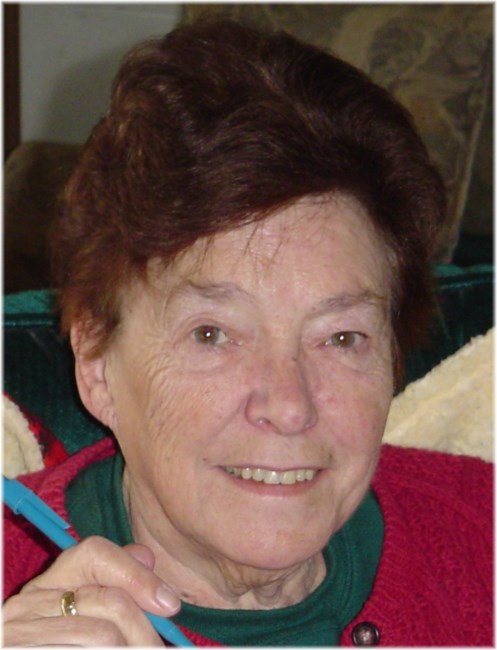
It was an unusually sultry morning, when the world was in turmoil, that Elizabeth McMullen Devlin was born June 11, 1937 at 10:45 a.m. Her parents were Margaret Simpson and John Devlin, who were married in St. Aloysius Catholic Church on December 26, 1935 in Chapel Hill by Airdrie, Lanarkshire, Scotland. Margaret was born to Elizabeth McMullen Simpson and John Simpson on August 31st, 1901. John Devlin was born to Sarah Green Devlin and John Devlin on October 4th, 1904. Although Elizabeth’s parents were brought up in the same little hamlet, the tiny village of Calderbank, by Airdrie Scotland, they did not become friendly until both were in their 30’s. When Margaret and John were born, life was hard indeed and both were the eldest of large families. By the time these children were six or seven years old, they were totally in charge of at least four younger siblings. Margaret had one sister, Isabelle, born two years her junior, when her father, a steel worker, died. Her mother married again to John Reilly. Thereafter, more brothers and sisters, Patrick, James, Hugh, Elizabeth, Agnes, and Jane.
John’s father, named John also, was a steel worker too. After John was born, came William, Mary, Peter and Ellen. Elizabeth’s parents, Margaret and John worked at home and held jobs outside when they were ten years old. Margaret was placed in service at fourteen, sent to a rich family who wanted a slave. She had to work fourteen hours a day and was given one half-day off per month. Eventually, Margaret was sent to School of Domestic Service by one good family and held an enviable position as housekeeper, in charge of all other staff in the household. John worked in a grocery store, eventually making manager, but was in bad health, always asthmatic and coughing. He was jailed for lifting one pound of sugar during the depression, when all families were at almost starvation. John’s mother, Sarah, was a teacher before marriage and John inherited her ability for figures and penmanship. Margaret and John eventually began dating – one day a month – and decided to marry in 1935. Some of their brothers and sisters were already married by this time. These two decided to move to the big city, Glasgow, Scotland, to begin their married life. They started as caretakers in a good part of the city, Hillhead, and things went well. When Margaret was pregnant, eventually, and after much praying for a child, they had to make it on their own. Care taking did not include having children, they found a little kitchen in Kinning Park, McLeen Street, Glasgow, and moved just before Elizabeth was born at Royal Maternity Hospital, Glasgow. Margaret had great pretensions and baptized the child Elizabeth McMullen Devlin, but as all her nieces were Elizabeth McMullen, she decided her daughter would be called “Elsbeth”. Very short lived, as everyone called the baby Elsie. Also, she had to be called Betty like all the other nieces, (Betty O’Donnell, Betty McFadden, Betty Reilly, Betty Travers, etc.) Betty’s first memories are of another home at 22 Portman Street, Glasgow, Scotland. Four stories up, where her parents moved in 1938. It was in a tenement building, a room and kitchen, three doors on the landing (three families) and an outside toilet on the lower landing, shared by three families. The stairs landing of the first three stories, nine families were cement. The stairs to the last story were wood.
I am Betty. My first memories were when I was about four years old. There was a war. (Declared in 1939 in Europe.) My mother, left for work at 10 p.m. I was never around, but this magic time mentioned over and over. She worked in a munitions factory in Bishopton from midnight to 8:00 a.m. In later years, I learned these women worked in factories making bombs. They had to take off all metal objects, hairpins, wedding rings, bras with metal fasteners, etc. and put on special overalls and work at machines. If a spark came off the machine, a woman was incinerated immediately and all others flew out the doors. A really dangerous job. My mother would come home around 9 a.m. and take our washing up to Granny’s (my dad’s mother), taking the wash to the steamy. The steamy was a public wash house where there was running hot water. (Our homes had only a cold water faucet.) At the steamy, a stall cost three cents. One took all washing in a basket, soap (no powder in those days) a scrub-board and energy. They also had spin dryers - three cents extra – and huge dryers which ran out of the side of the building on trucks (with racks for folding cloths over). The dryers were six cents extra, worth it for a wet climate. However the dryers had to be watched. Many are the cloths we lost when someone filled our dryer and declothed it while we were still washing in the stall.
I remember 1941. Every night bombs were dropped on us. The sirens were sounded and everyone rushed to the shelters, brick monstrosities smelling of cats pee and other things where most people spent the war. My parents did not believe in shelters. We lived on the river Clyde in Glasgow, Scotland, which was the epitome of shipbuilding at this time. The Germans were trying to obliterate our shipyards. Many are morning my dad took me for a walk and the streets around us were absolute rubble. Once I woke up and looked across the road there was no across the road. In 1942 I started school at five years old. One morning the school wasn’t there! However, my dad taught me to read and write and do some sums before the first day of school arrived. School in Scotland is rather different from school in this country. The first day of school the teacher wants to know who can read and write. Everyone can write one’s own name. There was a prize (half of an orange) for the one who could write his or her name on every one of the page correctly. I wrote mine out beautifully Betty Devlin as Delvin. I thought it looked better and broke my heart when I didn’t get the orange. Everything was rationed. 2 ounces of sugar, 2 ounces of candy, 4 ounces of meat, one and egg per week per person. Everyone had a ration book filled with little coupons with dates. The queues (lines) were tremendous. Even those with money stood in lines. I had three bananas in five years. They were severely rationed. My mother knew the greengrocer and had her name on a list to get me a banana once a year. We ate a lot of starchy things, lots of potatoes, porridge and turnips. My mother made a lot of chips (French fries) and we would always put them on bread and pretend they were banana sandwiches. People who grew up during this period were a little overweight due to starchy fillers. We read a lot, ate little, and respected our Elders. My dad was in ill health and didn’t work. I had free dinner in school which bothered me. However, my dad and his mom, my granny, always bet on the horses, dogs, anything with legs. In elementary school I would eat the free dinners at noon, rushed home and take dad’s and granny’s lines to the bookie. Gambling was not legal then. It so happened my best pal Lana Brazier, lived up the same close (tenement building) as the bookie who took the lines. This day, I rushed over with dads and granny’s lines, the lookout was not there, I almost panicked, but I had to get back to school, anyway. A cop took the line – I grabbed it back – said it was homework. He asked me where I was going I told him and he took me straight to Lana’s Mom who said sure I was coming for Lana but she has left. I was late for school saying my dad had a heart attack. The teacher made the class say a prayer for him but I don’t think for one minute she believed me.
When I was eight years old a terrible thing happened. I was sent to all Cousins, Aunts and Granny’s. I had lived through a war when there were no fathers around. Everyone’s Dad was in the army. We were poor. My dad was not in the army. I was sent every six months to the parish. This consisted of socks, shoes, sweater, and a jumper skirt . Everything itched like fury from the feet up. There was also a pair of shoes I would grow into, I never did. My mom used to sell this stuff to my aunt and knit me stuff so I wouldn’t itch. However when I was eight years old I had a little sister, Margaret Devlin. I had never encountered a baby before and was out of my depth. I had been shuffled around so much before Margo was born that I should have resented her. I never did. Happily I acknowledged having a sister. When I told everyone at school bell came to visit the new baby. It was no novelty to them. But they said coming up the stair “we’re coming up to see Betty with the wooden bum”. I was not amused. How I feel I love Margo as much as I ever loved my very own children.
When I was 10 years old we moved from four stories of wooden stairs to two stories up. One room and the kitchen and outside toilet shared by three families!!! We were made! This year I was very pleased that the Saint Vincent De Paul society decided to send me to Govan to bring me up to par. I hated every minute of it. Nuns everywhere. When I got home, my father was dying. So glad I brought him a little sacred scapular.
On October 4, 1948 I was asked to stay off school for the morning while my mom went to the steamy. She was home by noon. I went to free lunch. By 2:00 PM my aunt Mary came to take me home from school. My dad was dead. I did not believe it for a minute. It was a Monday. He was buried Friday. A nightmare it was. I went to the requiem mass but not the graveside. I will never go near a graveside not even my own!!! In November same year, I passed my qualifying exam with an A+. My mom was so excited. She said if only your father had been alive.
I got to high school. Popular was my first-not middle-name. I had so many friends, boys and girls, never missed much. I was always a good person. President of the Legion of Mary. Had a lot of respectable boyfriends, met my husband. We had a wonderful six year courtship. Married October 22, 1960. More later.
Our mother did not ever come back to write ‘more later’
In 1963, she had her first child, Martin. She had Colette two years later. The following year, our Dad was recruited in sunny Chula Vista, California. The ad in the Sunday Post claimed, “15 miles of sunny beaches.” Dad went down to London for an interview and was hired. Mom and Dad moved with two kids, two suitcases, and two hundred dollars.
That year, mom’s mother passed away and she returned to Scotland to bury her. In 1967, Gerard was born in Chula Vista. Betty was a homemaker, embarked on a home-based real estate career in the 1970’s, which she excelled at because of her gift of gab. People would ask her what she was doing later and she would say, “Listing your house tonight.” Many listings were due to her outgoing personality and inquisitive nature.
In 1981, she began a career as a bank teller and teller-trainer at Bank of America. She loved going to work because it enabled her to meet a lot more people. She loved Halloween at the bank, where she appeared as a punk rocker, little girl, clown, and Miss Scotland, complete with a toilet-paper sash.
She made many friends at the bank, many that lasted a lifetime.
In 1994 Betty’s life changed with the birth of her granddaughter Breann, lovingly referred to as “rascalface.” She babysat, walked her to kindergarten, and supported her in all her endeavors, particularly her music.
Betty passed away on August 30th, 2010 at home of natural causes. Or as she would say, “her heart stopped beating.” She was preceded in death by her husband Henry Tohill. They would have been married 50 years this October. She is survived by her sons, Martin and Gerard, her daughter Colette, and her cherished granddaughter Breann.
Mrs. Tohill passed away at home of natural causes.
Show your support
Add a Memory
Share Obituary
Get Reminders
Services
SHARE OBITUARYSHARE
- GET REMINDERS
v.1.18.0