
OBITUARY
Esther Mbawphor Nji
January 1, 1930 – July 31, 2026
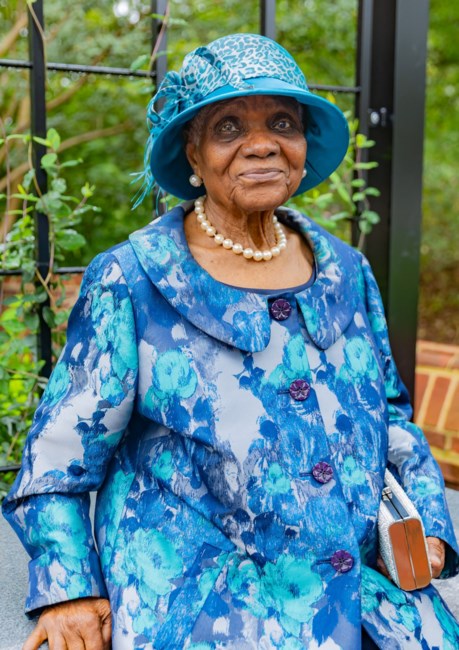
Esther Mbawphor Nji was born in the early half of the 20th century to parents Gwenyi and Mbapeh in Awing, a chieftaincy located approximately 45 kilometers (28 miles) from Bamenda. Her mother, Gwenyi, was the eldest daughter born to the Chief of Awing and held an honorary post as advisor to the chief alongside her brother. Esther herself was born in the palace. The birth was not officially recorded, so her listed birthday of January 1, 1930 was estimated — she may in fact have been born as early as 1926 or 1927.
As a young woman, she refused to marry the men presented to her by the chief and insisted on choosing her own. In her own words: "Ah be want man way ee di work for outside." She was among the first in her generation within her community to insist on picking her own spouse; she wanted someone who would take her out of the village. At approximately 16, she met, selected, and married her husband, Eugene Nji Mbangowah, a schoolteacher, and left the village to live in Bali. She gave birth in 1946 to her first son, Tembi, while living in teachers' housing in Bali.
Later, her husband was admitted to the police college in Ikeja, Nigeria. After completing his training, he returned and the family moved to Buea, Cameroon. During this time, Esther gave birth to her first daughter, Margaret (also known as NdeC), followed by another son. In Buea she farmed the land, grew and ground cassava to make gari for selling, along with other produce.
The young family later relocated to Enugu, Nigeria, for police refresher training and stayed for one year. While in Nigeria, Esther suffered the tragic loss of one of her sons, Nkongho. During this same period, she learned trading and other marketable skills, like sewing, from the other women at the police barracks. She and the women there would sew tablecloths, leather slippers, and other items for sale.
From Nigeria, the family returned to Bamenda, Cameroon, and from there went to Mudeka. While waiting for transport in Mudeka, she noticed a woman making and selling make-me-well (puff puff) by the roadside. She engaged the woman in conversation and, after observing her process, memorized it — knowledge she would later put to use back in Bamenda to generate her own income.
From Mudeka, the family moved to Wum, where Esther spotted land cleared by wildfire and decided to farm it. Growing peanuts, yams, and corn, she produced more than her family needed. Mami not only sold much of this produce but also generously gave much of it away. For a period, she cooked food prisoners at the local prison who had no one to bring them meals.
The family went on to live in various locations across the region — Mamfe, Nso, Mutengene, Mudeka, Ndu, Nkambe, Mbengwi — before finally returning to settle in Bamenda. While living at the barracks in Up Station, Bamenda, she frequently visited her brother, Tata Mofor, in Old Town. She joined a njangi (informal financial savings) group and used the funds to buy a small plot in Old Town, where she began building her house with her husband's support. Before the house was finished, she moved in with her children — she wanted her children to have stability so they could focus on school.
It was in Old Town that she established herself as a woman of business. With no competition, she made a killing selling make-me-well and corn to the community. She later stopped frying make-me-well and started selling cooking oil, soap, and bonbon, which was more profitable and less laborious. Her customers were largely her Hausa neighbors, who for religious reasons could not frequent the market. Her small business became so successful that her husband started borrowing from her to help pay school fees for all the children. Her home in Bamenda became the primary residence where all the Nji children grew up and went to school. It was also in Old Town that she gave birth to her remaining children, including twin daughters — a birth that earned her the title of Manyi (mother of twins).
Despite having no formal education, over the course of her life Manyi Esther Mbawphor established and owned at least three farms, built and sold several properties (some on behalf of her children), and spoke several languages — Awing, Bali, Pidgin English, and Igbo. Her adventurous spirit led her to travel to many countries, including Togo, Ghana, and the United States. She eventually relocated to the United States and became a U.S. citizen in 2010. She lived in the state of Maryland for 37 years with her daughter Hannah until her death at nearly 100 years old. As if she had chosen the day, while surrounded by family in her son Charles’s house, Manyi passed away in her sleep after a brief illness on a beautiful Friday afternoon on July 31, 2026.
She will be remembered for her warmth and welcoming nature, her love of dancing, her talented cooking, and her skill in growing just about anything. Her hospitality and generosity were famous.
She is survived by, one sister, her remaining children, grandchildren, great-grandchildren, and several great-great-grandchildren. Her family now lives across Cameroon, Japan, England, Togo, and the United States.
Show your support
Send Flowers
Add a Memory
Share Obituary
Get Reminders
Services
- SEND FLOWERSSEND
FLOWERS SHARE OBITUARYSHARE
- GET REMINDERS
v.1.18.0